
成都最会让国外镜头停久一点的,往往不是熊猫,而是人坐下来以后那股松弛 | What Most Often Makes Foreign Cameras Linger in Chengdu Is Not the Pandas but the Ease That Begins Once People Sit Down
他们到了成都以后,最容易拍到的不是景点高潮,而是生活感怎么把旅行托住 | What Foreign Creators Often Capture First in Chengdu Is Not a Single Peak Attraction, but How Daily Life Holds the Trip Steady
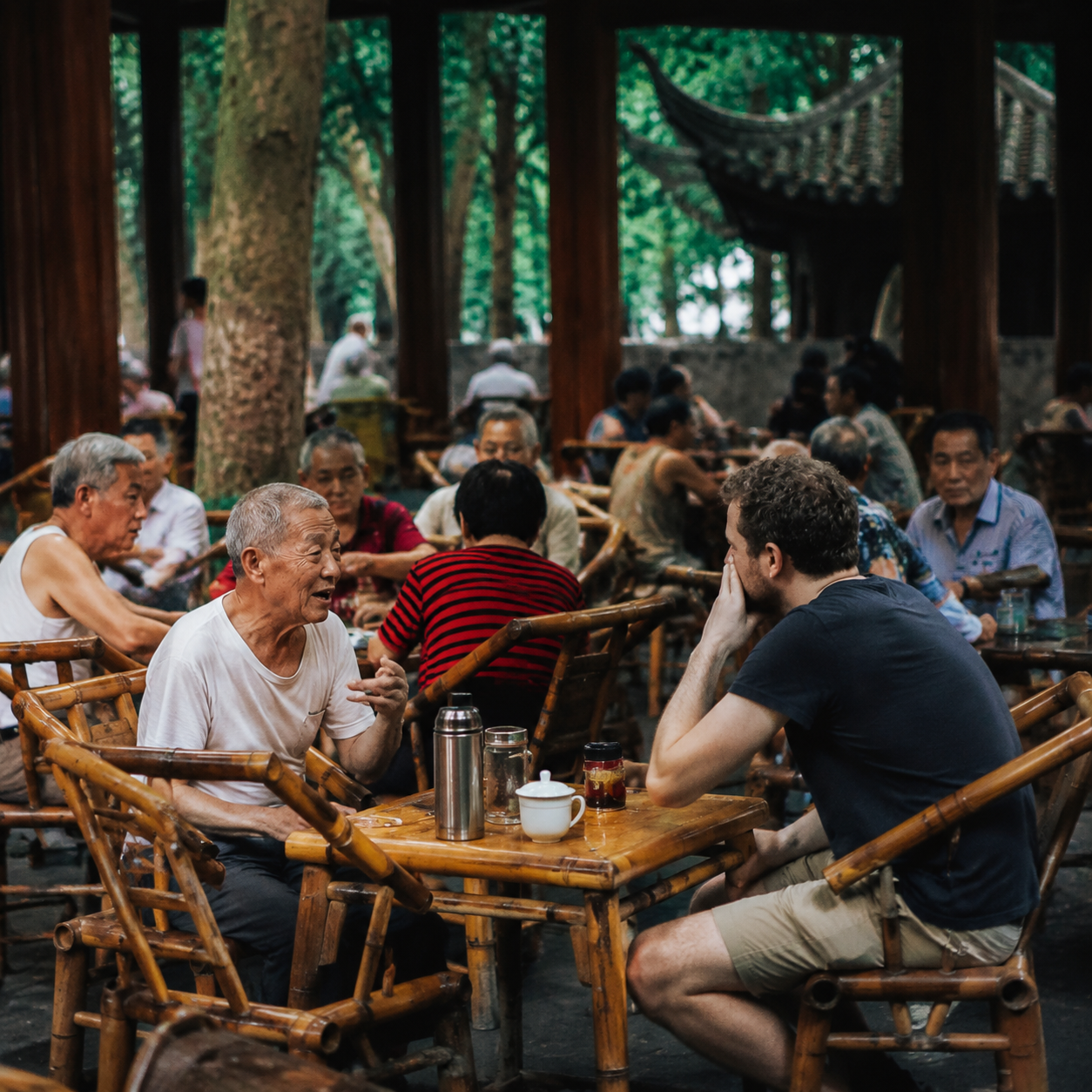
国外博主写中国城市时,常常会被两种地方迅速抓住:一种靠尺度,一种靠奇景。可成都很特别,它真正强的部分往往不是第一秒就把人压住,而是它会让旅行者很快意识到,自己在这座城里不必一直处于“景点模式”。茶馆、公园、街边小吃、地铁、慢下来还能继续成立的步行线,这些东西拼在一起,构成了一种很少被粗暴总结却极容易让人回头想念的城市感觉。
When foreign creators write about Chinese cities, they are often captured quickly by two categories of place: those driven by scale and those driven by visual wonder. Chengdu is different. Its true strength often does not come from overwhelming the viewer in the first second. It comes from helping the traveler realize very quickly that one does not have to remain in permanent attraction mode here. Teahouses, parks, street food, metro movement, and walking lines that still work after the pace has slowed down all combine into a city feeling that is rarely summarized aggressively yet is very easy to miss once one has left.
这也是为什么,很多关于成都的公开内容,哪怕表面上仍然会提到大熊猫、火锅、宽窄巷子或其他熟悉标签,真正让观众留住印象的,常常还是那些更生活化的片段:坐下来、等一会儿、喝一口、在树影里走一段、在普通街头突然发现这座城不逼你赶路。对 TravelCN 来说,这类内容特别适合转写成报道体,因为它能把“成都为什么舒服”这件事写得比“成都有哪些景点”更清楚。
That is why many public creator pieces about Chengdu, even when they still mention giant pandas, hotpot, Kuanzhai Alley, or other familiar labels on the surface, leave a stronger memory through more everyday fragments: sitting down, waiting a little, taking a sip, walking through tree shade, and suddenly realizing on an ordinary street that the city is not forcing movement. For TravelCN, this kind of material is especially suited to a reported format because it explains more clearly why Chengdu feels comfortable than simply listing what attractions Chengdu possesses.
成都最值得被写清楚的,不是“慢生活”这四个字,而是这种慢怎么真的长在路线里 / What Deserves Clarifying About Chengdu Is Not the Phrase “Slow Life,” but How That Slowness Actually Grows Inside the Route
“慢生活”已经快变成成都内容里最容易被滥用的词了。可如果只是把它当标签贴上去,它几乎什么也说明不了。真正的问题不是成都慢不慢,而是这种慢到底怎么作用在旅行者身上。它并不是叫人什么都不做,而是让一条路线里原本该非常用力的部分,忽然可以换一种更松的方式完成。你依旧会吃、会走、会看、会转场,但这些动作不再总带着赶时间的边缘感。
Slow life has become one of the most overused phrases in writing about Chengdu. But once it is pasted on as a label, it explains almost nothing. The real question is not whether Chengdu is slow in the abstract, but how that slowness actually affects the traveler. It does not ask people to do nothing. It allows parts of a route that might normally require force to be completed in a looser way. One still eats, walks, looks, and transfers, but those actions stop carrying the sharp edge of constant urgency.
国外博主如果把这层东西拍出来,TravelCN 最该做的,不是继续重复“成都很松弛”,而是把这种松弛拆成具体经验:哪些地方适合当作中午缓冲段,哪些街区适合拿来恢复脚力,哪些吃饭场景不只是为了“打卡成都美食”,而是真的会让一整天的节奏重新变顺。只有写到这一步,成都才会从抽象印象变成可执行路线。
If foreign creators succeed in filming this layer, TravelCN’s next step should not be to repeat that Chengdu feels relaxed. It should break that relaxation into specific experience. Which places function best as midday buffers? Which neighborhoods restore the legs? Which meal settings matter not merely because they are famous food moments, but because they reset the rhythm of the entire day? Only at that point does Chengdu move from abstract impression into executable route logic.
对第一次来中国的人来说,成都最重要的价值可能不是“必打卡”,而是“可恢复” / For a First-Time Visitor to China, Chengdu’s Greatest Value May Not Be Mandatory Check-In, but Recoverability

中国路线如果排得稍微紧一点,很多人会在第三天左右开始出现一种很隐蔽的疲惫:不是累到走不动,而是开始对下一站的热情变钝。成都特别适合处理这种状态,因为它的很多好东西并不要求人必须带着很高的兴奋度去消费。你状态正常,它依然成立;你有点疲,它也不会立刻垮掉。正因如此,它在整条中国旅行线里,常常扮演一种非常重要却不够被好好命名的角色:恢复城市。
Once a China route becomes even slightly dense, many people begin to feel a subtle kind of fatigue around day three. They are not exhausted to the point of collapse, but their excitement for the next stop begins to dull. Chengdu is especially good at handling this state because many of its best qualities do not require the traveler to arrive with a highly charged emotional state. If one feels normal, the city works. If one feels tired, it still does not fall apart. For that reason, Chengdu often plays a highly important role inside a China route, even if that role is not named often enough: a recovery city.
这并不意味着成都只是“休息站”。恰恰相反,它的价值很高,只是这份价值并不总以最戏剧化的方式出现。熊猫、火锅、茶馆、公园、巷子、夜色,这些元素放在一起,不是为了制造一次视觉轰炸,而是为了让旅行者重新觉得,中国路线里的轻和重可以重新平衡。对国外博主来说,这种城市很容易被拍成“没那么炸,但很好住、很好待、很好缓下来”的地方;而对 TravelCN 来说,这样的城市最值得被认真写透。
This does not mean Chengdu is merely a rest stop. On the contrary, its value is very high. It simply does not always appear in the most dramatic form. Giant pandas, hotpot, teahouses, parks, lanes, and evening light do not combine to create one visual explosion. They combine to help the traveler feel that the light and heavy parts of a China route can be rebalanced. For foreign creators, that kind of city easily becomes a place that is less explosive but deeply livable, stayable, and calming. For TravelCN, that is exactly the kind of city worth writing carefully through to the end.
真正好的成都文章,不该只问“去哪里”,还该问“什么时候停下来” / A Good Article About Chengdu Should Ask Not Only Where to Go, but Also When to Stop
很多城市攻略写到最后,答案只剩下一串地点;可成都如果只被写成地点清单,就会失掉它最独特的部分。真正重要的,不只是公园、巷子、馆、熊猫基地和火锅店分别在哪儿,而是这些东西之间,什么时候适合留白。一个午后到底该给茶馆还是给巷子,一个晚上该给火锅还是给河边步行,一段路到底是应该继续推进还是先在树下坐十分钟——这些问题看起来小,却决定了成都到底会不会被你走成一座舒服的城市。

By the end of many city guides, the answer collapses into a list of places. If Chengdu is written only as a list, its most distinctive strength disappears. What matters is not merely where the parks, lanes, museums, panda base, and hotpot restaurants are located, but where blank space should be left between them. Should an afternoon belong to a teahouse or an alley? Should an evening go to hotpot or a riverside walk? Should the route keep pressing forward or pause under the trees for ten minutes? These seem like small questions, but they decide whether Chengdu will actually be walked as a comfortable city.
这也是为什么,国外博主关于成都的内容最适合被转写成“生活感路线报道”,而不是纯景点推荐。因为成都最难得的地方,往往不是让你突然惊住,而是让你慢慢不想走。这样的城市,写法也应该更耐心一点。
That is why foreign creator material about Chengdu is best transformed into lived-route reporting rather than pure attraction recommendation. What is precious in Chengdu is not usually the ability to stop a person cold, but the ability to make a person gradually not want to leave. A city like that deserves a more patient style of writing as well.
公开素材来源 / Public Source Notes
- 基于国外博主公开可见的成都城市生活/慢节奏路线内容切口重写,偏“生活感如何托住整条中国路线”的报道体分析。
- 不做整段搬运,重点转写路线与恢复逻辑。
Public source note:
- Rewritten from publicly visible foreign-creator angles on Chengdu’s city life and slower route rhythm, focusing on how everyday atmosphere stabilizes a broader China trip.
- No wholesale reproduction is used; the emphasis is on route logic and recoverability.
- 呼和浩特被雨洗亮以后,连烧麦店门口的白雾都值得慢慢看 | After Rain Brightened Hohhot, Even the Steam Outside a Shaomai Shop Was Worth Slowing For
- 在西安回民街吃一天,胃和钱包都很满足 | A Full Day of Eating on Xi'an Muslim Quarter
- 桂林码头清晨的雾,教我别把山水只当背景 | Morning Mist at a Guilin Pier Taught Me Not to Treat Landscape as Background
- 海口出门前那几分钟,天气、潮气和路线都先挤进了手机里 | In the Minutes Before Going Out in Haikou, Weather, Humidity, and Route All Crowd into the Phone
- 起飞前一夜,我把第一次中国独行准备明白了 | The Night Before Takeoff, I Finally Understood How to Prepare for My First Solo Trip to China
- 从灰色水泥到绿荫长廊:中国城市道路绿化的二十年蜕变 | From Grey Concrete to Green Canopies: Two Decades of Urban Road Greening in China
- 如何在中国使用网约车应用 | How to Use Ride-Hailing Apps in China
- 福建土楼与海岸线7日游 | 7-Day Fujian Tulou & Coastline Tour
- 我们在西塘的雨夜里分着一把伞走散又重逢,那一晚比酒吧更像青春 | Sharing One Umbrella in Xitang Rain, We Got Lost and Found Again in a Night That Felt More Like Youth Than Any Bar
- 学会说“麻烦了”之后,我在中国的人际距离一下子变顺了 | After I Learned to Say Máfan Le, My Social Distance in China Suddenly Became Smoother
Comments (0)