
灯彩作坊里的一小时:我第一次发现光也可以被“做出来” | In a Lantern Workshop: The First Time I Realized Light Can Be Crafted by Hand
灯彩作坊里的一小时:我第一次发现光也可以被“做出来” | In a Lantern Workshop: The First Time I Realized Light Can Be Crafted by Hand
我以前总以为,灯彩最吸引人的部分是在夜里。亮起来的时候当然最美:颜色被点亮,轮廓变柔和,整个空间像忽然长出节日气氛。可真正让我理解中国灯彩的,不是晚上站在街头抬头看,而是白天走进一间作坊,看那些还没有发光的骨架、纸面、绸布、细线和手工工具安安静静地摆在桌上。那一刻我才意识到,灯彩并不是“有灯就行”的装饰,它首先是一门关于结构、材料和想象力的手艺。
I used to assume that the most attractive part of lantern art was the nighttime moment. Of course it is beautiful when illuminated: colors glow, outlines soften, and the whole space suddenly acquires a festive mood. But what truly helped me understand Chinese lantern craft was not standing outside at night and looking up. It was entering a workshop during the day and seeing the still-unlit frames, paper, silk, thread, and handmade tools resting quietly on tables. In that moment I realized that lantern craft is not simply decoration with light inside. It is first a craft of structure, material, and imagination.
老师拿起一个还没糊面的灯架给我们看。那只是一些细细的骨条,被弯成花瓣、鱼尾或者圆腹的形状,可已经有了生命的雏形。她告诉我们,做灯彩时,最先考虑的不是颜色,而是“站不站得住”“提起来稳不稳”“亮起来之后会不会显得笨重”。这让我很惊讶,因为游客通常最容易被成品的热闹吸引,却看不到前面这套非常讲究的逻辑。一个灯彩如果结构不好,再华丽的装饰也救不了它。
The instructor held up an unfinished lantern frame for us to see. It was only a set of thin strips bent into the shapes of petals, fish tails, or rounded bodies, yet it already contained the outline of life. She explained that in lantern-making, the first concern is not color, but whether the form can stand properly, whether it feels stable when carried, and whether it will appear too heavy once lit. That surprised me, because visitors are usually drawn first to the liveliness of the finished object and do not see this earlier logic at all. If the structure is poor, no amount of decoration can save the lantern.
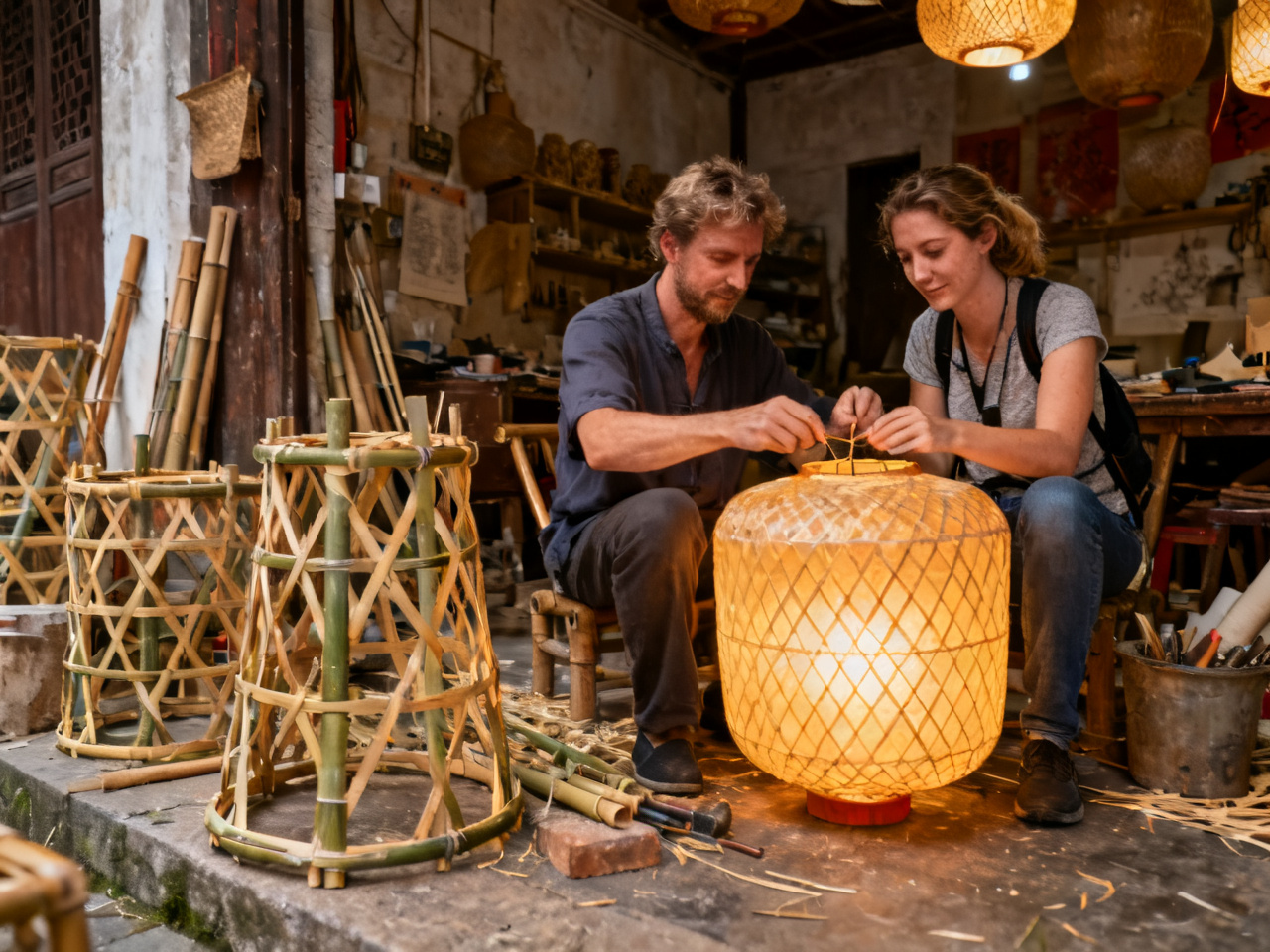
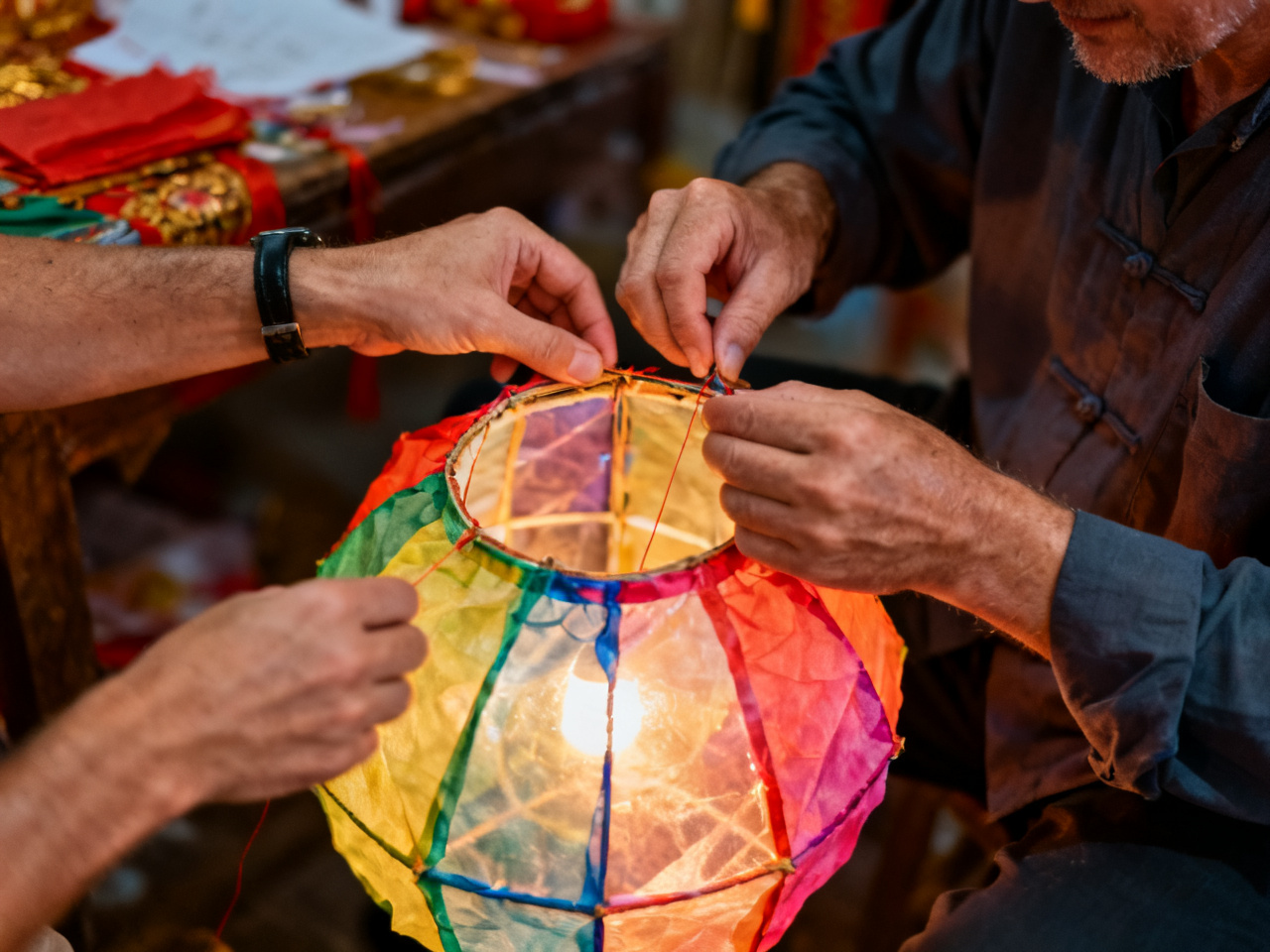
我尝试做的是一个比较简化的小灯彩,不算复杂,但已经足够让我明白这门手艺为什么不容易。先要把骨架固定好,再裁纸、上胶、包边,最后才谈得上装饰。每一步都不能太急。纸糊得太松,表面会皱;太紧,又可能破;线收得不好,轮廓就会显得毛躁。我原本以为这种体验的重点只是“亲手做一个好看的纪念品”,结果做着做着,我越来越能体会到老师口中反复出现的那个词:分寸。
I tried making a relatively simple small lantern. It was not complicated, but it was enough to show me why this craft is not easy. First the frame must be secured, then the paper cut and glued, the edges wrapped, and only after that can decoration begin. None of these steps can be rushed. If the paper is mounted too loosely, the surface wrinkles; too tightly, and it may tear. If the thread is not gathered well, the outline looks rough. I had assumed the point of this kind of experience was merely to make a pretty souvenir with my own hands, but as I worked, I increasingly understood the word the instructor kept repeating: proportion.
最让我感动的是,当一盏灯还没亮的时候,它已经在预备发光。白天看它,你看到的是骨架、表皮和手工痕迹;一旦点亮,所有这些准备就会被转化成一种柔和的视觉效果。那种变化非常神奇。它让我觉得,灯彩不是把光塞进一个容器里,而是先用手艺给光设计一个性格。圆的灯会显得温和,鱼形灯更灵动,花形灯更像节日里的笑容。原来光也不是抽象的,它可以通过民艺变得有地方感、有情绪、有故事。
What moved me most was that even before a lantern is lit, it is already preparing to glow. In daylight, you see frame, surface, and handmade traces. Once illuminated, all that preparation turns into a soft visual effect. The transformation feels magical. It made me think that lantern craft is not simply putting light inside a container. It is giving light a personality through craftsmanship. A round lantern feels gentle, a fish-shaped lantern feels lively, and a flower lantern looks like a festival smile. I realized that light is not abstract. Through folk craft, it can become local, emotional, and narrative.
因为我来自墨西哥,我很自然地会把中国灯彩和家乡的一些节庆装饰联系起来。墨西哥当然也非常擅长用颜色和公共空间制造节日氛围,无论是亡灵节装饰、彩纸剪旗,还是街头庆典中的临时视觉装置,都有强烈的参与感和热闹感。我们也很懂得让一个空间“活起来”。但中国灯彩给我的感觉更偏向一种细密、耐看的光感美学。它不只是要热闹,还要讲究轮廓的雅致、光线的层次和吉祥图案如何被温柔地托出来。
Because I come from Mexico, I naturally compare Chinese lantern craft with festive decoration traditions from home. Mexico is also exceptionally good at using color and public space to create celebration. Whether in Day of the Dead decorations, papel picado, or temporary visual structures in street festivals, there is a strong sense of participation and joyful intensity. We also know how to make a place come alive. But Chinese lantern art feels more oriented toward a delicate and lingering aesthetic of light. It does not aim only for excitement. It also cares about elegant contour, soft illumination, and the gentle way auspicious motifs are carried forward.
这种比较让我很受启发。墨西哥的节庆视觉常常会先抓住你,让你立刻进入气氛;中国灯彩则更像是把你慢慢包进去。它的美不一定一秒钟扑过来,而是在你盯着看一会儿之后,才意识到骨架多么匀称,颜色多么克制,灯面上的图案和透出来的光是怎样互相成全的。一个更偏向外放的节日能量,一个更偏向含蓄的发光秩序,我都喜欢,但它们确实很不一样。
This comparison taught me a great deal. Mexican festive visuals often seize your attention immediately and pull you into the atmosphere at once. Chinese lantern craft wraps around you more gradually. Its beauty does not always rush toward you in the first second. Often it is only after looking a while that you notice how balanced the frame is, how restrained the color is, and how the image on the surface and the light behind it complete each other. One leans more toward outward festive energy; the other toward a more subtle order of illumination. I love both, but they are undeniably different.
如果有外国旅行者问我,哪一种中国民艺最适合在“白天体验、晚上回味”,我大概会推荐灯彩。因为它把制作和观看分成了两个层次:白天你学会尊重结构,晚上你才真正看见光的效果。等我提着自己做的小灯走出作坊时,天色已经慢慢暗下来了。那盏灯并不完美,边角也还能看出新手的犹豫,可当里面的灯亮起,我还是很认真地高兴了一下。那不是因为它特别精致,而是因为我第一次亲眼看见:原来光真的可以被人一层一层地做出来。
If a foreign traveler asked me which Chinese folk craft is best experienced in the day and remembered at night, I would probably recommend lantern art. It divides making and viewing into two layers: by day you learn to respect structure, and by night you finally understand the effect of light. By the time I carried my small lantern out of the workshop, evening was beginning to fall. The lantern was far from perfect, and the edges still showed a beginner’s hesitation. Yet when the light inside came on, I felt a very sincere burst of happiness. Not because it was so refined, but because for the first time I had seen with my own eyes that light really can be crafted, layer by layer, by human hands.

- 皮影戏:光与影之间的千年叙事 | Shadow Puppetry: A Thousand Years of Storytelling Between Light and Shadow
- 新疆北疆12日深度游 | 12-Day Northern Xinjiang In-Depth Tour
- 我第一次坐中国夜间高铁,发现安静也是一种旅行服务 | On My First Evening High-Speed Train in China, Quiet Became Part of the Service
- 昆明蓝花楹城市漫步:把春天走成一条紫色街巷 | A Jacaranda Walk in Kunming: Turning Spring into a Purple Street
- 重庆让国外大博主上头的,从来不只是洪崖洞那一层灯火 | What Hooks Major Foreign Creators in Chongqing Is Never Only the Glow of Hongyadong
- 中国旅游礼仪与文化禁忌 | Travel Etiquette & Cultural Taboos in China
- 广东早茶:不只是吃,是一种生活方式 | Cantonese Morning Tea: More Than a Meal, It's a Way of Life
- 美国人去中国旅行前必须知道的事 | What Americans Need to Know Before Traveling to China
- 中国白酒与黄酒:送礼自饮怎么选 | Chinese Baijiu & Huangjiu: Gift & Tasting Guide
- 我在中国黄昏公园里学会一个人坐着,不急着把空白填满 | In a Chinese Park at Dusk, I Learned to Sit Alone Without Rushing to Fill the Silence
Comments (0)