
竹编小课:我第一次发现“柔软的材料也可以有骨架” | Bamboo Weaving Workshop: The First Time I Realized Soft Material Can Still Have a Spine
竹编小课:我第一次发现“柔软的材料也可以有骨架” | Bamboo Weaving Workshop: The First Time I Realized Soft Material Can Still Have a Spine
我原本以为,竹编的魅力主要在“天然”和“朴素”这两个词上。作为一个来自菲律宾的外国人,我从小对竹子并不陌生:它可以出现在房屋结构里、家具里、篮子里,也可以出现在很多热带地区日常生活最普通的角落里。所以刚到中国、第一次看到竹编体验课时,我其实有一点自以为是,觉得自己大概很快就能理解这门手艺。可真正坐下来,把一根根削薄的竹篾拿到手里之后,我才发现,中国竹编真正让我着迷的,并不是材料本身,而是它如何把柔软、秩序和结构感编进同一个物件里。
I originally assumed the charm of bamboo weaving was mainly captured by the words “natural” and “simple.” As a foreigner from the Philippines, I am not unfamiliar with bamboo. It appears in house structures, furniture, baskets, and many of the most ordinary corners of daily life across tropical regions. So when I first saw a bamboo-weaving workshop in China, I was a little overconfident and thought I would understand the craft quickly. But once I actually sat down and held thin strips of split bamboo in my hands, I realized that what truly fascinated me in Chinese bamboo weaving was not the material alone, but the way softness, order, and structural strength could be woven into a single object.
老师先让我们摸几种不同粗细的竹篾,再教我们最基础的起底方法。看上去只是横一根、竖一根地交叉,可一旦自己开始编,手马上就知道事情没有那么简单。竹篾太松,整个面会散;太紧,又容易折出不自然的硬痕。更难的是节奏:你必须一边看图样,一边维持手上的力度一致,还得不断检查边缘是不是歪了。那一刻我突然明白,竹编和很多外行想象中的“随手做做”完全不是一回事。它的难,不在某个夸张动作,而在连续不断的小判断里。
The instructor first let us touch bamboo strips of different widths and then taught us the most basic method of building the base. It looked like nothing more than crossing one strip over another, yet the moment I tried it myself, my hands immediately understood that it was not so simple. If the strips were too loose, the whole surface lost coherence. If they were too tight, they bent into unnatural hard creases. Even harder was the rhythm: I had to follow the pattern, maintain even pressure, and constantly check whether the edge was drifting out of line. In that moment I understood that bamboo weaving is nothing like the casual “just make something by hand” image many outsiders might have. Its difficulty lies not in one dramatic gesture, but in a long sequence of small decisions.
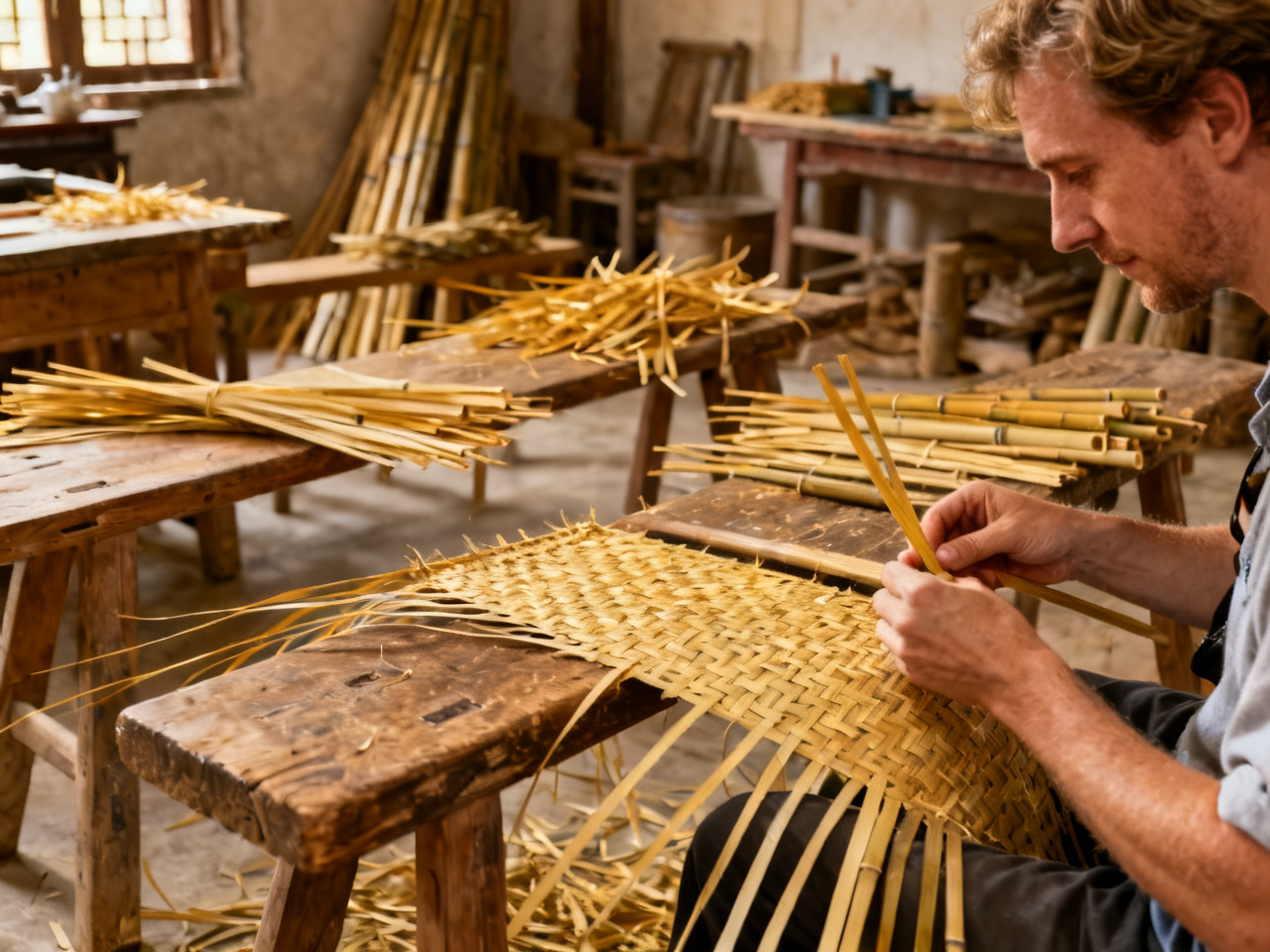
最让我佩服的是,老师做示范时动作非常安静。她几乎没有多余的力气,手指只是在竹篾之间轻轻穿梭,可编面却越来越稳,越来越平整。她说,好的竹编不是把材料“压服”,而是顺着它的性子去安排它。竹子有自己的纤维方向,也有自己的脾气,什么时候适合弯,什么时候不能急,都要靠经验去判断。我听到这里时特别有共鸣,因为这正是很多传统手艺最迷人的地方:你不是在单方面控制材料,而是在学习如何与材料合作。
What impressed me most was how quiet the instructor’s movements were during her demonstration. She used almost no wasted force. Her fingers simply moved through the strips, yet the woven surface grew steadier and flatter. She said that good bamboo weaving does not “subdue” the material, but arranges it according to its nature. Bamboo has its own grain direction and its own temperament. Knowing when it can bend and when it should not be forced depends on experience. I felt an immediate connection to that idea, because it is one of the most beautiful qualities of traditional craft: you are not controlling the material by yourself; you are learning how to cooperate with it.
做着做着,我开始留意竹编图案里的几何感。最基础的平纹已经很耐看,稍微复杂一点的变化又会让表面出现斜线、菱格、重复起伏,看起来既像数学,又像织物。可它和布不一样,因为竹编最后往往要变成立体器物:篮子、盒子、灯罩、托盘、屏风,甚至更大的生活用品。也就是说,这门工艺不只是“表面漂亮”,它从一开始就在考虑承重、开口、边框和使用方式。对一个游客来说,这一点特别容易让人产生敬意——你会意识到自己看到的不是装饰技巧,而是一整套与生活长期磨合出来的结构智慧。
As I continued, I began noticing the geometric beauty inside woven patterns. Even the most basic plain weave already looked elegant, and slightly more complex variations created diagonals, diamonds, and repeating rhythms that felt part mathematics and part textile. Yet bamboo weaving is not cloth, because it often becomes a three-dimensional object: a basket, box, lampshade, tray, screen, or larger household item. That means the craft is not only concerned with surface beauty. From the beginning, it thinks about weight, opening, framing, and practical use. For a traveler, that is especially humbling. You realize that what you are seeing is not just decorative technique, but a whole structural intelligence refined through long everyday use.
这也让我自然想起菲律宾的竹工艺。我们同样会把竹子用在篮筐、编席、家具和建筑细节上,很多地区也保留着非常强的手工传统。可是我在中国这次体验里感受到的重点稍微不同。菲律宾的竹制品常常更直接地让我联想到热带生活的通风感、轻便感和实用性;而中国竹编,至少在这堂课和我看到的成品里,更强烈地呈现出一种“秩序被精细化”的美学。它不仅要求能用,还要求纹样、边口、收束和整体比例都非常讲究。两者都聪明,也都贴近日常,只是中国竹编更让我感到一种静下来的克制。
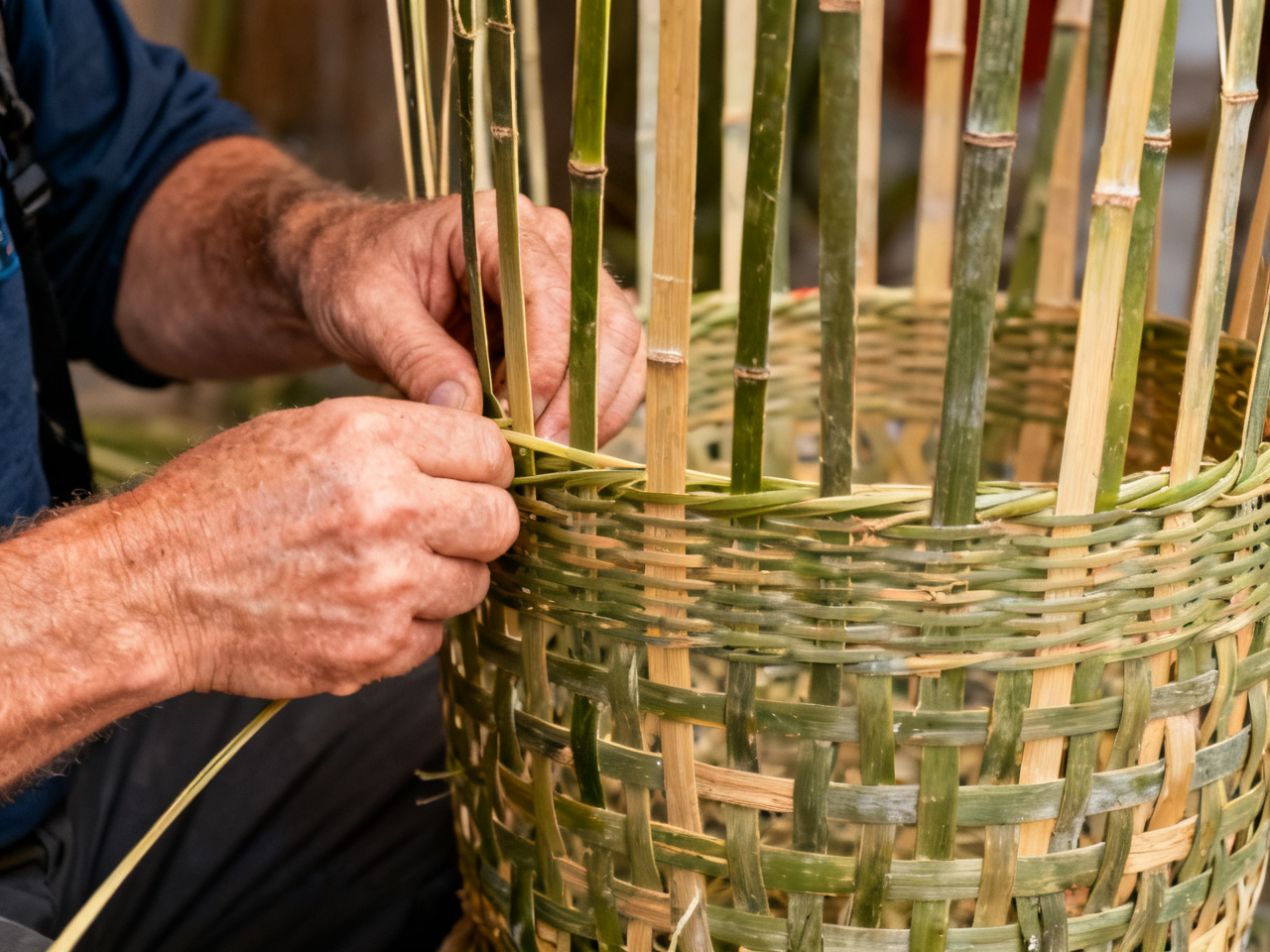
This naturally made me think of bamboo craft in the Philippines. We also use bamboo in baskets, mats, furniture, and architectural details, and many regions preserve strong handcraft traditions. But the emphasis I felt in China was somewhat different. Philippine bamboo objects often make me think first of tropical living—ventilation, lightness, practicality. Chinese bamboo weaving, at least in this workshop and in the finished works I saw, presented more strongly an aesthetic of refined order. It does not only ask whether an object works; it also asks whether the pattern, edge finish, closure, and overall proportion are carefully resolved. Both traditions are intelligent and close to everyday life, but Chinese bamboo weaving gave me a deeper feeling of restraint and composure.
我最后完成的是一个很小的杯垫大小的编面,说不上多漂亮,边缘还有一点不齐。但当我把它放在桌上时,心里还是有一种很踏实的满足。因为这块小小的编面让我第一次真正理解,为什么竹编会在中国很多地方被看得那么重要。它代表的不是简单的“乡土气息”,而是一种把自然材料变成稳定秩序的能力。你从柔软的竹篾开始,最后得到的却是一个有骨架、有节奏、有用途的物件。
In the end, I finished only a small woven square, about the size of a coaster. It was not especially beautiful, and the edges were still a little uneven. But when I placed it on the table, I felt a very solid satisfaction. This small piece made me truly understand for the first time why bamboo weaving matters so much in many parts of China. What it represents is not merely a rustic atmosphere, but an ability to turn natural material into stable order. You begin with flexible bamboo strips and end with an object that has structure, rhythm, and purpose.
如果有外国朋友问我,哪一种中国民艺最容易让人从“材料”直接走到“文化理解”,我会很愿意推荐竹编。因为它看起来朴素,实际上层次非常深。你可以先从竹子的触感进入,再慢慢理解编法、结构、器形和地方审美之间的关系。对我来说,这次体验最珍贵的地方就在这里:它没有用夸张的视觉震撼打动我,而是用一种非常安静的方式,让我重新理解了手艺中的力量感。
If foreign friends asked me which Chinese folk craft most easily carries a person from material contact into cultural understanding, I would gladly recommend bamboo weaving. It looks simple, yet its layers run deep. You can begin with the tactile feeling of bamboo and then gradually understand the relationship among weaving methods, structure, vessel form, and local aesthetics. For me, that is what made this experience so valuable. It did not impress me through dramatic spectacle. It quietly made me rethink what strength can mean in craft.
- 唐装:传统与现代之美 | Tang Suit: Modern Traditional Wear
- 广东广西10日海陆游 | 10-Day Guangdong-Guangxi Sea & Land Tour
- 在喀什,先让我停下来的不是景点,而是路口边那只刚出炉的馕 | In Kashgar, It Was Not a Landmark but a Fresh Naan Beside the Crossing That Made Me Stop
- 四个人一桌火锅,谁来先付?我在成都学会了中国式AA的真正节奏 | Four People, One Hot Pot Bill: In Chengdu I Learned the Real Rhythm of Splitting Cost
- 中国地理概览 | China Geographic Overview
- 版画拓印体验:我第一次明白一张纸为什么也能“接住时间” | Print Rubbing Experience: The First Time I Understood How Paper Can Catch Time
- 面塑摊前的半个下午:我第一次看见面团也能有表情 | At a Dough Figurine Stall: The First Time I Saw Flour and Dough Grow a Face
- 一碗面,走遍中国 | One Bowl of Noodles, One Country
- 最值得购买的中国纪念品 | Best Chinese Souvenirs to Buy
- 苗绣与蜡染:我在贵州看见布上的山河 | Miao Embroidery and Batik: In Guizhou, I Saw Mountains and Rivers Written on Cloth
Comments (0)