
在中国吃素这件事,比你想象的难,也比你想象的容易 | Eating Vegetarian in China: Harder Than You Think, Easier Than You Fear
在中国吃素这件事,比你想象的难,也比你想象的容易 | Eating Vegetarian in China: Harder Than You Think, Easier Than You Fear
争议先摆出来:很多素食者到中国之前都听说过"中国素食很难吃",也有人说"中国有全世界最悠久的素食传统"。这两句话都是真的,只是说的不是同一个中国。
Let's start with the contradiction: many vegetarians arrive in China having heard that "Chinese vegetarian food is terrible," while others insist that "China has the world's oldest vegetarian tradition." Both statements are true. They're just talking about different Chinas.
一个是街头的中国——炒菜里随手加的猪油、用肉汤打底的素菜、服务员听到"不要肉"之后端上来的"只有肉丝"的菜。另一个是寺庙的中国——有着一千五百年历史的佛教斋食传统,把豆腐、面筋、菌菇做到了令人叹服的境界。
One is street-level China — the lard casually added to stir-fries, the "vegetable dishes" built on meat broth, the plate of "just a little shredded pork" that arrives after you said no meat. The other is temple China — a Buddhist vegetarian tradition fifteen hundred years deep, where tofu, wheat gluten, and mushrooms have been elevated to astonishing heights.
寺庙斋饭:素食的原点
中国佛教寺庙的斋饭制度可以追溯到南北朝时期。梁武帝萧衍在公元511年颁布诏令,要求汉传佛教僧侣戒除肉食,这一传统延续至今。走进任何一座汉传佛教寺庙的斋堂,你会发现一套完整的饮食哲学:不仅不吃肉,还要戒除"五辛"——葱、蒜、韭、薤、兴渠(阿魏)。
China's Buddhist temple meal tradition traces back to the Northern and Southern Dynasties period. Emperor Wu of Liang issued a decree in 511 CE requiring Han Buddhist monks to abstain from meat — a tradition that continues unbroken today. Step into the dining hall of any Han Buddhist temple and you'll find a complete dietary philosophy: not only no meat, but also abstention from the "five pungents" — scallions, garlic, chives, shallots, and asafoetida.
杭州灵隐寺附近有几家对外开放的素斋餐厅,其中一家在工作日的午餐时间,坐满了并非信徒的普通食客。一位从上海专程来的女士点了一份"素东坡肉"——用豆腐皮层层叠叠卷制而成,外形几乎以假乱真,口感绵软,酱汁浓郁。她说她不信佛,但每隔几个月就要来吃一次,"因为这里的厨师是认真的"。
Near Lingyin Temple in Hangzhou, several vegetarian restaurants open to the public operate nearby. On a weekday at lunch, one of them is filled with ordinary diners who aren't Buddhist practitioners. A woman who came specially from Shanghai ordered "vegetarian Dongpo pork" — layers of tofu skin rolled and pressed into a shape nearly indistinguishable from the original, soft in texture, rich with braised sauce. She said she wasn't Buddhist, but came every few months: "because the cooks here are serious."
城市素食餐厅:新一代的选择
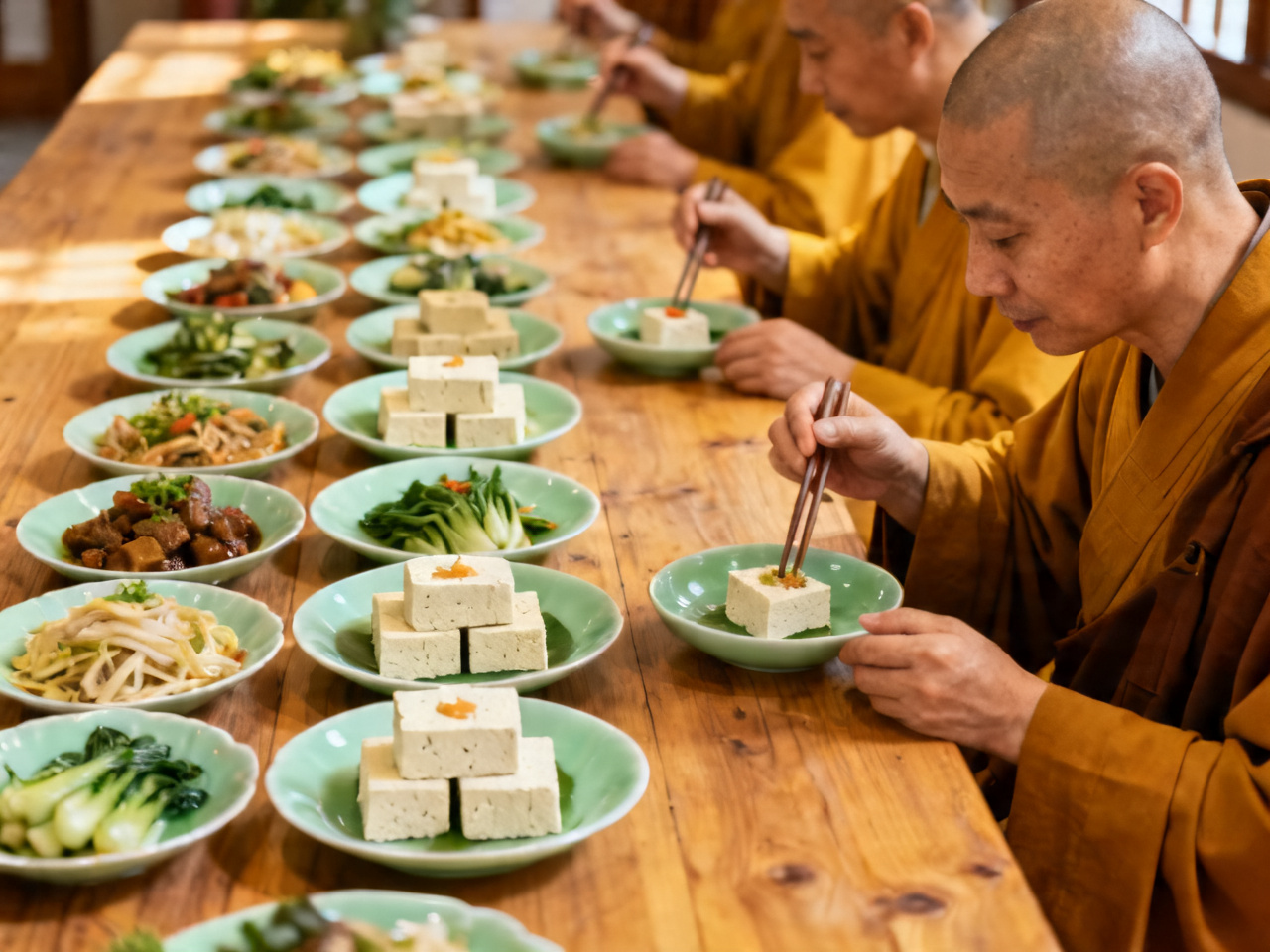
过去十年,中国一线城市的素食餐厅经历了一次明显的升级。上海、北京、成都、广州都出现了一批定位年轻消费者的现代素食餐厅,它们不再以"仿荤"为卖点,而是直接呈现食材本身的质感和味道。
Over the past decade, vegetarian restaurants in China's first-tier cities have undergone a visible transformation. Shanghai, Beijing, Chengdu, and Guangzhou have all seen a wave of modern vegetarian restaurants targeting younger diners — no longer selling themselves on meat imitation, but presenting the textures and flavors of ingredients directly.
上海静安区某家素食餐厅的菜单上,有一道"松茸与豆腐":新鲜松茸切片,和嫩豆腐一起清蒸,只用少量盐和芝麻油调味。价格不便宜,但食客愿意付,因为这道菜的逻辑是清晰的——好食材,简单处理,不需要解释。
On the menu of a vegetarian restaurant in Shanghai's Jing'an District, there's a dish called "matsutake and tofu": fresh matsutake sliced and steamed with silken tofu, seasoned with only a small amount of salt and sesame oil. It's not cheap, but diners pay willingly, because the logic of the dish is clear — good ingredients, minimal intervention, no explanation needed.
实际操作:在普通餐厅怎么吃
对于大多数素食者来说,真正的挑战不是找到素食餐厅,而是在普通餐厅点到真正的素食。几个实用的策略:
For most vegetarians, the real challenge isn't finding a vegetarian restaurant — it's ordering genuinely vegetarian food at an ordinary restaurant. A few practical strategies:
说"我吃素,不吃任何肉、鱼、虾,也不要猪油"比说"我不吃肉"有效得多。后者在中国语境里经常被理解为"不要大块的肉",鸡汤、猪油、鱼露都可能悄悄出现。
Saying "I'm vegetarian — no meat, fish, or shrimp of any kind, and no lard" is far more effective than saying "I don't eat meat." In Chinese culinary context, the latter is often interpreted as "no large pieces of meat," and chicken broth, lard, or fish sauce may quietly appear anyway.
蛋炒饭、素炒时蔬、麻婆豆腐(要求不加肉末)、凉拌黄瓜、蒸蛋羹——这几样在大多数中餐馆都能点到,风险相对较低。
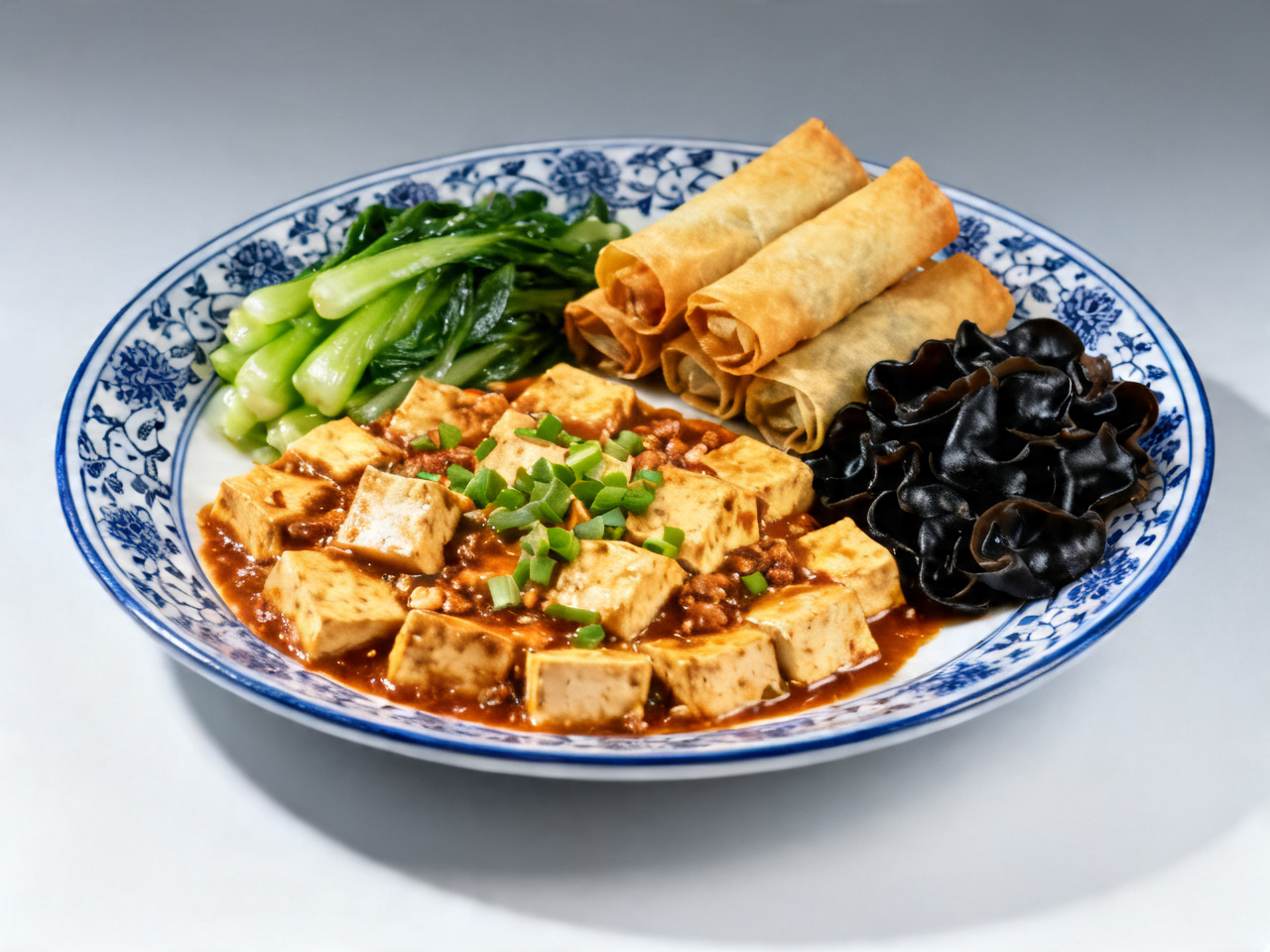
Egg fried rice, stir-fried seasonal vegetables, mapo tofu (request no minced meat), smashed cucumber salad, steamed egg custard — these can be ordered at most Chinese restaurants with relatively low risk.
素食者的城市选择
成都是一个被低估的素食城市。川菜里有大量以豆腐、魔芋、菌菇为主角的菜式,麻辣的调味体系本身就不依赖肉类来建立风味层次。成都的素食餐厅数量在国内城市中名列前茅,而且价格亲民。
Chengdu is an underrated vegetarian city. Sichuan cuisine has a large repertoire of dishes centered on tofu, konjac, and mushrooms, and the mala flavor system doesn't rely on meat to build its layers of taste. Chengdu ranks among the top Chinese cities for number of vegetarian restaurants, and prices are accessible.
厦门的素食文化受闽南佛教传统影响深厚,寺庙斋堂和民间素食馆并存,选择丰富。北京的素食餐厅近年来增长迅速,尤其集中在三里屯、五道口等年轻人聚集的区域。
Xiamen's vegetarian culture runs deep, shaped by Southern Fujian Buddhist tradition — temple dining halls and neighborhood vegetarian restaurants coexist, offering genuine variety. Beijing's vegetarian scene has grown rapidly in recent years, concentrated especially around Sanlitun and Wudaokou where younger crowds gather.
在中国吃素,需要一点耐心,一点准备,和愿意主动沟通的意愿。但一旦找到对的地方,你会发现中国素食的深度,远超过任何一份旅游攻略能够描述的范围。
Eating vegetarian in China requires some patience, some preparation, and a willingness to communicate directly. But once you find the right places, you'll discover that the depth of Chinese vegetarian cuisine extends far beyond what any travel guide can adequately describe.
延伸阅读 / Related Reads
- 中国八大菜系全览 | The 8 Great Cuisines of China
- 第一口就着了魔:一个外乡人在成都的麻辣沉沦 | Spellbound at First Bite: A Stranger's Descent into Chengdu's Heat
- 街头那碗热气,才是中国城市的真实体温 | Street Steam: The Real Pulse of Chinese Cities
- 花椒档案:一个植物学者眼中的四川味觉地图 | The Peppercorn Dossier: Sichuan's Flavor Map Through a Botanist's Eyes
- 华东五城10日经典环线 | 10-Day East China Five-City Loop
- 我第一次把扫码付款练成一种低压力习惯 | How I Turned QR Payment into a Low-Stress Habit
- 在写字楼大厅等外卖时,我第一次明白站得近不一定拿得更快 | Waiting for Takeout in an Office Lobby Was the First Time I Learned That Standing Closer Does Not Mean Getting Food Faster
- 来华支付第一课:现金、银行卡、移动支付怎么搭配 | Payment Setup for China: Cash, Cards, and Mobile Wallets
- 在洛阳看牡丹之外:一座古都的日常层次 | Beyond Peonies in Luoyang: The Everyday Layers of an Ancient Capital
- 黄山山脚那家白灯小馆,让我在上山前先把胃和心都放平了 | A White-Lit Eatery at the Foot of Huangshan Settled Both My Stomach and My Mind Before the Climb
- 走到一半就下城墙,是我在南京学会的第一个正确决定 | Getting Off the Wall Midway Was the First Right Decision I Learned in Nanjing
- 风筝制作与放飞:我第一次看懂中国人为什么把春天送上天空 | Kite Making and Flying: My First Real Understanding of How China Sends Spring into the Sky
- 孔氏南宗家庙门口的豆腐脑,让我重新认识衢州的早晨 | A Bowl of Tofu Pudding Outside the Southern Confucius Temple Changed How I Saw Quzhou Mornings
- 一次小小的药店交流,怎么让我开始信任在中国开口求助这件事 | How a Small Pharmacy Interaction Taught Me to Trust Asking for Help in China
- 在中国高铁站学会像本地人一样换乘 | How I Learned to Transfer Like a Local at a Chinese High-Speed Railway Station
Comments (0)