
下车后先找薄外套,我在六盘水重新学会看天气 | I Looked for a Light Jacket First and Learned to Read the Weather in Liupanshui
2026年6月25日至11月30日 11% AirHelp + Smart 和AirHelp + Pro 訂閱享 11% 折扣(美國無效)
下车后先找薄外套,我在六盘水重新学会看天气 | I Looked for a Light Jacket First and Learned to Read the Weather in Liupanshui
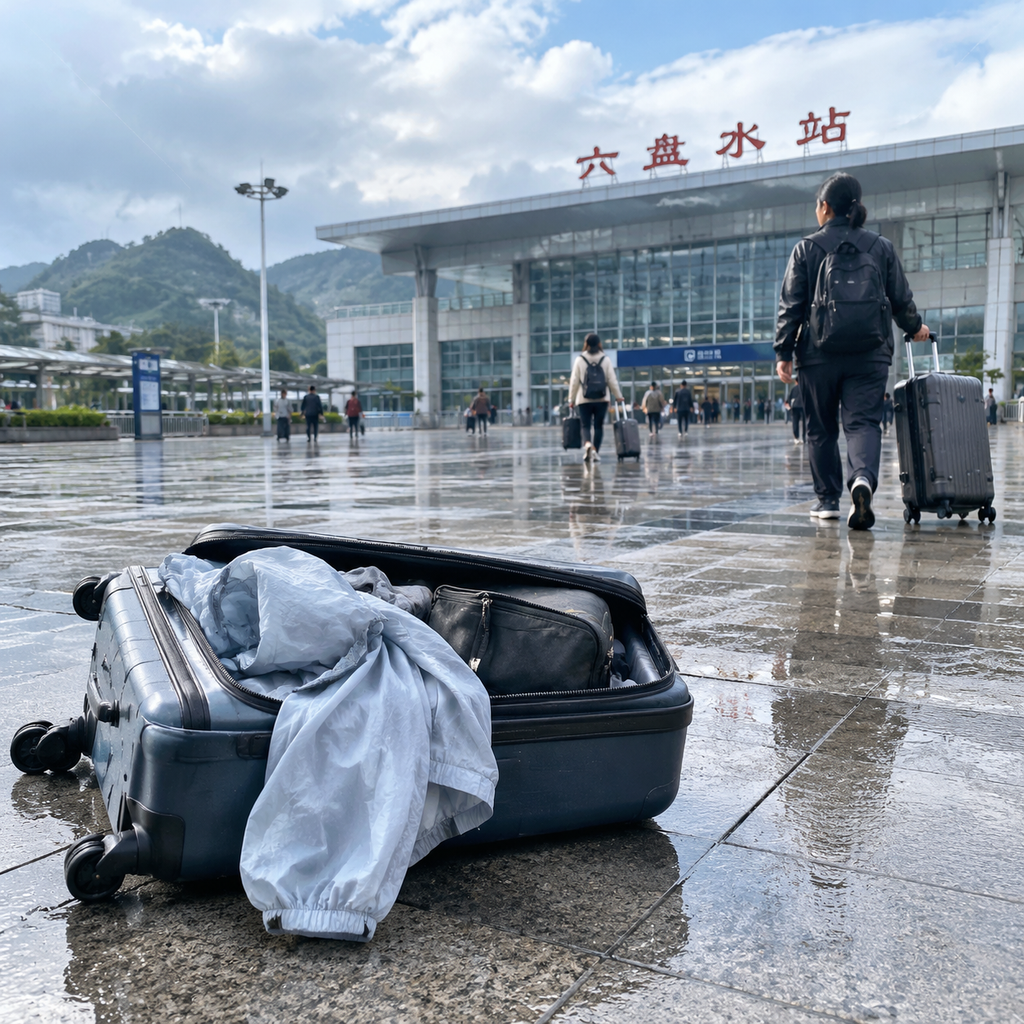
我到六盘水那天,真正先做的事不是找方向,也不是打开地图看景点,而是把行李箱横在站前较宽的一块地面上,蹲下来翻衣服。车门打开以后,带着湿意的风从裤脚往上钻,我原本穿着短袖,手臂很快起了一层细小的鸡皮疙瘩。行李箱里有一件很薄的长袖外套,被我压在洗漱包和一双备用鞋下面。我把洗漱包拎出来,拉链碰到箱框,发出一声干脆的响;旁边的人拖着行李往出口走,我却先把外套披上,再把袖口往手腕处抻平。那一刻我才意识到,六盘水的“凉”不是一句适合写在宣传牌上的形容词,而是会改变我下车顺序的身体信息。高海拔城市的空气让阳光、风、阴影和湿气显得分明,同一天里不同位置的体感也可能相差很远。
When I arrived in Liupanshui, my first task was neither finding the right direction nor opening a map of attractions. I set my suitcase on a broad patch of pavement near the station, crouched down, and searched for a jacket. As the vehicle door opened, damp air slipped upward from my trouser cuffs. I had dressed for warmth elsewhere, but my bare arms quickly tightened with gooseflesh. A light long-sleeved jacket was buried beneath my toiletry bag and spare shoes. I pulled the bag out, heard the zipper tap against the suitcase frame, and draped the jacket over my shoulders before smoothing the cuffs. Only then did I understand that Liupanshui's coolness was not a slogan. It was physical information that changed the order of my first actions. At this elevation, sunlight, wind, shade, and moisture separate sharply, and two nearby places can feel like different climates.
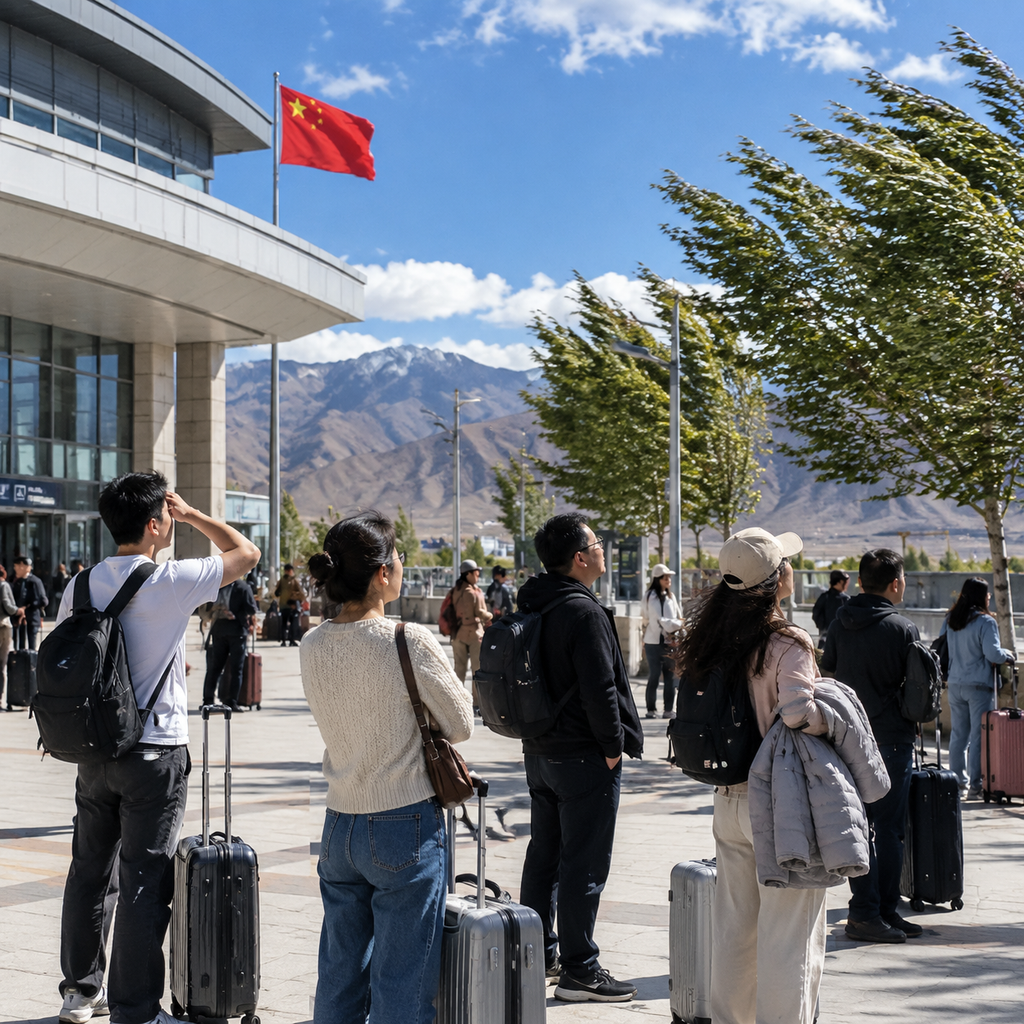
我没有立刻把外套扣紧,因为站前的日光仍然亮,肩膀晒到的地方有一点暖。我先站在出口边,观察了几分钟:有人穿短袖,有人套着针织衫,也有人把薄羽绒服搭在胳膊上;穿着差异并不意味着谁准备得更充分,而是大家对风口、阴影和活动量的应对不同。等候车辆的人大多把衣服放在手边,不急着穿死。这个小观察后来反复帮到我。六盘水的天气不能只看天空是不是蓝,也不能把手机上的一个概括性图标当成路线指令。我会看树梢是否被风持续推向同一个方向,看建筑转角的旗子是不是绷直,看云层有没有从山脊一侧压过来,还会把手伸到背阴处感受墙面附近的冷气。对于要走很多路的人,薄外套不是负担,而是一件随时改变穿法的工具。
I did not fasten the jacket immediately because the sunlight outside the station was still bright, warming the shoulder that faced it. I stood near the exit and watched for several minutes. Some people wore short sleeves, others had knit layers, and a few carried thin down jackets over their arms. The differences did not mean that one person had prepared better; they reflected different responses to wind, shade, and exertion. People waiting for rides kept their layers within reach instead of committing to one way of dressing. That observation became useful repeatedly. In Liupanshui, a blue sky is not a complete forecast, and a single phone icon is not a route instruction. I watched whether the treetops were being pushed steadily in one direction, whether flags at building corners were pulled taut, and whether clouds were sliding over a ridge. I also placed my hand in the shade near a wall. A light jacket became a tool whose way of being worn could change at any moment.
从站前往城区走的第一段路,我故意没有叫车。不是因为这条路一定适合步行,而是我想先知道自己会如何适应这里。拖着箱子走过一段铺装路时,轮子在接缝处发出连续的咔哒声,鞋底落地的节奏比平地快一些,我很快就开始注意呼吸。路并不总是陡,却有缓慢抬升和下降的变化;高处看起来只多了几步,走起来却会把小腿的力量一点点抽走。太阳照着时,我把外套敞开,经过树荫便把前襟合上,风从领口钻进来时再把拉链往上提。这样的穿脱动作让步行速度自然慢下来。我原来以为旅行中的慢是心情选择,到了这里才发现,有些慢是坡度和空气共同安排的。
I deliberately walked the first stretch from the station toward the urban area instead of calling a car. The road might not have been ideal for luggage, but I wanted to learn how my body would adjust. The suitcase wheels clicked over pavement joints, and my feet settled into a quicker rhythm than they would on flat ground. Soon I began monitoring my breathing. The road was not constantly steep, yet its gentle rises and falls accumulated in my legs. A short climb on a map could still draw strength from my calves. In sunlight I left the jacket open; under trees I closed the front, and when wind entered at the collar I pulled the zipper higher. Those small changes slowed my walking without a deliberate decision. I had thought a slower travel pace was a matter of mood. Here, slope and air arranged part of it for me.
街区比我想象中更适合用“走几百米再决定”的方式认识。沿街的店面有小吃店、药房、修理铺、便利店和卖日用品的门面,招牌挨得近,门口却常常留着一小片可以停脚的位置。有人把塑料凳摆到檐下,有人拎着菜从巷口出来,电动车经过时会在路边留下短促的提示声。我注意到楼房之间的空隙,那里往往比主路更早进入阴影;同一条街的向阳侧有晾晒的衣物,背阴侧的墙根还留着潮气。我的路线因此不再是“从甲景点到乙景点”,而是先沿着有遮挡的一侧走,看到身体开始发冷就转进有店面的路段。这样走虽然绕了一点,却让我能随时停进室内,也能从店门口的蒸汽、声音和人流判断附近居民正在怎样使用这条街。
The neighborhoods were best understood through a rule of walking a few hundred meters before deciding what came next. Along the streets I saw snack shops, pharmacies, repair stalls, convenience stores, and small stores selling household goods. Their signs stood close together, while each doorway often left a little room to pause. Plastic stools sat beneath eaves, shoppers emerged from lanes carrying vegetables, and passing electric scooters gave brief warning sounds. I watched the gaps between buildings, which often fell into shade before the main road did. Laundry hung on the sunny side, while dampness remained near the base of shaded walls. My route stopped being a simple line from one attraction to another. I walked the more sheltered side first, turned toward shops when I felt chilled, and used steam, voices, and the density of people at doorways to understand how residents were using the street.
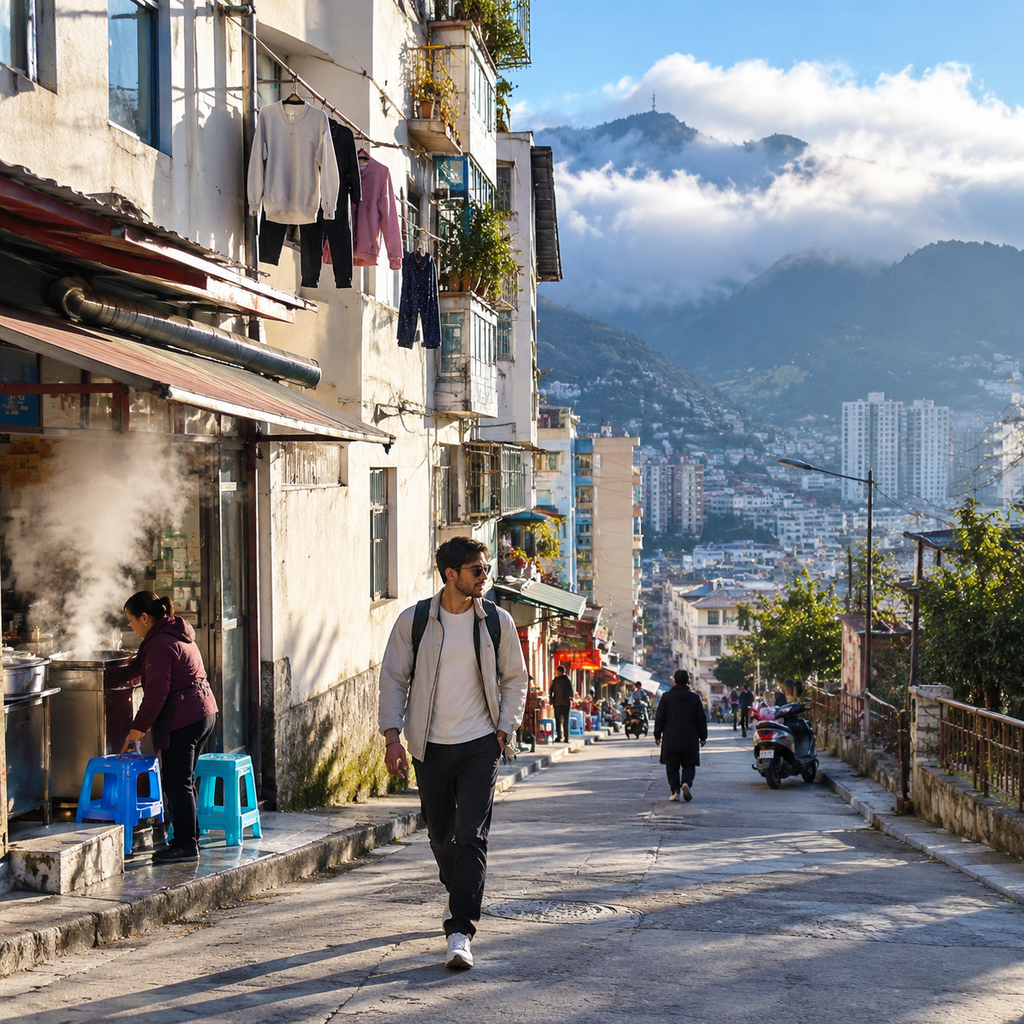
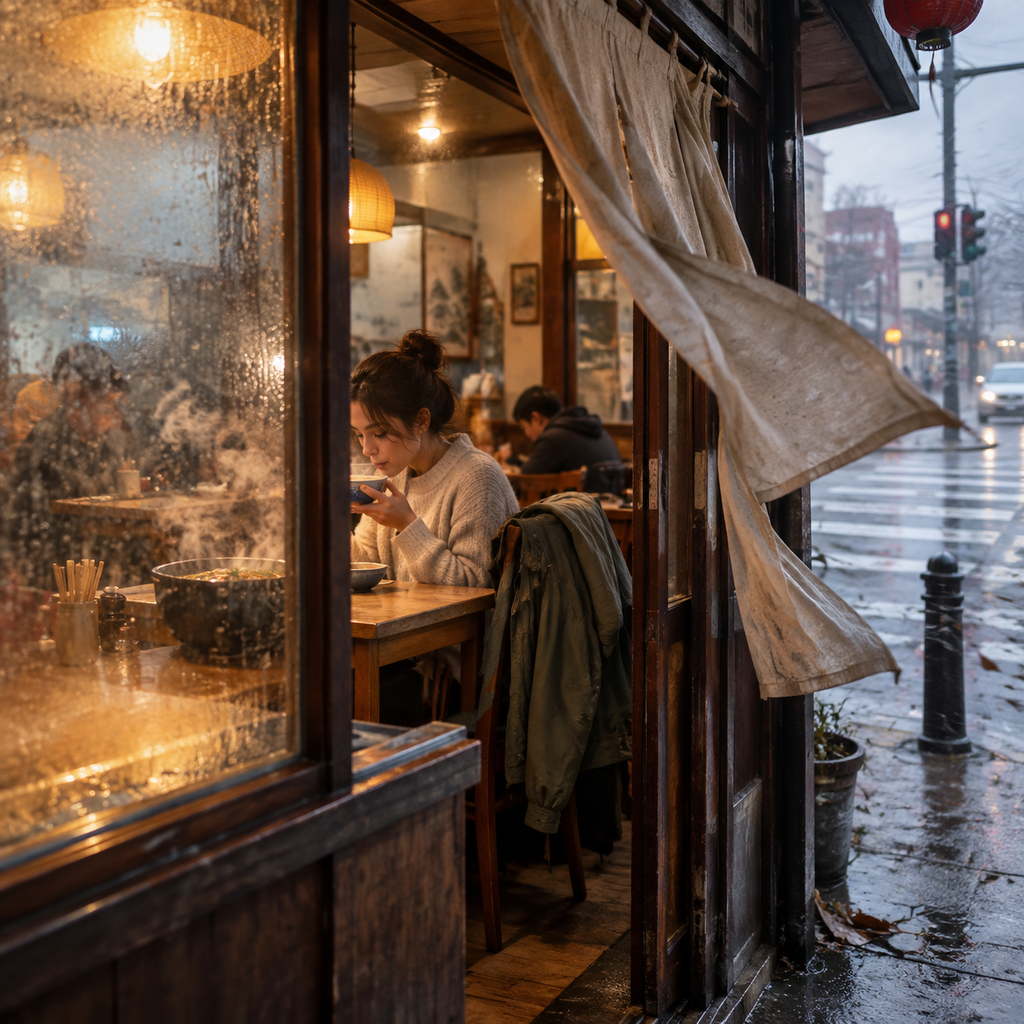
我第一次因为天气改变午饭,是在一片看起来很普通的街区。上午阳光透亮,我本来想继续走远,找一家藏在巷子里的饭馆。临近中午,云把光线压低,风从十字路口横着穿过来,刚才还敞开的外套必须合上。我站在路口看了看远处的坡,意识到再走下去要经过一段没有连续店面的路。那段路在晴天也许很舒服,天气转阴后却没有合适的停脚点。于是我选择先在附近吃饭,把远处的路线留到天气更稳定的时候。店里门帘被人掀开又落下,厨房里有汤水翻动的声音,玻璃上蒙着一层薄雾。我坐下时手指还有风吹后的凉,端来的热食先暖了掌心,再让我愿意把外套脱到椅背上。这个取舍并不浪漫,却比硬着头皮赶路更可靠。
The weather changed my lunch plan for the first time in an ordinary-looking neighborhood. The morning light had been clear, and I had intended to continue toward a restaurant hidden in a lane. Near midday, clouds lowered the light and wind crossed the intersection sideways. The jacket that had been open now had to be closed. I looked at the slope ahead and realized that the next stretch had few continuous shopfronts where I could stop. It might have been pleasant in sunshine, but it offered little shelter under a gray sky. I chose to eat nearby and leave the farther route for steadier weather. The restaurant curtain lifted and fell as people entered, while the kitchen made the muffled sound of liquid simmering. My fingers were still cold when I sat down. The hot food warmed my palms first, and only then did I feel comfortable placing the jacket over the chair.
我没有把那顿饭写成某种“本地必吃”的结论,因为我无法替每一家店确认菜单,也不想给读者制造固定期待。我更愿意描述点餐时的判断:先看桌边其他人的碗里有什么,再看自己能不能吃完;先问清楚是否有不想要的配料,再决定要不要加辣;如果同行人走路已经明显变慢,就不为了追求更远的招牌去排一顿不确定的饭。天气冷下来时,带汤汁、刚出锅或需要趁热吃的食物会让停留更舒服,但这不等于每个人都适合重口味。我的做法是把第一份点得保守,等身体暖起来再补;这样既避免在陌生环境里点多,也保留了继续观察的余地。吃饭从“找名店”变成了恢复体力和重新判断路线的一环。
I did not turn that meal into a claim about a single must-eat dish. I could not verify every shop's menu, and I did not want to create a fixed expectation for other travelers. Instead, I paid attention to the practical decisions behind ordering: I looked at what others were eating, considered what I could finish, asked about ingredients I wanted to avoid, and decided on spice only after that. If a companion's walking pace had already slowed, chasing a famous name farther away did not make sense. On a colder day, a brothy dish or food served straight from the kitchen can make a pause more comfortable, but that is not the same as saying everyone should choose a heavy flavor. I ordered cautiously at first and added only if I still needed more. The meal became a recovery stop and a way to reassess the route.
吃完出来时,太阳突然从云缝里露了一会儿。我把外套脱下来搭在左臂上,刚走过饭馆门口的阴影,肩背就感到一阵热;再往前几步,风把衣角掀起来,我只好把衣服绕在手肘上,免得它拖到路边。天气变化并不总以大雨的方式出现,更多时候是光线变薄、风向改变、阴影移动,让我不断修正衣服和速度。我开始用“体感分段”安排路线:有日照、能看见开门店面的路段适合多走;坡道连续、树荫密、缺少补给点的路段则尽量安排在精力充足时;一旦天空变暗,就优先靠近有室内空间的街道。看天气不再是等待预报给我一个答案,而是边走边收集信号。
When I came outside after eating, the sun briefly appeared through a break in the clouds. I carried the jacket over my left arm, but heat reached my shoulders as soon as I crossed the restaurant's shade. A few steps later, wind lifted the hem, so I looped it around my elbow to keep it from brushing the roadside. Weather changes do not always arrive as dramatic rain. Often they appear as thinning light, a new wind direction, or a moving band of shade, each requiring an adjustment to clothing and pace. I began dividing routes by bodily comfort: sunny streets with visible open shops were good for longer walks; continuous slopes under dense trees, with few places to replenish water or rest, belonged earlier in the day. When the sky darkened, I moved toward streets with indoor spaces. Reading the weather meant gathering signals while walking rather than waiting for one definitive forecast.
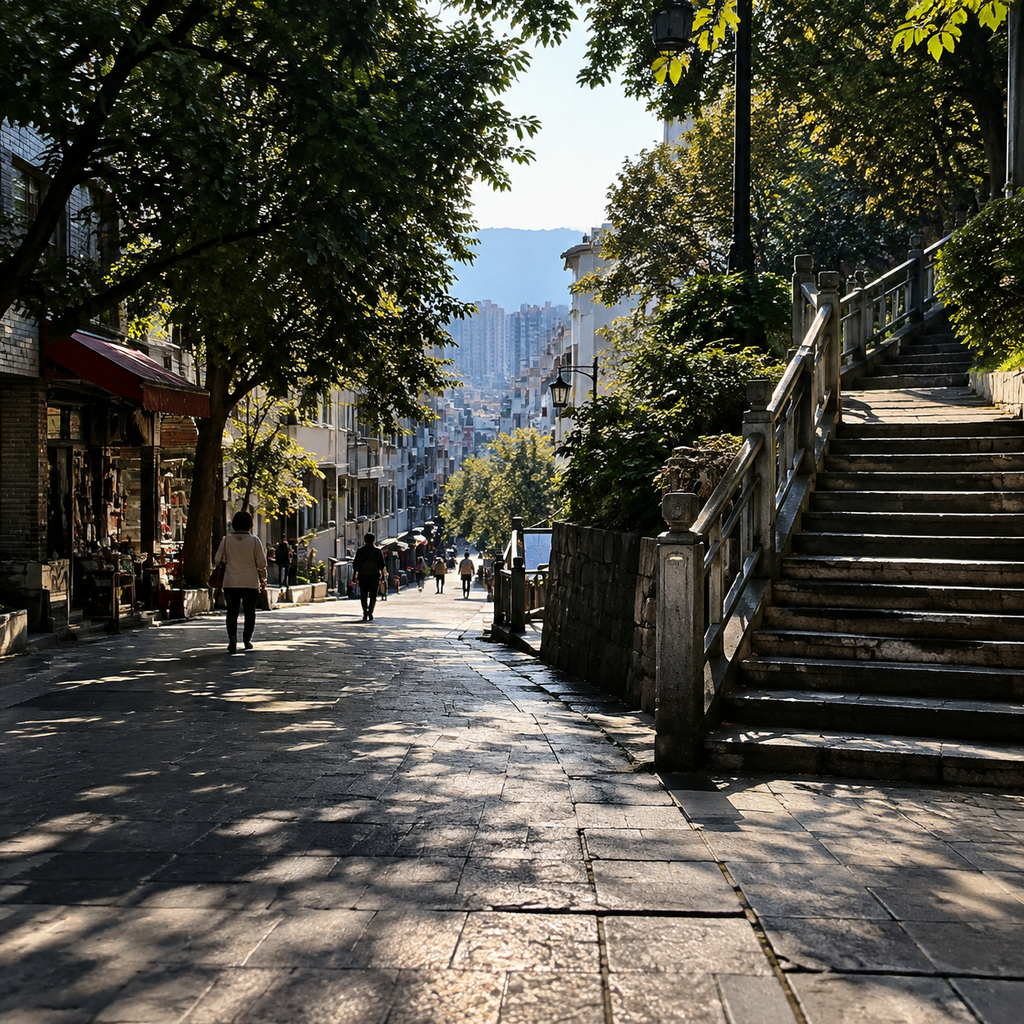
下午我在一个居民活动较多的片区停留,那里没有强烈的景点边界,反而更能看出城市怎样被日常使用。有人在路边慢慢推着车,有人坐在树下说话,店铺门口的纸箱被折平靠在墙边,雨后容易积水的地方铺着颜色不同的砖。我走得很慢,不时停下来让出窄路。经过一处台阶时,我发现向上的台阶被风吹得干爽,下面转角却潮湿发滑,于是把手机收进包里,扶着栏杆一步步走。这样的细节让我不再把高海拔当成一个抽象标签。它具体表现为鞋底对湿砖的反馈、爬坡时胸口的起伏、太阳被云挡住后手背温度的变化,也表现为居民如何选择有檐的座位和背风的门口。
In the afternoon I lingered in an area with plenty of everyday resident activity. It had no dramatic attraction boundary, which made it easier to see how the city was actually used. Someone pushed a cart slowly along the road, people talked beneath a tree, flattened cardboard boxes leaned against shop walls, and differently colored paving marked places that could hold water after rain. I walked slowly and moved aside whenever the lane narrowed. At a set of steps, the upper section felt dry under the wind, while the corner below was damp and slippery. I put my phone away and climbed one step at a time with a hand on the rail. Elevation stopped being an abstract label. It appeared in the feedback from wet paving beneath my shoes, the rise of my chest on a slope, and the change in temperature on my hand when a cloud covered the sun. It also appeared in the way residents chose sheltered seats and wind-protected doorways.
我在街边向一位正在整理门口物品的本地人请教,问的是一个很实际的问题:如果下午还想步行,应该优先往哪一侧走。对方没有给我一条听起来完整的观光路线,只是指了指有连续店面的方向,又提醒我山边一带遇到风时体感会更明显。我没有把这个提醒扩写成关于整座城市的判断,只把它当作当时当地人的经验。临走前我又确认了一遍方向,把对方指的路和手机地图上的街口对上,再出发。这个交流让我意识到,问路时不要只问“哪里好玩”,还可以问“哪段路更背风”“下雨后哪边容易滑”“走累了哪里能坐一会儿”。问题越具体,得到的回答越可能真正帮助我做取舍。
I asked a local person who was arranging items outside a shop a practical question: if I wanted to keep walking that afternoon, which side should I favor? The answer was not a complete sightseeing route. The person pointed toward a direction with a continuous line of storefronts and noted that the sensation of wind could be stronger near the hills. I did not turn that brief advice into a judgment about the whole city. I treated it as local experience relevant to that moment. Before leaving, I checked the direction again by matching the indicated street corner with my phone map. The exchange taught me to ask more useful questions than simply “What is fun here?” I could ask which stretch was sheltered, which pavement became slippery after rain, or where I could sit for a while. Specific questions are more likely to produce actionable choices.
傍晚前的路线是我最容易犯错的一段。光线还没有完全变暗,我便以为可以去看一个更远的街区,结果走到半途,云层低下来,风在楼群之间形成一股不断回卷的气流。我的脚步没有立刻停,但肩膀开始缩起来,外套袖口也被风灌得发凉。我站在一家还开着门的店铺外侧,把背包带重新调紧,喝了几口水,然后在两个选择之间犹豫:继续走,可能错过回程时更舒服的光线;现在折返,则要放弃原来想看的那段路。我最后选择折返,并不是因为那条远路不值得,而是我已经没有足够的体力和确定性去承担来回。旅行路线需要给回程留余量,尤其在坡道、高处和天气变化较快的地方,地图上的距离不能代表身体的成本。
The route before evening was where I made my easiest mistake. The light had not fully faded, so I assumed I could reach a farther neighborhood. Halfway there, the cloud cover dropped and wind began circulating between the buildings. I did not stop immediately, but my shoulders tightened and cold air filled the jacket cuffs. Outside a shop that still had its door open, I tightened my backpack straps, drank some water, and weighed two choices. Continuing might preserve the remaining daylight, but returning later could be less comfortable. Turning back meant giving up the street I had wanted to see. I turned back because my available energy and certainty were no longer enough for the round trip. A route needs reserve capacity for the return, especially on slopes and in exposed areas where conditions can change. Map distance is not the same as bodily cost.
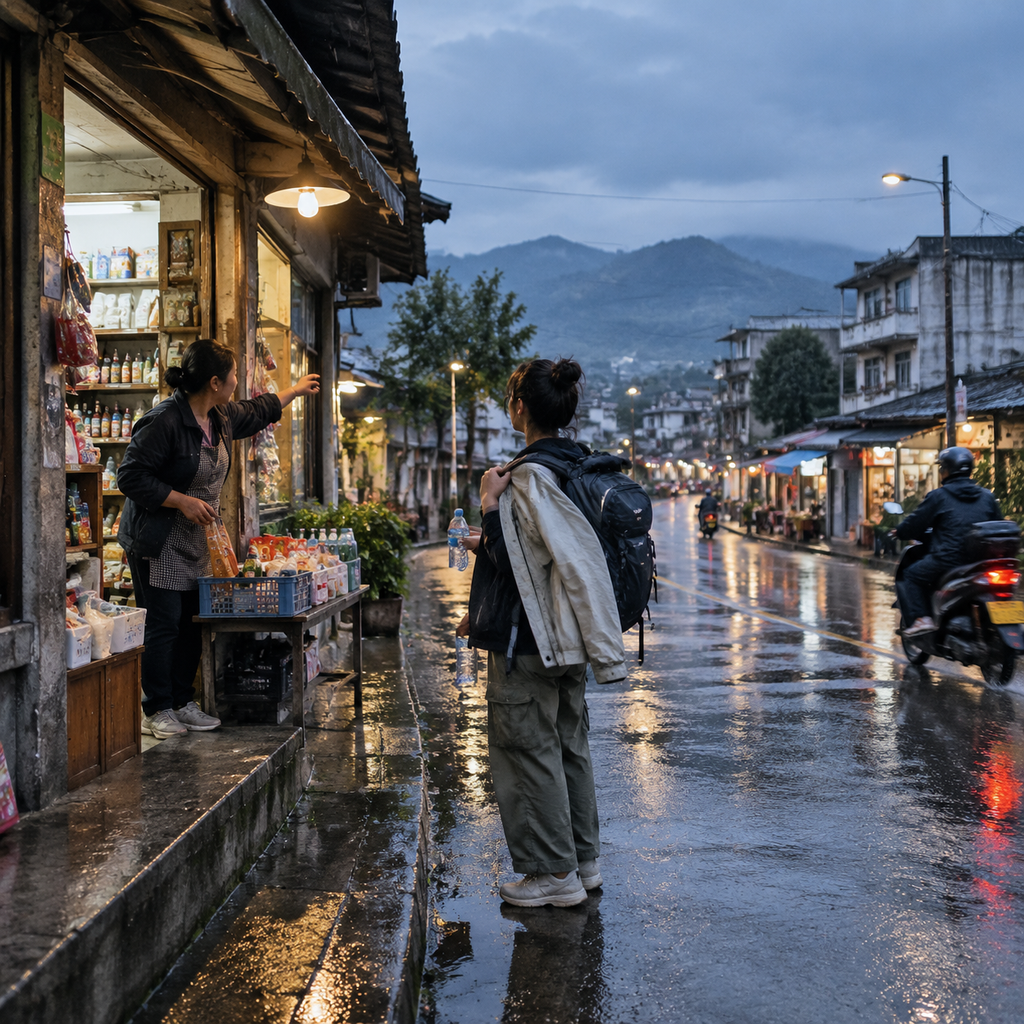
折返路上我进了一家小店补水,也顺便和店里的人聊了几句。我先用自己能说清楚的简单词句描述刚才的风,询问这附近晚上是不是还会更冷。对方没有替我保证天气,只建议我把外套留在手边,并告诉我晚些时候如果想吃东西,沿着有灯、有店的路走会更省心。我觉得这类回答很重要,因为它没有把陌生城市包装成一套确定答案。当地人知道的是自己的生活范围和当下经验,旅行者要做的是听进去,再结合自己的衣服、体力、同行人的状态和交通方式判断。那几分钟的交流还让我学会一个小动作:问完路不要马上转身,先复述自己理解的方向;如果对方点头,我再走,减少因为听错一个路口而多爬一段坡的可能。
On the way back I entered a small shop for water and spoke briefly with the people inside. I used simple words to describe the wind and asked whether the evening might feel colder nearby. No one promised a forecast. Instead, I was advised to keep the jacket within reach, and told that if I wanted food later, following streets with lights and open shops would make things easier. I valued the restraint in that answer. Local people know their daily surroundings and current experience; they cannot guarantee the conditions a traveler will meet elsewhere. I still had to combine their advice with my clothing, energy, companions, and transport. I also learned a small communication habit: after asking for directions, I repeat the route in my own words before turning away. A nod confirms that I have not misunderstood a single corner and added an unnecessary climb.
六盘水的餐饮选择也会被天气牵着走。晴朗时,我愿意沿着街区多看几家,把坐下的时间推迟一点;阴冷或风大的时候,我会优先找门口不直吹、座位不在频繁开合门边的店。进入餐馆后,我先把背包放在不挡人的地方,再观察门帘和窗缝有没有持续进风。吃饭过程中如果发现外套穿着仍冷,我不会为了拍照或赶路线立刻离席,而是把热饮或热汤慢慢喝完,等手指恢复灵活。相反,如果店里暖气或蒸汽让人发热,饭后就要提前把外套搭好,出门前再穿,避免从暖处骤然走到风里。对我来说,好的用餐安排不是把每一家店塞进行程,而是让食物、停留时间和下一段路的体力互相接得上。
Food choices in Liupanshui were also shaped by the weather. Under clear skies I was willing to compare several streets before sitting down. In cold shade or strong wind, I favored a place whose entrance was protected and whose seat was not beside a constantly opening door. Inside, I placed my backpack where it would not block anyone and watched whether wind kept entering through the curtain or window gaps. If my jacket still felt cold during the meal, I did not leave simply to take a photograph or preserve a schedule. I finished a hot drink or broth slowly until my fingers became flexible again. The opposite adjustment mattered too: after a warm room or steamy meal, I laid the jacket ready and put it on before stepping outside, rather than meeting the wind unprepared. A good meal plan connects food, rest, and the strength needed for the next street.
第二天早晨我特意把出门时间放慢,先在住处附近走了一小圈,观察地面、风和店铺开门的情况,再决定要不要去更远的地方。清晨的街面声音比白天少,清扫路面时的刷子声、车辆驶过湿地的摩擦声和远处店门卷帘的声响一层层传过来。空气里有潮湿石材的味道,阳光照到屋檐时,亮处和暗处的界线很清楚。我没有因为天气暂时平静就把外套留在房间,而是折好放进容易拿出的袋子里。这个决定后来派上用场:走到较开阔的地方,风一起来,我可以停下穿衣,不需要翻遍整个行李。旅行准备的价值常常不在于用上多少东西,而在于需要时能不能快速拿到。
The next morning I slowed down deliberately. I took a short walk near where I was staying, watched the pavement, wind, and shop activity, and only then decided whether to go farther. The morning streets carried fewer sounds: a brush sweeping pavement, tires rubbing over damp ground, and the rolling shutters of distant shops. The air smelled faintly of wet stone, and sunlight drew a sharp border between the lit and shaded sides of the eaves. I did not leave the jacket behind merely because the weather seemed calm. I folded it into an easily reached bag. That choice proved useful in an open area where the wind picked up. I could stop and put it on without unpacking everything. Preparation is often valuable not because every item gets used, but because the needed item can be reached quickly.
我后来把步行路线分成三种,而不是按“必去”和“可不去”简单分类。第一种是有连续店铺和遮挡的城市道路,适合天气不稳定时边走边看;第二种是坡道较多、视野开阔的路线,适合出发时体力好、风向较温和的时段;第三种是需要专门前往的远距离线路,最好先确认往返交通和回程体力,不把它和一顿长时间排队的饭安排在同一段最累的时间里。这个分法没有精确到每个街口,也不替别人承诺某条路线一定轻松,因为人的速度、鞋子、年龄和对寒冷的耐受都不同。它只是一个帮助我调整顺序的框架:天气好时把开放路段放前面,天气摇摆时把室内停留点放近处,体力下降时把“还想看”改成“先能安全回来”。
I eventually divided walking routes into three types instead of labeling them simply as must-see or optional. The first type consisted of urban roads with continuous shops and shelter, useful when conditions were unsettled. The second involved more slopes and open exposure, better suited to a time when I had energy and the wind was moderate. The third required a dedicated trip; I needed to consider the return transport and reserve strength, rather than combining it with a long food wait at the hardest part of the day. This framework was not precise enough to promise that any route would feel easy, because pace, footwear, age, and cold tolerance differ. It helped me set an order: place exposed stretches earlier when conditions were good, keep indoor pauses nearby when the sky was uncertain, and replace “I still want to see it” with “I need to return comfortably” when energy fell.
我也开始留意别人怎样处理衣服。公交站边有人把袖子卷到手肘,站到风口后又放下来;骑车的人把外套拉链拉到下巴,停在阳光里时把帽子摘掉;坐在门口聊天的人把椅子朝向背风的一面。没有人专门讲解这些动作,它们像是城市生活里自然形成的微小经验。作为游客,我最容易犯的错是把别人穿什么当成标准答案,或者为了显得轻便而硬撑短袖。更合适的做法是观察动作背后的条件:对方是在移动还是停留,处在阳光还是阴影,附近有没有可以随时进出的室内空间。衣服的厚薄只是表面,真正影响体感的是风、活动量和停留时间。
I also began noticing how other people handled their layers. Near a bus stop, someone rolled their sleeves to the elbows and lowered them again after stepping into the wind. A cyclist zipped a jacket to the chin, then removed a hat while resting in the sun. People chatting outside a shop turned their chairs toward the sheltered side. No one explained these movements; they were ordinary pieces of local experience. My tourist mistake would have been treating someone else's clothing as a universal answer, or refusing a layer in order to look prepared for a warmer place. It was better to observe the conditions behind each action: whether a person was moving or waiting, in sunlight or shade, and close to an indoor refuge. Thickness was only the surface. Wind, exertion, and duration shaped comfort more directly.
在一处街角,我和一位准备收摊的摊主聊到天气对生意的影响。我没有问无法核实的营业时刻,也没有追问具体收入,只听对方说,风大或下雨时,路过的人停留方式会变,热食更容易让人坐下来,但摊位也要更注意挡风和收拾。这个观察让我重新看待街边餐饮:一张塑料桌、一个挡雨棚、一只盛汤的碗,既是吃饭的设施,也是对天气的回应。我点餐时会先看桌面是否干燥、座位是否方便起身、离门口是否太近;如果天色明显变暗,就不把一顿饭拖得过久。与当地人交流最有用的部分,不是得到一条漂亮的故事,而是看到他们怎样把风、雨、客流和工作动作放在同一个判断里。
At a corner I spoke with a vendor who was preparing to close for the day about the way weather affected the stall. I did not ask for an unverifiable opening schedule or exact earnings. I listened as the vendor explained that wind and rain changed how passersby stopped. Hot food could encourage people to sit, while the stall itself needed better protection and quicker cleanup. I began seeing street food differently. A plastic table, a rain cover, and a bowl of soup were not only dining equipment; they were responses to weather. When choosing a seat, I checked whether the surface was dry, whether I could stand up easily, and whether I was too close to the entrance. If the sky darkened, I avoided stretching the meal unnecessarily. The value of the conversation was seeing how wind, rain, customers, and work were judged together.
六盘水并没有让我学会预测每一次天气变化,我学会的是不和天气争辩。出门时我会准备薄外套,鞋子尽量选择踩到湿地仍有抓地力的款式,手机和证件放在不容易被雨水碰到的位置;走路时把坡度、风口、遮挡和补给点一起看,而不是只盯着景点名称;吃饭时给身体留出暖起来和降温的时间;问路时把问题说得具体,并复述答案;安排远线时先想回程,遇到低云、持续风或路面变滑,就及时缩短目标。这些建议听起来都不惊险,却能在实际行走中减少许多不必要的狼狈。高海拔凉爽气候的难处不一定是某个极端瞬间,而是细小变化连续出现,慢慢消耗判断力和体力。
Liupanshui did not teach me to predict every change in the weather. It taught me not to argue with conditions. I carried a light jacket, chose shoes with dependable grip on damp ground, and kept my phone and documents away from places where rain could reach them. While walking, I considered slope, wind exposure, shelter, and places to replenish supplies together instead of staring only at attraction names. At meals, I allowed time for the body to warm and cool. When asking directions, I made the question concrete and repeated the answer. For a distant route, I planned the return first. If low cloud, sustained wind, or slippery pavement appeared, I shortened the goal. None of these choices is dramatic, but together they prevent avoidable discomfort. The challenge of a cool highland climate is often a chain of small changes that gradually drains judgment and energy.
离开六盘水前,我又经过最初下车时走过的那片站前空地。行李箱的轮子再次碾过接缝,声音和第一天差不多,我却已经不会把外套压在箱底。那件薄外套被我放在最上层,手一伸就能摸到;即使阳光正好,我也会把它带在身边。回看这几天,真正改变我的不是记住了几个地名,而是重新理解了“看天气”这件事:先看自己的身体,再看风和阴影,接着看街道是否提供停留条件,最后才决定下一段要不要走远。这样的顺序让路线更有弹性,也让我在陌生街区里少一点逞强,多一点与环境合作的耐心。站前风吹过来时,我把外套披上,拉好一边袖口,才拖着箱子往前走。
Before leaving Liupanshui, I passed through the same open space near the station where I had first arrived. The suitcase wheels crossed the joints with the same familiar clicking sound, but I no longer buried my jacket at the bottom. It sat on top, within immediate reach, and I carried it even when the sunlight looked generous. What changed over those days was not a list of place names. I had revised what it meant to read the weather: begin with the body, then notice wind and shade, check whether the street offers somewhere to pause, and only afterward decide whether to go farther. That order gave my route flexibility and replaced stubbornness with patience. When wind moved across the station forecourt, I put the jacket on, pulled one cuff into place, and rolled my suitcase forward.
如果把这座城市放进一份具体的旅行计划,我会给第一次来的自己留下几条可以现场执行的提醒。抵达后不要急着把所有衣物收进箱子,先在站前或交通节点感受风和阴影,再决定当天穿法;步行安排不要只按地图距离排序,先走有店铺、有檐口、能补水和休息的街段,确认身体状态后再扩大范围;连续坡道和开阔地带尽量不要和长时间等餐叠在一起;吃饭时优先选择自己能承受的口味与分量,热食可以帮助停留,但不能代替保暖;与当地人问路时,询问背风方向、路面情况和回程方式,听完复述;遇到天气转坏,及时改成短线、室内停留或交通衔接,不把“已经走到这里”当作必须继续的理由。建议都要根据当天的风、云、身体和同行者调整,不能把任何经验当作精确预报。
If I were turning the city into a practical plan for a first visit, I would leave myself a few instructions that could be used on the spot. Do not pack every layer away immediately after arrival; feel the wind and shade near the station or transport point before choosing what to wear. Do not rank walks by map distance alone. Start with streets offering shops, eaves, water, and places to rest, then expand after checking your energy. Avoid pairing a long exposed slope with a long wait for food. Choose a flavor and portion you can comfortably handle; hot food can make a pause pleasant, but it cannot replace warm clothing. When asking locals, ask about shelter from wind, pavement conditions, and the return option, then repeat what you heard. If conditions worsen, switch to a shorter route, an indoor pause, or a transport connection. Do not treat the fact that you have already come this far as a command to continue. Every suggestion remains subject to that day's conditions and your own body.
我愿意把下车后寻找薄外套写成这趟旅行最有用的起点,因为它很小,却把许多判断都牵了出来。它让我摸到风从哪里进来,看见阴影怎样切开街道,发现坡度会怎样改变食欲和步速,也让我在问路时不再只寻找景点答案。六盘水的街区并不需要我用夸张的语言证明什么,它只要让我在一个普通路口停下来,把外套从左臂换到肩上,再决定是进店吃一碗热食,还是沿着有灯的路慢慢走回去。旅行有时不是把更多地方装进一天,而是知道什么时候该走,什么时候该坐,什么时候承认风已经替我做出了选择。
I am willing to call the search for a light jacket after getting off the vehicle the most useful beginning of this trip because it was small enough to reveal many larger decisions. It made me feel where the wind entered, see how shade divided a street, and notice how slopes altered appetite and walking speed. It also changed the way I asked for directions: I looked for conditions, not merely attractions. Liupanshui's neighborhoods did not need exaggerated language to prove anything. They only needed to make me stop at an ordinary corner, move the jacket from my arm onto my shoulders, and decide whether to enter for a hot bowl of food or follow a lit street slowly back. Travel is sometimes less about fitting more places into one day than knowing when to walk, when to sit, and when to accept that the wind has already made part of the decision.
我还发现,所谓高处和低处的差别,不一定要靠明显的山路才能感觉出来。站在一段开阔的上坡路上,风会把衣服贴到背上;转入楼房夹出的窄巷,风声变小,空气却可能因为背阴而更湿冷。我的手掌在开阔处会很快失去暖意,握住手机时指尖反应变慢,到了有阳光的墙边又渐渐恢复。我因此不再把“到了高处就看远景”当作唯一目标,有时会在视野最开阔的位置停几分钟,再沿着背风方向下行。拍照、看景和保留体力之间需要取舍,风景不会因为我少拍一张就消失,但手指冻僵后,回程找路和操作手机都会变得麻烦。
I learned that the difference between exposed and sheltered ground did not require a dramatic mountain trail. On an open uphill stretch, wind pressed the fabric against my back. In a narrow lane between buildings, the noise of wind faded, yet the shade could feel damper and colder. My palms lost warmth quickly in the open, and my fingertips responded slowly when I held my phone. Beside a sunlit wall, they recovered little by little. I stopped treating every high point as a command to chase a view. Sometimes I paused at the most open spot, then descended along the protected side. Photographs, scenery, and energy compete for the same small reserve. Missing one picture is harmless; numb fingers make navigation and phone use genuinely harder.
有一场短暂的雨让我重新检查随身物品的摆放。雨点先落在外套肩头,声音很轻,接着路边的石面颜色变深,店铺檐下的人向里收了半步。我没有急着把手机举出来查地图,而是先把背包拉链拉紧,把纸巾和证件移到内层,再确认鞋底踩上去是否打滑。雨不大时,继续走可能比站在狭窄门口堵住别人更合适;雨势变密时,我会找可以合法停留的室内空间,等路面和视线好一些再决定。电子地图很有用,但雨里频繁掏手机会让手和屏幕都变湿,也容易错过脚下的高低差。我的做法是提前记住下一处明显的转角,走到那里再拿出手机核对,而不是每隔几步就低头。
A brief shower made me reorganize everything I carried. Drops first tapped softly on the shoulders of my jacket. Then the paving stones darkened, and people under the eaves stepped inward by half a pace. I did not immediately hold up my phone to check the map. I tightened the backpack zipper, moved tissues and documents into an inner pocket, and tested whether my shoes were slipping. When rain was light, continuing could be kinder than blocking a narrow doorway. When it thickened, I looked for an indoor place where I could wait without obstructing anyone. Maps remained useful, but repeatedly taking out a phone in rain wet both hand and screen and made it easier to miss uneven ground. I began remembering the next obvious corner in advance and checking the map there instead of looking down every few steps.
如果同行者和我一起走,我会把“冷不冷、累不累”说得更具体,而不只问一句“还能不能走”。有人可能只是手冷,却仍愿意慢慢看街;也有人肩膀发紧、说话变少,已经需要尽快找室内位置。我们会把下一段拆成很小的目标:先走到有灯的路口,再决定是吃饭、乘车还是继续。这样安排会牺牲一点速度,却能避免一个人为了不拖累别人而沉默硬撑。我自己也学会主动说出要停下来,不再等到呼吸明显变重才承认坡度超出了预期。旅行中最难改的不是路线,而是“既然计划了就必须完成”的心理惯性。天气给出的信号和同行者的状态都应该有权修改计划。
When traveling with someone else, I ask more specifically than “Can you keep walking?” One person may have cold hands but still want to look around slowly. Another may have tense shoulders and grow quiet, which can mean an indoor pause is already needed. We break the next stretch into small targets: reach the lit intersection first, then choose between food, transport, or continuing. This sacrifices a little speed and prevents someone from silently enduring discomfort to avoid slowing the group. I also learned to say that I needed a pause before my breathing became obviously heavy. The hardest thing to revise is often not the route but the belief that a plan must be completed once written. Weather signals and a companion's condition deserve the authority to change it.
夜里走街区时,我不把“灯亮”简单等同于“适合久走”。我会看亮着的店面是不是连续,路边有没有突然收窄的地方,地面反光是否掩盖了积水或台阶;经过人声较少的路段,我会提前把目的地和回程交通看清楚,避免站在风口临时翻找信息。餐馆门口的蒸汽、便利店的白光、还在收拾货物的店家,都说明附近仍有日常活动,但这不代表我应该打扰别人或把私人空间当作休息区。我会选择靠近公开营业场所、方便转身离开的路线,外套拉好,手机保持有电。这样的夜间判断并不追求把城市想象得危险,而是承认光线、风和疲劳会叠加,让我需要更早做决定。
At night I did not treat every bright street as suitable for a long walk. I checked whether open shops formed a continuous line, whether the pavement narrowed unexpectedly, and whether reflected light hid puddles or steps. Before entering a quieter stretch, I confirmed the destination and return transport so I would not have to search in an exposed place. Steam at a restaurant door, the white light of a convenience store, and a shopkeeper still arranging goods all indicated ordinary activity nearby, but they did not give me permission to intrude or use private space as a resting area. I stayed near public businesses and routes that allowed an easy turn back, kept the jacket closed, and conserved phone battery. This was not an attempt to imagine the city as dangerous. It was an acknowledgment that darkness, wind, and fatigue compound each other.
我离开前做的最后一个动作,是把薄外套的口袋逐一摸了一遍:车票或证件没有落下,纸巾没有被雨水打湿,口袋里的小物件没有因为反复穿脱而掉在店里。这个检查看起来琐碎,却对应了几天里所有的天气调整。外套曾经挂在椅背、缠在手肘、披在肩上,也曾被我塞进背包最外层;如果没有固定放置习惯,东西很容易随着路线变化散开。我把最常用的物品放在同一侧,把不需要频繁拿出的东西收进内袋,再拖着箱子走向交通节点。那时我已经接受一个事实:六盘水的行走不适合被写成一条笔直的线。它更像是由阳光、风、店檐、热饭、坡道和问路组成的连续选择,每一步都可以根据现场重新安排。
Before leaving, I ran my fingers through every pocket of the light jacket. My documents were still there, tissues had stayed dry, and no small item had fallen out in a restaurant during the repeated changes of clothing. The check looked minor, but it connected to every weather adjustment I had made. The jacket had hung over a chair, wrapped around my elbow, rested on my shoulders, and been tucked into the outer pocket of my backpack. Without a consistent place for small belongings, they could scatter as the route changed. I kept frequently used items on one side and less-needed items inside, then rolled the suitcase toward the transport point. By then I had accepted that walking in Liupanshui was not a straight line. It was a chain of choices involving sunlight, wind, eaves, hot food, slopes, and conversations, with every step open to revision.
对于第一次来的人,我会把行李准备得轻一点,却把衣物层次准备得完整一点。薄外套最好放在随身包或行李最上层,里面穿容易卷起的长袖,外面不必一开始就套得很厚,这样在日照和阴影之间移动时可以逐层调整。脖子、手腕和脚踝最容易先暴露在风里,我会检查袖口能不能收住,鞋袜是否干燥,裤脚会不会拖到湿地。雨具也不要只在看到乌云后才寻找,忽然下雨时人会本能地往最近的檐下挤,窄门口反而容易互相挡路。提前把轻便雨具放在能迅速取出的地方,既方便自己,也不必在别人门前长时间翻包。高海拔旅行的准备不是把衣服越带越厚,而是让身体在不同体感之间有可操作的余地。
For a first visit, I would keep the luggage light but make the clothing layers complete. I would put the light jacket in a day bag or on top of the suitcase, wear a long-sleeved layer that could be rolled up, and avoid beginning in the heaviest coat so I could adjust between sun and shade. Wrists, ankles, and the neck often meet wind first, so I would check whether cuffs close securely, socks are dry, and trouser hems stay clear of wet ground. Rain gear should not be buried until dark clouds appear. When rain starts suddenly, people instinctively crowd beneath the nearest eave, and a narrow doorway can become difficult for everyone. Keeping a compact rain layer within quick reach helps without forcing me to unpack in front of someone else's entrance. Highland preparation is not about carrying the thickest clothes; it is about giving the body room to adjust.
我还会给一天的行程留出一个不需要预约、不依赖某家店一定开门的空档。天气好的时候,这个空档可以用来绕进居民区看街巷;风雨起来时,它就变成室内休息、提前用餐或返回交通节点的时间。很多旅行计划的问题,不是安排得太少,而是每个时间格都已经被占满,任何一阵雨、一次问路或体力下降都会让后面的安排一起往后推。我在六盘水走过之后,更愿意把远处目标写成“条件合适再去”,把附近街区写成随时可以完成的观察。这样既不把未完成当作失败,也不会为了追赶一个地点,错过真正能看见当地生活的店门、台阶、树荫和人声。
I would also leave one part of the day open, without depending on a reservation or assuming that a particular shop would be open. In good weather, that time could be used to wander through residential streets. In wind or rain, it could become an indoor rest, an early meal, or a return to a transport point. The problem with many travel plans is not that they contain too little, but that every time slot is occupied. A shower, a longer conversation, or tired legs then push the entire plan backward. After walking in Liupanshui, I preferred to mark distant goals as “go only if conditions allow” and nearby streets as reliable observation space. An unfinished destination did not feel like failure, and chasing it did not make me miss doorways, steps, shade, and voices that revealed daily life.
Public Source Notes
本文为基于个人叙事与一般旅行常识撰写的原创离线草稿,未引用无法核实的网址、精确天气数据、价格、营业时间或未经确认的人物原话。建议出行前通过官方气象、交通和当地公共服务渠道核对实时信息。
- 如果八月只能挑几站,笔者会把海风、馆藏和夜路留给这三座城 | If August Only Leaves Room for a Few Stops, the Writer Would Save Sea Breeze, Museums, and Night Walks for These Three Chinese Cities
- 在绍兴,一张公交卡小票和一座小桥一起把我领进了城 | In Shaoxing, a Transit Receipt and a Small Bridge Led Me into the City Together
- 花椒档案:一个植物学者眼中的四川味觉地图 | The Peppercorn Dossier: Sichuan's Flavor Map Through a Botanist's Eyes
- 婚礼与节庆中的传统服饰 | Traditional Dress in Chinese Weddings & Festivals
- 低价团不是不能报,但合同要比宣传页更重要 | Cheap Tours Are Not Always Bad, but the Contract Matters More Than the Brochure
- 在写字楼大厅等外卖时,我第一次明白站得近不一定拿得更快 | Waiting for Takeout in an Office Lobby Was the First Time I Learned That Standing Closer Does Not Mean Getting Food Faster
- 来华旅行必备配件 | Best Travel Accessories for China
- 中国旅游交通换乘攻略 | China Transit & Transfer Guide
- 中国自驾游完全攻略 | Complete Self-Drive Travel Guide in China
- 一块豆腐的两千年旅程 | A Block of Tofu's Two-Thousand-Year Journey
Comments (0)