
在写字楼大厅等外卖时,我第一次明白站得近不一定拿得更快 | Waiting for Takeout in an Office Lobby Was the First Time I Learned That Standing Closer Does Not Mean Getting Food Faster
在写字楼大厅等外卖时,我第一次明白站得近不一定拿得更快 | Waiting for Takeout in an Office Lobby Was the First Time I Learned That Standing Closer Does Not Mean Getting Food Faster
我第一次在上海一栋写字楼大厅等外卖时,以为最有效率的办法就是站在门口最近的位置。那是一个闷热的工作日下午,空调风从玻璃门里往外卷,门口地垫被来回进出的人踩得微微翘起。大厅一侧摆着临时外卖架,塑料袋、纸袋和咖啡杯套层层叠在一起,偶尔有汤面盒子透出一点热气和葱花味;另一边是闸机和电梯口,刷卡声、脚步声、骑手电话里重复的“我到了,你下来拿一下”混在一起。午饭高峰刚过,但取餐的人还在一波一波地下楼。作为一个刚开始适应中国写字楼生活细节的外国人,我很自然地觉得,只要我贴近大门和外卖员,第一时间看见自己的那一单,就能最快拿走。
The first time I waited for takeout in the lobby of an office tower in Shanghai, I assumed the most efficient strategy was to stand as close to the entrance as possible. It was a humid afternoon. Air-conditioning spilled outward through the glass doors, and the floor mat by the entrance had curled slightly from so many shoes passing over it. Along one side of the lobby stood a temporary takeout shelf crowded with plastic bags, paper bags, and coffee carriers; now and then a box of noodle soup released a trace of steam and scallion smell. On the other side were the turnstiles and elevators, layered with card-swipe sounds, footsteps, and delivery riders repeating into their phones, “I’ve arrived, come down and get it.” The main lunch rush had just passed, but waves of people were still coming downstairs for pickups. As a foreigner only beginning to understand the small habits of Chinese office-building life, it seemed obvious to me that if I stayed right by the door and close to the rider, I would spot my own order first and get it fastest.
结果我很快就发现,自己站的位置正好最碍事。那天我盯着手机上的“骑手即将到达”,下意识堵在门边,身体还往前探,生怕错过。不到两分钟,后面进来的人就开始从我身边侧着挤过去:有人刚从外面抽烟回来,有人抱着文件夹要去前台登记,还有一个外卖员双手提着好几单,门一开就差点和我撞上。前台一位女生看了我一眼,语气很客气,只轻声说:“可以去侧边等,别堵门口。”那句话一点也不重,却让我立刻往旁边退了几步。也就是那几步距离,让我忽然意识到,在这种写字楼大厅里,等外卖最重要的事情并不是离骑手最近,而是别站在所有人都必须经过的那条线上。
I discovered very quickly that I had chosen exactly the most obstructive place to stand. I was staring at the message on my phone saying the rider was about to arrive, and without thinking I planted myself by the door, leaning forward slightly so I would not miss anything. Within less than two minutes, people coming in behind me were already squeezing around my body at an angle. Some had just come back from smoking outside. Some were carrying folders to register at the reception desk. One rider holding several orders in both hands nearly collided with me the moment the door opened. A receptionist glanced over and, in a very polite voice, said only, “You can wait at the side. Just don’t block the entrance.” The sentence was gentle, but it made me step away immediately. And those few steps were enough to make me realize that in this kind of office lobby, the most important thing when waiting for takeout is not being physically closest to the rider. It is staying off the line that everyone else is required to pass through.
我退到侧边以后,视野反而更清楚了。那里通常会有一小块默认等待区,靠近墙、外卖架或立柱,不挡门,也不顶着闸机。站在那个位置,你能同时看见进门的骑手、架子上的单号和手机上的取餐信息,而且身体不会一直被门流推着走。我观察了一会儿,发现熟悉这里的人几乎都这样做:先下楼,站到边上,看一眼姓名或尾号,确认自己的那一单到了再上前;如果骑手还在找单,他们也不会围成一圈逼近,而是留一点空间让对方把餐放稳、把号码念完。原来写字楼大厅等外卖的节奏,不是“谁抢前面谁赢”,而是每个人稍微退开一点,反而让信息和人流都更顺。
Once I moved to the side, my view actually became clearer. There was usually a kind of unofficial waiting zone near the wall, the takeout rack, or a pillar—close enough to observe, but not blocking the entrance or pressing into the turnstiles. From there, I could see riders entering, read the numbers on the bags, and check my phone at the same time, without being physically pushed by the current of the door. I watched for a while and noticed that people familiar with the place almost all behaved this way: they came downstairs, stood to the side, checked the name or final digits, and stepped forward only when they confirmed the order was theirs. If the rider was still sorting bags, nobody crowded into a ring around him. People left enough space for him to set things down, read out numbers, and finish organizing. I realized that the rhythm of waiting for takeout in an office lobby is not “whoever gets closest wins.” It is that everyone steps back a little, and that in turn makes both information and foot traffic move more smoothly.
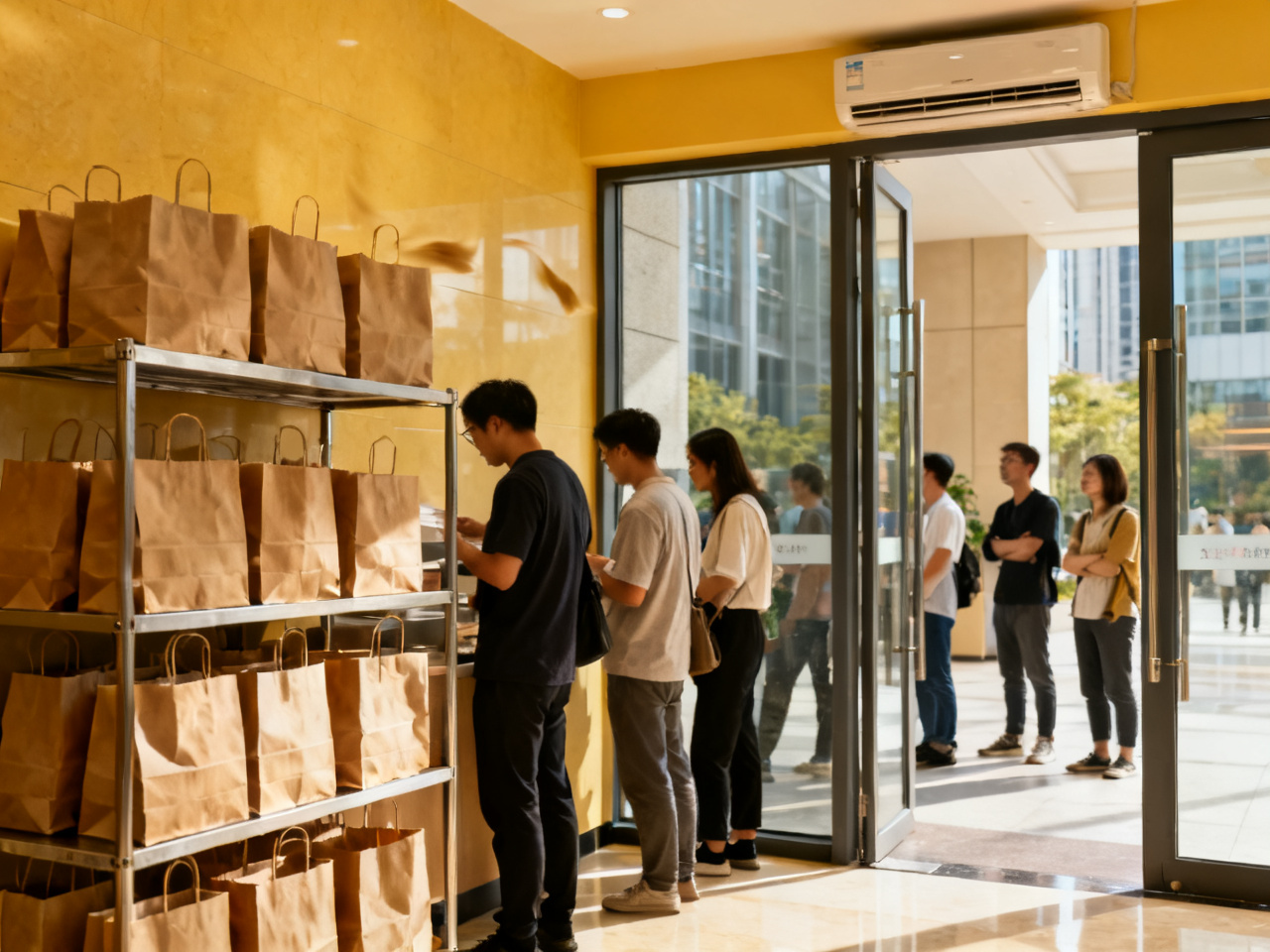
后来我还注意到,很多大厅里的外卖混乱,其实不是因为人太多,而是因为太多人都以为“我只挡一会儿没关系”。一个人站在门缝边等,另一个人挤在外卖架正前方核对手机,第三个人拿到餐后还站在原地拆吸管、翻筷子、看是不是少了酱包,空间马上就会打结。相反,那些运转顺的大厅往往有一套大家默认遵守的小动作:拿到餐的人立刻闪到旁边再检查;等餐的人把中间留给刚进门的骑手;前台如果提醒去侧边等,大家也不会争辩;如果袋子太多,骑手会先把同一楼层或同一公司的单子分开排。没有谁专门培训过所有人,但很多人都知道,楼里本来就不是只服务你这一单。
Later I noticed that much of the apparent chaos around office-lobby takeout is not caused by too many people, but by too many people assuming that “it’s fine if I block things just for a moment.” One person waits in the crack of the doorway. Another stands directly in front of the takeout shelf checking their phone. A third person gets their meal and then remains in place opening the straw, checking the chopsticks, and seeing whether a sauce packet is missing. Very quickly, the space knots up. By contrast, lobbies that run smoothly usually depend on a set of tiny default gestures: people who receive their meal step away immediately before checking it; people still waiting leave the center open for riders just coming through the door; if reception tells them to stand to the side, they do not argue; and if there are many bags, riders often separate orders by floor or company before calling them out. Nobody has formally trained everyone in this system, but many people already know that the building is not there to serve only their single order.
我有一次亲眼看见一个骑手把十几袋外卖放到架子上,正低头找其中一单,旁边几个人全都同时往前凑,结果谁也看不清,反而把他挡得更难整理。最后还是前台说了一句“大家退一点”,场面才重新松开。那时候我一下就明白了,站得近不一定更快,很多时候恰恰相反。你越贴近,骑手越不好报号;你越堵在前面,真正属于你的那一袋越不容易从一堆袋子里被看见。尤其在中国这种高密度写字楼环境里,效率往往不是靠个人抢位置,而是靠大家共同给流程留出操作空间。
Once I watched a rider place more than ten takeout bags on a rack and lower his head to search for one particular order. Several people around him all leaned forward at the same time, and suddenly nobody could see clearly while he himself had even less room to sort. Only after the receptionist said, “Everyone step back a little,” did the scene loosen again. That was when I understood it completely: standing closer does not necessarily make things faster. Very often it does the opposite. The more tightly you press in, the harder it becomes for the rider to call out numbers. The more you occupy the front, the harder it becomes for your own bag to emerge from the pile. Especially in China’s dense office-building environment, efficiency often comes not from each person fighting for position, but from everyone together leaving enough operational space for the process to work.
我后来也学会了几个很简单的办法:下楼前先把手机取餐信息打开,不到门口才临时找;到了大厅先看是架上自取还是骑手手发;如果一时没找到,不在最中间硬站着,而是先退到边上再确认;拿到餐以后立刻离开主通道,去电梯边或角落看有没有漏单、漏吸管。这些动作并不复杂,却让我每次取餐都顺了很多。更重要的是,它们让我从“我怎么最快拿到我的午饭”这个单一角度,慢慢转向“我怎么拿饭又不让这个大厅更乱”这个更完整的角度。
I later learned a few very simple methods: open the pickup information on my phone before going downstairs instead of searching for it at the entrance; once in the lobby, first determine whether the order is self-pickup from the rack or handoff from the rider; if I cannot find it immediately, do not plant myself in the center but step aside to recheck; and after receiving it, leave the main passage at once and move toward the elevator side or a corner before checking for missing items or utensils. None of these actions are complicated, yet they have made every pickup much smoother for me. More importantly, they shifted my perspective from the narrow question of how I could get my own lunch fastest toward the fuller question of how I could get it without making the whole lobby messier.
顺着这个判断方法继续看,中国写字楼里的中午节奏和中国公共空间里的站位感也能互相印证。
Following the same way of reading a scene, 中国写字楼里的中午节奏 and 中国公共空间里的站位感 also reinforce this habit from other angles.
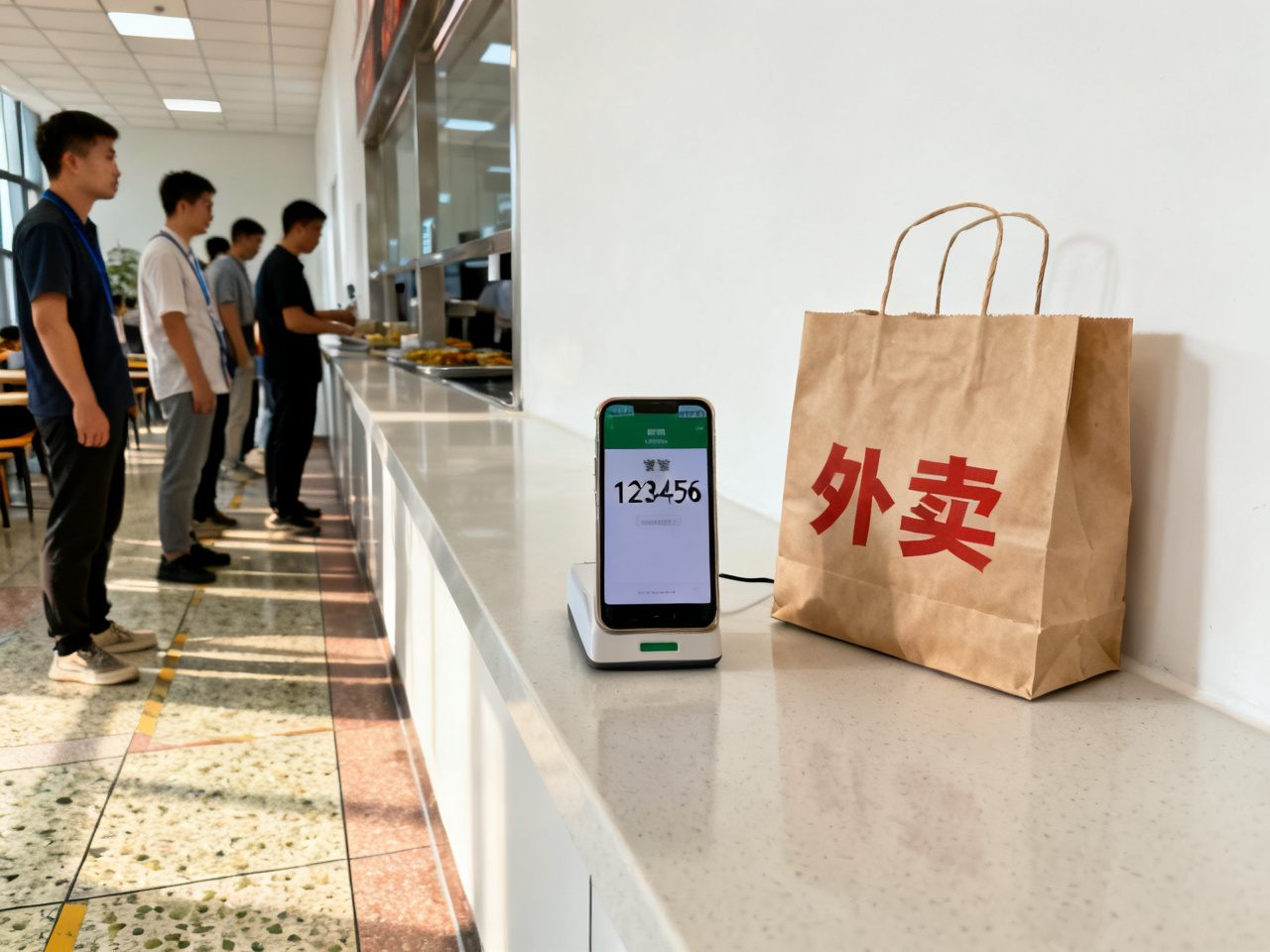
现在如果有刚进中国写字楼工作的外国朋友问我,等外卖最容易忽略的规矩是什么,我会说,就是那一步侧身。别堵门,别堵架子,别堵骑手落袋子的手边。你站远一点,不代表你落后,很多时候恰恰说明你读懂了这里的动线。对我来说,写字楼大厅等外卖这件小事特别能说明中国日常公共空间的一种逻辑:每个人都想快,但真正的快不是把自己塞到最前面,而是知道什么时候应该把正中间让出来。自从学会站到边上看号码以后,我拿外卖反而更少出错,也更少心烦。说到底,我学到的不只是取餐技巧,而是一种很实用的城市直觉——在拥挤的地方,给流程留路,往往比给自己抢路更有效。
Now, if a foreign friend starting work in a Chinese office tower asks me what rule about waiting for takeout is easiest to overlook, I would say it is that one sideways step. Do not block the door. Do not block the rack. Do not block the rider’s hands as he places the bags down. Standing a little farther away does not mean falling behind. Very often it means you have understood the flow correctly. To me, this tiny act of waiting for takeout in an office lobby reveals something larger about everyday public space in China: everyone wants speed, but real speed does not come from shoving yourself into the front. It comes from knowing when to clear the center. Since learning to stand to the side and watch the numbers from there, I make fewer pickup mistakes and feel less irritated. In the end, what I learned was not only a food-collection trick, but a very practical urban instinct: in crowded places, leaving room for the process is often more effective than fighting to leave room only for yourself.
- 重庆让国外大博主上头的,从来不只是洪崖洞那一层灯火 | What Hooks Major Foreign Creators in Chongqing Is Never Only the Glow of Hongyadong
- 中国住宿避坑指南:酒店民宿青旅怎么选 | Accommodation in China: Hotels, B&Bs & Hostels
- 西北大环线自驾攻略:青海甘肃10日 | 10-Day Northwest Loop: Qinghai & Gansu Road Trip
- 五月第一次去北京,我是怎么把暴走行程改成舒适慢线的 | My First Beijing Trip in May: How I Turned an Exhausting Route into a Gentle Slow-Paced Plan
- 我在上海小学门口等放学时,第一次真正听懂“你吃了吗”为什么不是在问饭 | Waiting Outside a Shanghai Primary School, I Finally Understood Why “Have You Eaten?” Is Not Really About Food
- 从武夷山下来,在茶桌上理解岩韵 | Understanding Rock Rhyme at a Wuyi Tea Table
- 漆扇体验之后,我第一次发现“流动的颜色”也能有秩序 | After Trying Lacquer Fans, I Realized for the First Time That Flowing Color Can Also Have Order
- 中国高铁怎么买票?外国人全流程指南 | How to Buy China's High-Speed Rail Tickets: A Complete Guide for Foreigners
- 中国景区门口的安检队伍,其实有自己的节奏 | Security Lines at Chinese Scenic Spots Have Their Own Rhythm
- 在大同的风里看石窟与城墙 | Reading Grottoes and City Walls in Datong's Wind
Comments (0)