
南京城墙夜走笔记:历史不是展板,是脚下的坡度 | Night Walk on Nanjing City Wall: History Felt Through the Slope
南京城墙夜走笔记:历史不是展板,是脚下的坡度 | Night Walk on Nanjing City Wall: History Felt Through the Slope
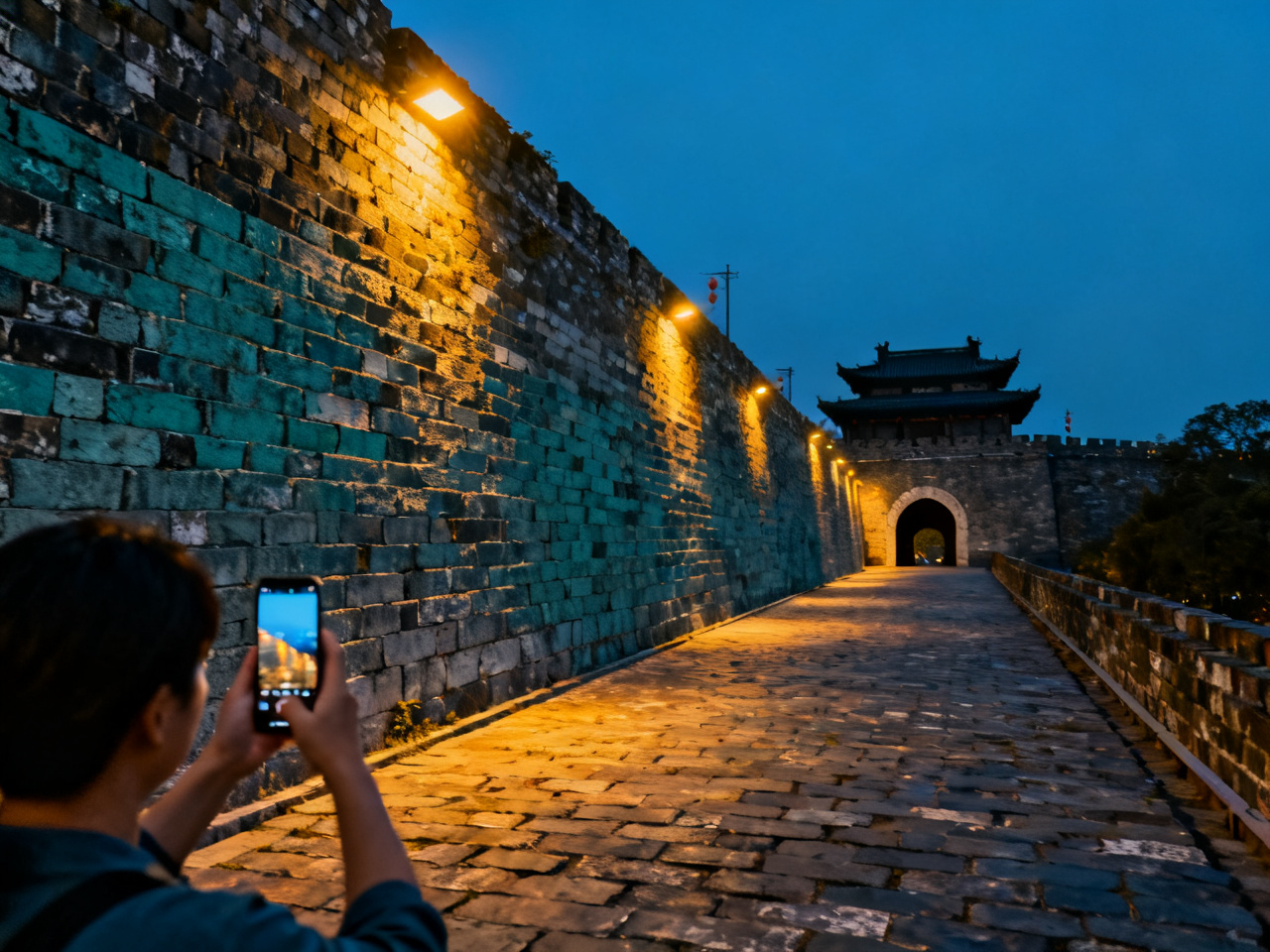
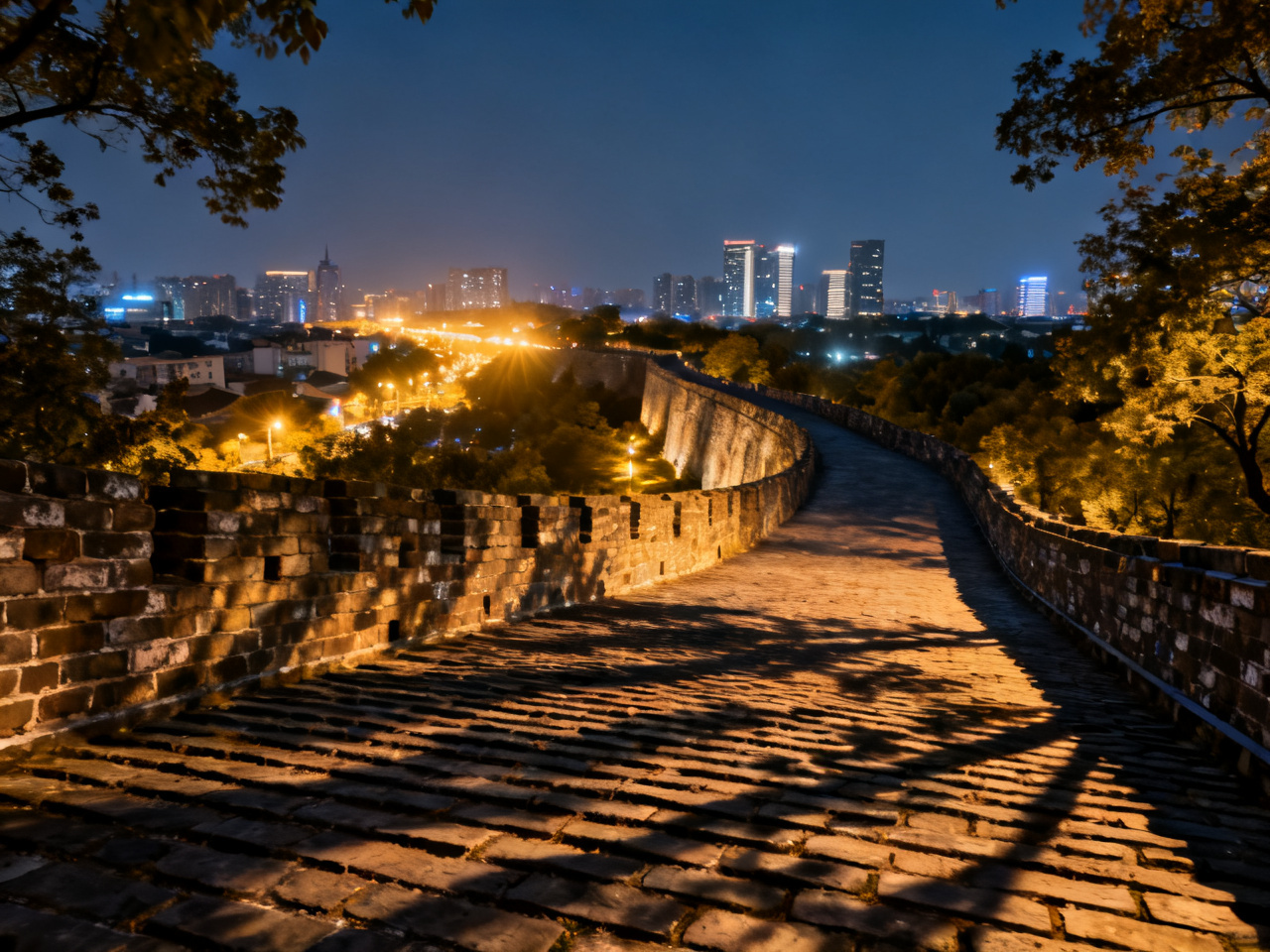
白天看城墙,人容易把它看成一段知识;夜里走城墙,它才更像一种身体经验。南京城墙最打动我的地方,不是某一块砖的年代说明,不是某个节点旁边的文字牌,而是你一脚踩上去之后,身体立刻知道这里不是平地。那一点点持续上扬又缓缓回落的坡度,会在夜色里把历史从“我知道”变成“我感到”。你沿着墙面走,城市灯光在下方摊开,远处楼群闪着稳定而现代的亮,近处树冠被风吹得轻轻晃,脚边砖石吸住白天存下的余温。历史在这种时刻不是博物馆里被框出来的东西,而是你的呼吸、步频、视线高度都被它轻微改写。夜走南京城墙的价值,恰恰在于它让人离开展板式理解,回到一种更朴素的判断:原来城防、地势、警惕、通行,首先都和脚感有关。
In daytime, people often read a city wall as information. At night, walking it turns it into a bodily experience. What moves me most about the Nanjing City Wall is not the date label on a particular brick or the explanatory panel near a historical node, but the fact that once you step onto it, your body instantly knows this is not level ground. That slight, continuous rise and gradual fall transforms history in the dark from something you “know” into something you “feel.” As you walk along the wall, city lights spread below, distant towers hold a stable modern glow, nearby tree canopies shift softly in the wind, and the brick beneath your feet still stores some of the day’s warmth. In such moments, history is not a framed museum object. Your breathing, cadence, and eye level are all being gently rewritten by it. The value of a night walk on the Nanjing wall lies precisely here: it pulls you away from display-board understanding and returns you to a simpler realization—that defense, terrain, vigilance, and movement all begin with what the feet perceive.
我那次上城墙时,天刚从蓝里退成灰,最妙的不是完全黑下来之后,而是那段光线尚未决定归属的时间。游客说话声还没有全散,手机拍照的动作还很多,可夜意已经开始接管空间。你会发现白天容易忽略的细节,在傍晚反而慢慢浮出来:砖缝的阴影更深,垛口的间距更明确,墙体转折处的风更明显。人走在上面,不由自主会放慢,因为每一次轻微的起伏都会传到小腿和脚踝。南京城墙的历史厚重,当然可以通过年代表、战争叙述、修缮资料来理解,但真正让我记住它的,是一种近乎安静的受力感。你走着走着,会意识到“墙”不是抽象边界,而是一条真实可行、可守、可望的高线。夜里尤其明显,因为视觉信息减少后,身体会接管更多判断。
When I went up the wall, the sky was just shifting from blue into gray. The most beautiful part was not full darkness, but that interval when the light had not yet chosen its side. Tourists were still talking, phones were still being raised for pictures, yet the night had already begun to take over the space. Details that are easy to ignore by day emerged slowly at dusk: shadows in the brick joints deepened, the spacing of battlements became clearer, and the wind at the wall’s turns felt sharper. People naturally slowed down, because every subtle rise and dip traveled into the calves and ankles. The historical weight of the Nanjing wall can certainly be understood through chronology, war narratives, and restoration records, but what made it stay with me was a quiet sense of force and balance. As you walk, you realize that a “wall” is not an abstract border but a real elevated line that could be traveled, defended, and watched from. At night this becomes even clearer, because when visual information decreases, the body takes over more of the judging.
很多城市遗址到了晚上会变成背景,适合拍照,却不一定适合思考;南京城墙恰好相反,它在夜里反而更容易让人进入状态。原因之一是高度关系会变得更直观。你看见城下道路的车灯在流动,才真正理解“居高临下”不是成语,而是一种可被即时感知的位置优势。原因之二是坡度会逼你诚实。平地散步时,人很容易边走边分心,聊天、看手机、东张西望都没问题;可在城墙上,哪怕坡并不陡,你的身体也会持续做微调,于是注意力更容易被拉回脚下。那种感觉很像在读一段没有标点的长句:你不能跳读,只能一步一步顺着呼吸走。历史因此不再是外部知识输入,而像一种由地形发出的低声提示。它不吵闹,却很难被忽略。
Many urban relics turn into mere backdrops at night—good for photos, not always good for thought. The Nanjing City Wall is almost the opposite. In darkness, it becomes easier to enter its logic. One reason is that height relationships become more immediate. When you watch the headlights moving along the roads below, you finally understand that “commanding the view from above” is not just an idiom but a positional advantage your body can grasp instantly. Another reason is that the slope forces honesty. On flat ground, people can walk while distracted—chatting, checking their phones, looking around at random. But on the wall, even if the incline is gentle, your body keeps making adjustments, and attention is pulled back to your feet. The feeling is like reading a long sentence with no punctuation: you cannot skim it; you have to move through it one breath at a time. History then stops being external information and begins to feel like a low voice issued by terrain itself. It is not loud, but it is difficult to ignore.
如果要给这段夜走一个最准确的描述,我会说它不像参观,更像校准。你白天在城市里待久了,习惯的是平整路面、明确指示、便利照明和不断被消费场景接住的节奏;可一上城墙,哪怕经过现代维护,它仍然保留着一种不完全顺从的结构。它不会故意为难你,但也绝不提供那种毫无阻力的舒适。正因为如此,你会开始重新感受自己的步幅,重新留意风从哪一面来,重新判断该停在哪个位置看灯火最合适。墙上的每一段小坡都像在问:如果这不是散步,而是巡守,你会怎么走?如果你需要在暗里分辨方向、在高处保持稳定、在风里持续前进,你的身体是否还像平地上一样松散?这种发问不需要任何讲解员说出口。地形自己就在说。
If I had to describe the night walk most accurately, I would say it feels less like a visit and more like recalibration. After spending the day in the city, you get used to level surfaces, clear signage, convenient lighting, and rhythms constantly supported by consumer spaces. But once you step onto the wall, even after modern maintenance, it still retains a structure that does not fully submit. It does not deliberately make life difficult, but neither does it offer frictionless comfort. Precisely because of that, you begin to re-measure your stride, notice from which side the wind arrives, and decide where to stop for the best view of the lights below. Each small incline seems to ask: if this were not leisure walking but patrol, how would you move? If you had to distinguish direction in the dark, stay stable at height, and keep going against the wind, would your body remain as relaxed as it is on flat ground? No guide needs to speak this question aloud. The terrain speaks for itself.
我也因此越来越觉得,南京城墙最值得推荐的打开方式,不是把它当作历史知识补课点,而是把它当作一段夜间步行路线。最好不要赶时间,不要把它夹在两顿饭之间,不要一边走一边高强度刷手机。给自己留一段完整的黄昏到入夜,让眼睛慢慢适应,让脚慢慢接受砖石和坡度,让城市在墙下逐渐发亮。这样走完,你记住的可能不是某个具体年份,而是身体突然明白:原来“城”之所以成立,不只是因为有墙,更因为墙改变了观看、通行和防守的方式。如果你喜欢这种通过步行理解城市的方法,可以对照看泉州海丝散步观察,那篇更偏向从街巷气味和商业纹理读城市;也可以读北京胡同慢走经验,体会平地街区如何通过转弯和院墙积累历史感。若想再看一个与泉州相关的旧角度,泉州海丝旧稿也能形成对照。
That is why I increasingly feel that the best way to approach the Nanjing City Wall is not as a lesson point for historical facts, but as a nighttime walking route. Do not rush it, do not squeeze it between two meals, and do not spend the whole time intensely checking your phone. Give yourself one complete transition from dusk into night. Let your eyes adjust slowly, let your feet accept the bricks and slopes, and let the city brighten gradually beneath the wall. After walking it this way, what you remember may not be a particular year, but a bodily realization: a “city” exists not only because it has walls, but because the wall changes how seeing, moving, and defending work. If you like understanding cities through walking, compare this approach with 泉州海丝散步观察, which reads a city more through street smells and commercial textures, or with 北京胡同慢走经验, where flat neighborhoods accumulate history through turns and courtyard walls. For another Quanzhou-related angle, 泉州海丝旧稿 also offers a useful contrast.
夜走结束时,我从墙上下来,回到路灯更亮、车声更近的地面,反而会有一种轻微的不适应。不是累,而像从一种更老、更慢、更讲究地势的时间里退出来。那时我才真正理解,历史不是挂在旁边供人阅读的说明,而是那些仍然能改变你步伐的结构。南京城墙把这种结构保存了下来,所以它最有力量的时刻,往往不是白天人最多的时候,而是夜里风起、坡度开始说话的时候。对我而言,这就是这段夜走最珍贵的收获:我没有只是“看了”一处古迹,而是让自己的身体短暂借住进了它的逻辑里。
When the walk ends and I come down from the wall into brighter streetlights and closer traffic sounds, I often feel a slight readjustment. Not exactly fatigue—more like stepping out of an older, slower, more terrain-conscious time. Only then do I fully understand that history is not a note hanging nearby for people to read, but structures that can still alter your gait. The Nanjing City Wall preserves that kind of structure, which is why its most powerful moments are often not when daytime crowds are thickest, but when the night wind rises and the slope begins to speak. For me, that is the most valuable gain of the walk: I did not merely “see” an ancient site. I let my body briefly live inside its logic.
- 云南大理到丽江:慢游洱海边的五天四夜 | Dali to Lijiang, Yunnan: A Slow 5-Day Journey Along Erhai Lake
- 从大连到湛江:中国沿海城市的海鲜吃法 | Seafood Along China's Coast: From Dalian to Zhanjiang
- 中国手机上网指南:SIM卡、eSIM与VPN | Getting Online in China: SIM, eSIM & VPN Options
- 中国武术文化体验:太极拳少林功夫 | Chinese Martial Arts: Tai Chi & Shaolin Kung Fu
- 中国白酒与黄酒:送礼自饮怎么选 | Chinese Baijiu & Huangjiu: Gift & Tasting Guide
- 我们带着孩子在杭州遇上五月细雨,才知道西湖不用一路赶 | Traveling Hangzhou with a Child in May Rain Taught Us West Lake Never Needed Rushing
- 五一去哪儿?8个你可能没听过的宝藏目的地 | Where to Go for May Day? 8 Hidden Gems You Probably Haven't Heard Of
- 支付宝绑定国际银行卡实操 | Alipay Foreign Card Binding Walkthrough
- 贵阳夜市里的一张塑料凳,让我放下了游客的架子 | A Plastic Stool in a Guiyang Night Market Made Me Drop My Tourist Distance
- 我在和田河边捡了一块石头,然后掉进了八千年的坑 | I Picked Up a Stone by the Hetian River and Fell Into an 8,000-Year Rabbit Hole
Comments (0)