
深夜便利店里那几分钟,让我第一次觉得自己也进入了中国城市的夜班节奏 | A Few Minutes in a Late-Night Convenience Store Made Me Feel I Had Entered the Night Rhythm of a Chinese City
深夜便利店里那几分钟,让我第一次觉得自己也进入了中国城市的夜班节奏 | A Few Minutes in a Late-Night Convenience Store Made Me Feel I Had Entered the Night Rhythm of a Chinese City
我以前总把便利店当成白天的补给点:买水、买纸巾、临时拿点零食,动作都很快,像在路上顺手完成一件小事。可后来有一次,我在中国真正走进深夜便利店,感觉却完全不一样。那天已经快十二点了,街上不像白天那么亮闹,很多店都拉下了卷帘门,只剩路口的招牌灯和偶尔经过的外卖车还在动。我原本只是想进去买瓶水,结果推门进去的一瞬间,听见冷柜的轻响、微波炉的提示音、收银台边有人低声说“关东煮再加一个”,突然就觉得这个空间不像白天的“顺手一停”,更像夜里专门给还没结束的人留的一小块缓冲地带。
I used to think of convenience stores as daytime supply points: places to buy water, tissues, or a quick snack, all in fast motions, like completing a tiny task while already on the move. But one night in China I really stepped into a convenience store after midnight, and the feeling was completely different. It was nearly twelve. The street was no longer bright and busy like daytime. Many shops had already pulled down their shutters, and only the lit signs at intersections and the occasional delivery scooter still moved through the dark. I had only meant to buy a bottle of water. Yet the moment I pushed open the door and heard the hum of the refrigerators, the microwave beep, and someone softly saying at the counter, “Add one more oden item,” I suddenly felt that this space was no longer a daytime stop made in passing. It was a small buffer zone preserved for people whose day had not finished yet.
店里的人不多,却很有层次。一个刚下班的年轻人站在热柜前看饭团和便当,神情已经有点放空;一位外卖骑手进来拿瓶功能饮料,手机还在不断亮单;收银台边有个学生模样的人捧着泡面等加热,背包放在脚边,像是刚从自习室出来。最让我印象深的是,大家虽然互不打扰,却都明显带着一种“今晚还没完全收尾”的状态。没有谁特别着急,也没有谁真的松到底。那种介于疲惫、补给、再出发之间的感觉,让便利店在深夜看起来像城市给人开的一个小接口。
There were not many people inside, yet the scene had layers. A young office worker who seemed freshly off work stood in front of the hot-food shelf staring at rice balls and boxed meals with an expression already half emptied out. A delivery rider came in for an energy drink while new orders kept lighting up his phone. A student-looking customer held instant noodles waiting for hot water, backpack by the feet, as if just out of a study room. What stayed with me most was that although nobody disturbed anyone else, everyone clearly carried the feeling that the night was not fully wrapped up. No one was in a dramatic hurry, yet no one was fully relaxed either. That mood—somewhere between fatigue, refueling, and setting out again—made the convenience store look like a small interface the city keeps open for its unfinished people.
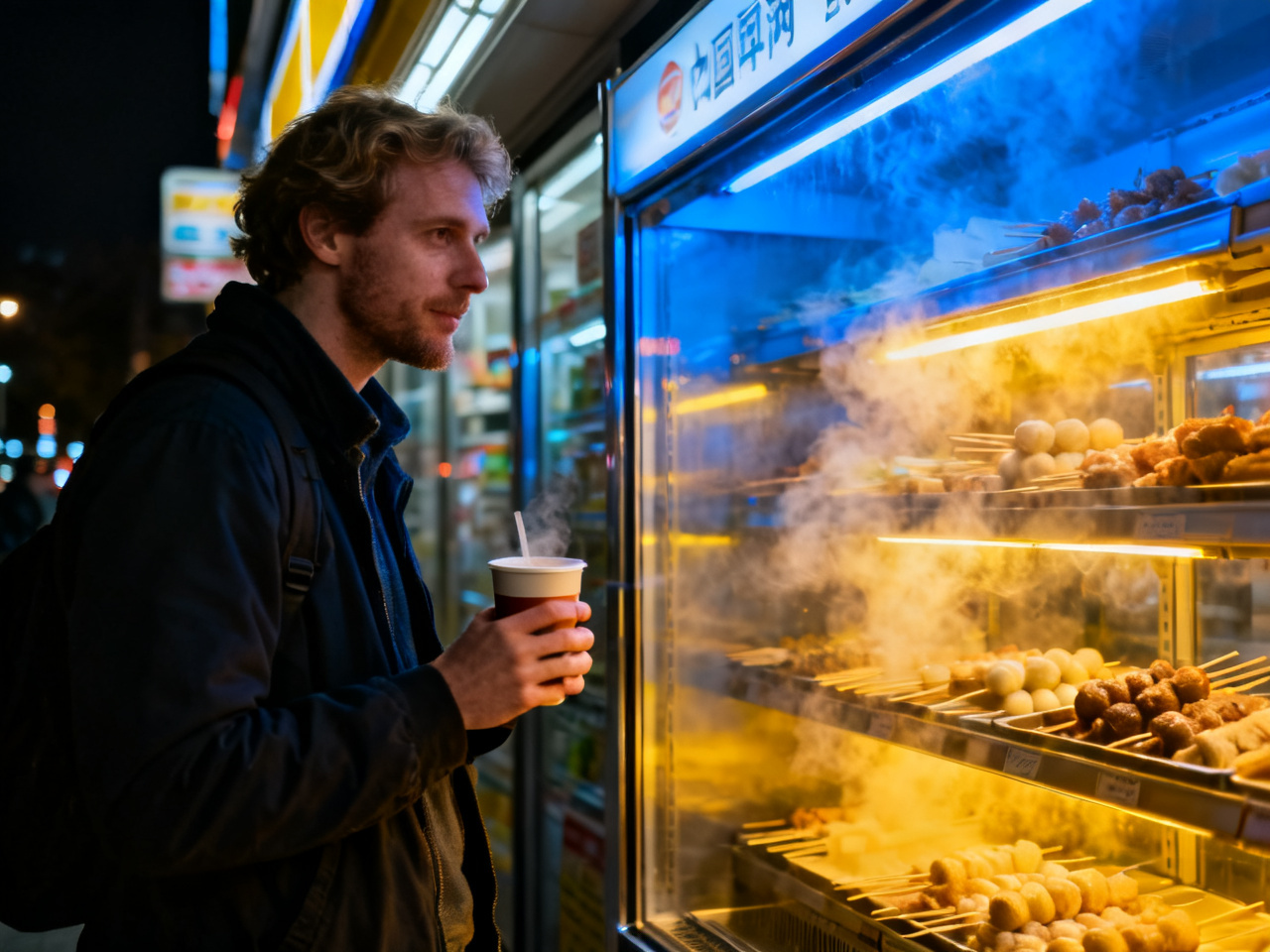
我那天最后没有只买水,还顺手拿了个茶叶蛋和一盒热牛奶,坐到窗边高脚凳上待了几分钟。玻璃外面偶尔有人快步走过,店里空调很稳,灯光白得有点不讲情绪,可正因为这样,反而让人安定。你会发现,深夜便利店里最重要的不是商品多,而是它允许你在城市还没彻底睡着的时候,暂时把自己放到一个不需要解释的中间状态。你不必非得在这里社交,也不必装得很有效率。你可以只是站着发会儿呆、等食物加热、补充一点糖分和热量,然后再决定接下来是回家、继续赶路,还是再走一段。
That night I ended up buying more than water. I took a tea egg and a carton of hot milk as well, then sat for a few minutes on a high stool by the window. Outside, people occasionally hurried past. Inside, the air-conditioning was steady and the light was so white that it almost refused emotion. Yet that was exactly what made the place calming. You begin to notice that the most important thing about a late-night convenience store is not the variety of goods. It is the way it lets you place yourself in a middle condition—when the city has not fully gone to sleep and neither have you—without needing to explain yourself. You do not have to socialize there, and you do not have to perform efficiency. You can simply stand still, wait for food to heat up, take in a little sugar and warmth, and then decide whether you are going home, continuing onward, or walking a bit farther first.
后来我越来越觉得,外国人如果想理解中国城市的夜生活,不一定非要先去酒吧街或者夜市。去一趟深夜便利店,反而更容易看见真实的夜班节奏。那里聚集的不是“出来玩的人”而已,还有刚加完班的人、夜骑手、准备返校的学生、临时睡不着出来买点东西的人。每个人只停留几分钟,却都在同一个空间里留下一点夜里的体温。我也因此更认同先在低压力场景里自然开口或自然停留的意义,因为便利店正是那种即使一句话不多,也能让你慢慢接上城市脉搏的地方。
Later I increasingly felt that if foreigners want to understand urban nightlife in China, they do not necessarily need to begin with bar streets or night markets. A late-night convenience store can reveal the real rhythm much more clearly. The people gathered there are not only those “out for fun.” They are also office workers just off overtime, delivery riders, students heading back late, and people who could not sleep and came out to buy something small. Each person stays only a few minutes, yet all of them leave behind a trace of nighttime body heat in the same space. That is also why I came to believe even more strongly in speaking naturally or simply lingering naturally in low-pressure settings, because a convenience store is exactly the kind of place where even without saying much, you can slowly connect to the pulse of the city.
后来有一次我凌晨一点多又走进另一家便利店,看到收银台旁边坐着一个保安,手里捧着热豆浆,正在和店员慢慢聊天;门口则有个年轻女生对着手机确认打车位置,另一只手拎着刚买的面包。那一幕特别普通,却让我觉得很完整:夜里的城市并不是忽然空掉,而是缩小成几个仍然亮着的节点,而便利店就是其中最稳定的一种。它不热闹得夸张,却持续地接住那些还在路上的人。对我来说,这种“被接住”的感觉,正是中国城市深夜最温柔的一部分。
Later, at around one in the morning, I walked into another convenience store and saw a security guard sitting by the register with hot soy milk in his hands, chatting slowly with the clerk. Near the entrance, a young woman checked the location of her ride-hailing car on her phone while holding a loaf of bread she had just bought. The scene was extremely ordinary, yet it felt complete to me. The city at night does not suddenly become empty. It contracts into a handful of nodes that remain lit, and the convenience store is one of the most stable among them. It is not extravagantly lively, yet it keeps catching the people who are still on the road. For me, that feeling of being quietly caught is one of the gentlest parts of urban China after midnight.
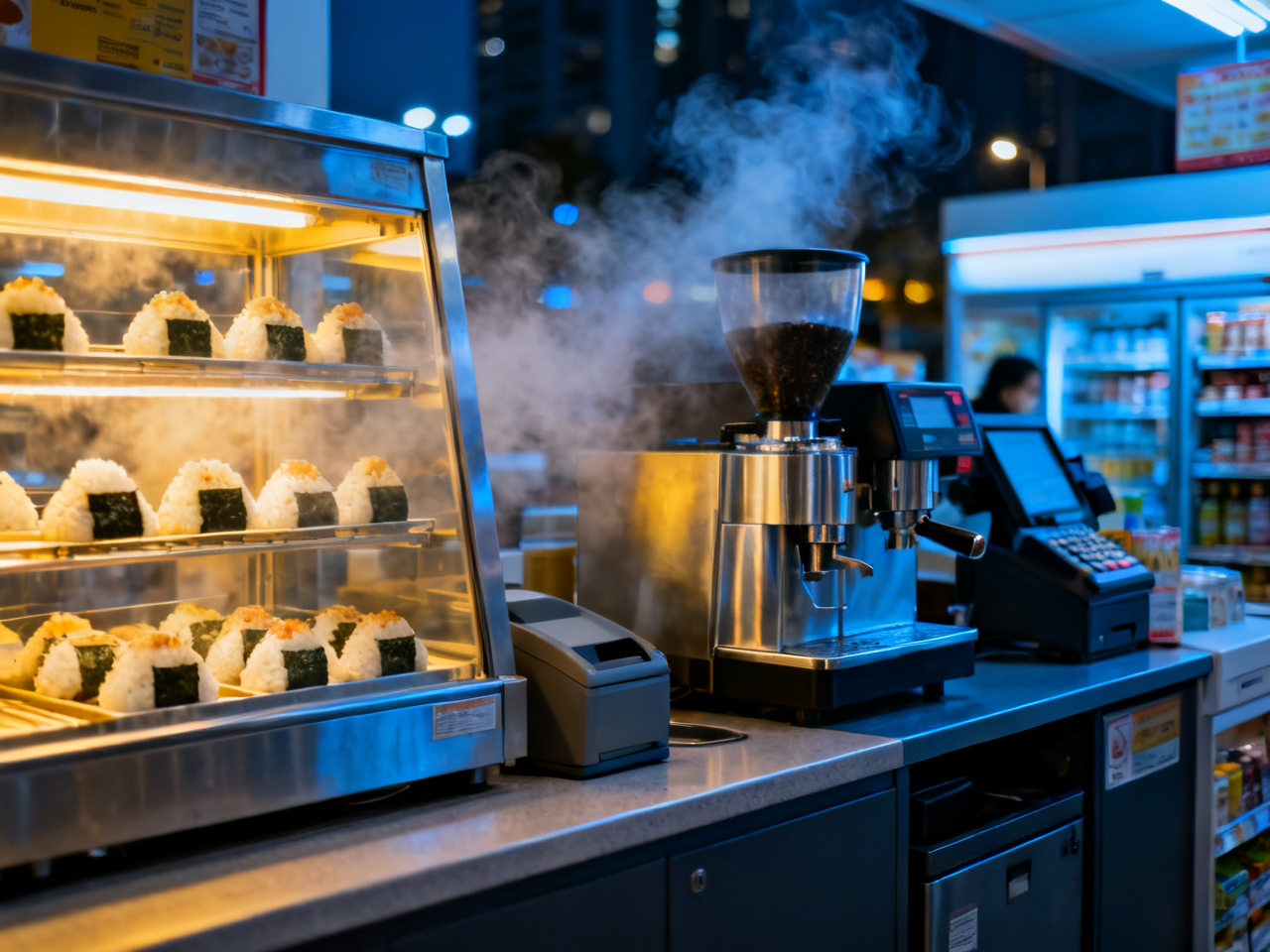
现在如果有人问我,在中国深夜最适合去哪里感受城市还在继续呼吸,我会说去便利店待几分钟。买不买很多东西并不重要,重要的是你会在那里看见一些白天不容易注意到的人和节奏:疲惫但还在运行的、安静却没有真正停下的、彼此陌生却共享同一盏灯光的。那几分钟很短,却足够让你明白,城市的夜并不是白天的空白,而是另一种更轻、更慢、也更真实的生活层。
If someone asks me now where to feel that a Chinese city is still breathing late at night, I would say: spend a few minutes in a convenience store. It does not matter whether you buy much. What matters is that there you can see people and rhythms that daytime often hides: the tired but still functioning, the quiet but not truly stopped, the mutually unfamiliar yet sharing the same light. Those few minutes are brief, but they are enough to show that urban night is not simply the blank space left behind by day. It is another layer of life—lighter, slower, and in some ways even more real.
- 站在深圳北站外第一个红灯前,我开始读懂这座城的速度 | At My First Red Light Outside Shenzhen North, I Began to Read the City’s Speed
- 外国人在中国买东西被拒收现金怎么办? | What To Do When a Chinese Shop Refuses Your Cash
- 威海的海风还没吹到脸上,我先把车票、地图和付款码排好了顺序 | Before Weihai’s Sea Wind Reached My Face, I Had Already Put Tickets, Maps, and Payment Codes in Order
- 十二月的中国:北方玩雪,南方过冬 | December in China: Snow Up North, Warmth Down South
- 中国传统节日 | Traditional Chinese Festivals
- 落地后的第一笔钱:在中国旅行建立支付备用方案 | Your First Payment After Landing: Building a Backup Plan for Travel in China
- 冷门但值得去的中国小城 | Hidden Gem Cities in China Worth Visiting
- 中国医疗就诊指南:看病买药与保险 | Medical Care in China: Hospitals, Pharmacies & Insurance
- 中国四季节庆日历:每月最佳活动 | China Festival Calendar: Best Events by Month
- 合肥路口那些半秒钟的互让,比任何介绍都更像城市说明书 | The Half-Second Acts of Yielding at Hefei Crossings Explain the City Better Than Any Guide
Comments (0)