
木偶戏后台的一晚:我第一次知道“线”也能有性格 | One Night Behind a Puppet Theatre: The First Time I Learned That Strings Can Have Personality
木偶戏后台的一晚:我第一次知道“线”也能有性格 | One Night Behind a Puppet Theatre: The First Time I Learned That Strings Can Have Personality
我以前看木偶戏,总是先被舞台前面的故事吸引:角色出场、音乐响起、人物一抬手一转身,观众马上就会进入情节。可这次在中国旅行时,真正让我记住木偶戏的,不是坐在台下的那一刻,而是演出前后短暂进入后台的经验。站在幕布后面,看那些还没“活过来”的木偶静静挂着,我第一次强烈地意识到,木偶戏最迷人的地方之一,是它把人、物和戏之间的关系做得非常直接。你能清楚知道它是“被操纵”的,可一旦演出开始,你还是会心甘情愿地相信它有自己的性格。
When I used to watch puppet theatre, I was always drawn first to the story unfolding in front of the stage: the entrance of characters, the rise of music, the moment a figure lifts an arm or turns, and the audience is immediately pulled into the plot. But during this trip in China, what truly stayed with me was not sitting in front of the stage. It was the brief chance to go backstage before and after the performance. Standing behind the curtain and seeing the puppets hanging there before they had “come alive,” I felt very strongly for the first time that one of the most fascinating things about puppet theatre is how directly it shapes the relationship between human, object, and drama. You know perfectly well that the puppet is being controlled, yet once the performance begins, you still willingly believe it has its own personality.
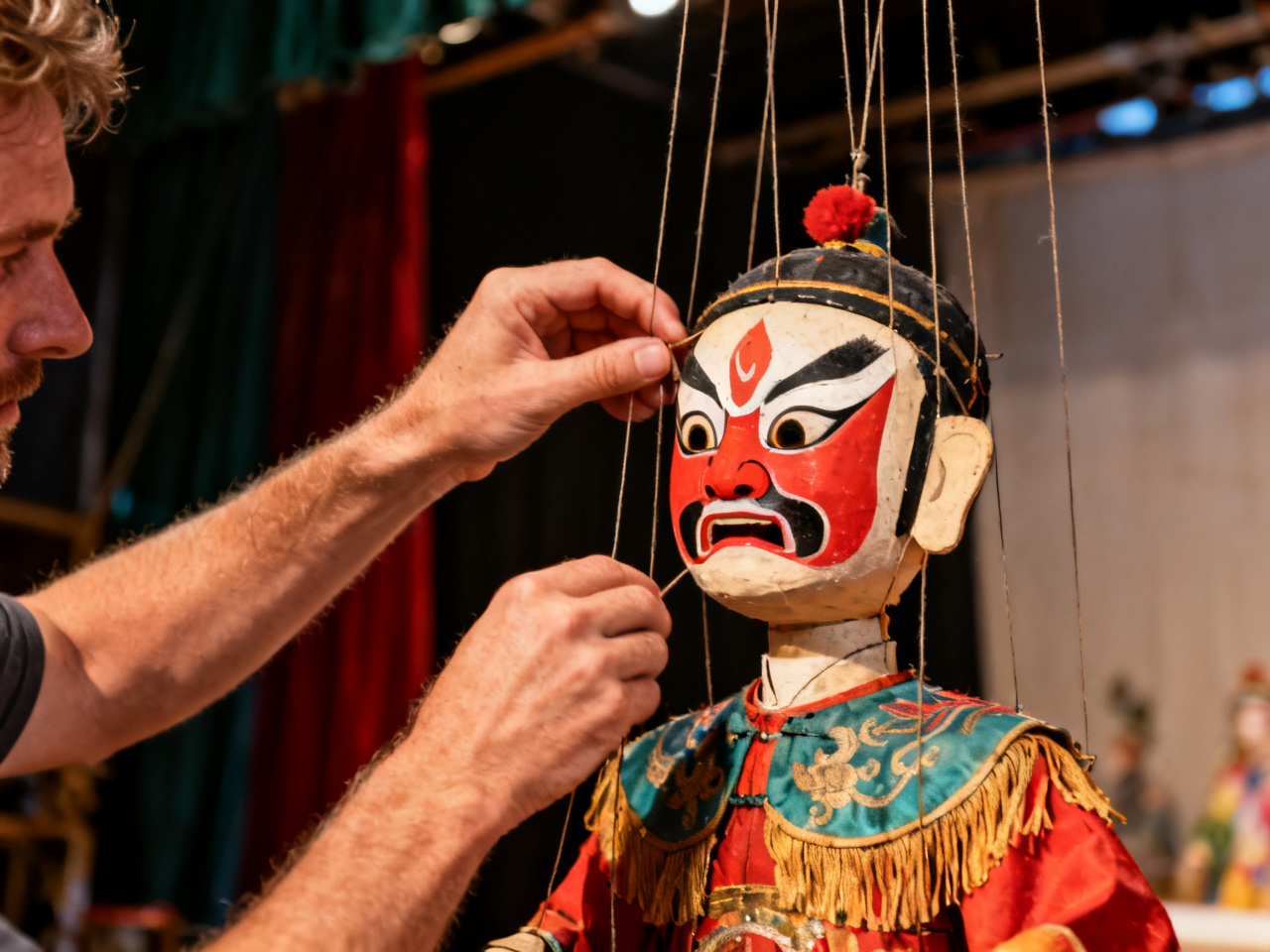
后台比我想象得更忙,也更安静。忙,是因为木偶、服装、道具、乐器和操偶人的手都在准备进入同一个节奏;安静,是因为每个人都很专注,没有多余的动作。老师拿起一个木偶给我们看,先让我看头部雕刻,再看手、脚、衣饰和连接处。我原本以为木偶戏主要看的是脸,后来才知道真正关键的是“动起来之后像不像”。头能不能转得自然,袖子甩起来有没有分量,步子迈出去是否有节拍感,这些决定了观众会不会在几秒钟内接受它是一个角色,而不只是一个道具。
Backstage was busier and quieter than I had imagined. Busy, because puppets, costumes, props, instruments, and puppeteers’ hands were all preparing to enter one shared rhythm. Quiet, because everyone was deeply focused, without unnecessary movement. The instructor lifted one puppet for us to examine, first showing the carved head, then the hands, feet, costume, and points of connection. I had assumed that puppet theatre depended mainly on the face, but I later learned that the real key is whether it feels convincing once in motion. Can the head turn naturally? Does the sleeve carry weight when it swings? Does the step have rhythm when it moves forward? These details determine whether an audience accepts it within seconds as a character rather than a prop.
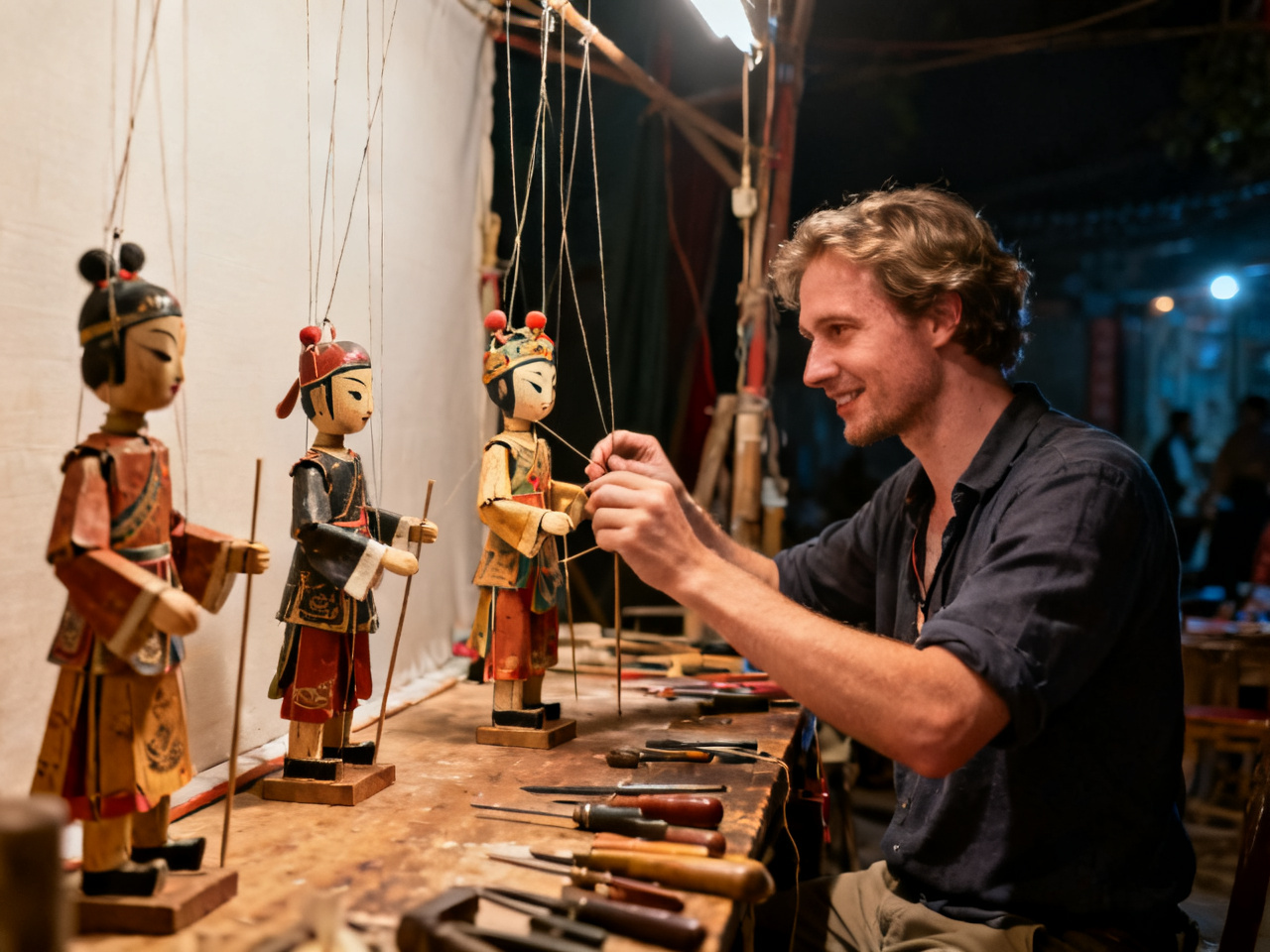
演出开始以后,我几乎顾不上看完整剧情,因为我的注意力不断被动作吸走。一个角色只是轻轻偏头,意思就出来了;另一个角色抬手稍快一点,情绪立刻显得急;两个木偶隔着一点距离对望,居然真的会产生人物关系。那种感觉非常奇妙,因为你明明知道一切都来自操偶人的技术,可正因为技术足够稳定,木偶反而像拥有了独立生命。中国木偶戏打动我的地方,正是这种“人工的生命感”。它一点也不想掩饰背后的手艺,却仍然能让观众相信眼前发生的是戏,而不是示范。
Once the performance began, I could barely focus on the whole plot because my attention kept getting pulled toward movement itself. One character only had to tilt its head slightly, and the meaning was there. Another raised its hand just a bit faster, and the emotion immediately felt urgent. Two puppets looking at each other from a short distance somehow created a real relationship. The feeling was extraordinary, because you know perfectly well that everything comes from the puppeteer’s technique, yet precisely because that technique is so stable, the puppet seems to acquire an independent life. What moved me in Chinese puppet theatre was this sense of “artificial life.” It does not try to hide the craft behind it, and yet it still persuades the audience that what is happening is drama, not demonstration.
因为我来自印度尼西亚,我自然而然会想到家乡非常有名的木偶与皮偶传统。印尼的传统木偶戏,尤其是 wayang,无论在视觉风格、角色体系还是宗教文化层面,都有非常深的历史积累。我们也很熟悉“操偶者如何让角色活起来”这个问题。但这次中国木偶戏给我的感觉还是不同。印尼传统偶戏常常让我先感到神话感、象征性和仪式气息,而中国木偶戏,至少在这次体验中,更强调人物动作的世俗性、戏剧情绪的直接性,以及观众对角色性格的即时识别。
Because I come from Indonesia, I naturally thought of the famous puppet and shadow traditions from home. Indonesian puppet theatre, especially wayang, has enormous historical depth in visual style, character systems, and religious-cultural meaning. We are also very familiar with the question of how a puppeteer brings a figure to life. But Chinese puppet theatre still gave me a different feeling. Indonesian traditional puppet performance often first evokes mythic atmosphere, symbolism, and a sense of ritual. Chinese puppet theatre, at least in this experience, placed more emphasis on the worldly quality of movement, the directness of theatrical emotion, and the audience’s immediate recognition of character personality.
这种区别让我很有兴趣。印尼偶戏有时像是在让观众进入一个更古老、更象征性的世界;中国木偶戏则更像把角色直接推到你面前,让你立刻从动作里理解他是谁、他高不高兴、他威不威风、他滑不滑稽。一个更偏向仪式化叙事,一个更偏向可见的舞台生命力。作为外国观众,我很享受这种比较,因为它让我明白,同样是“偶”,不同文化会对“活”的标准有完全不同的偏爱。
That difference fascinated me. Indonesian puppet performance sometimes feels like an invitation into an older, more symbolic world, while Chinese puppet theatre pushes characters directly toward you, so that you understand immediately through movement who they are, whether they are pleased or angry, dignified or comic. One leans more toward ritualized narrative; the other toward visible stage vitality. As a foreign viewer, I enjoy this comparison because it shows me that even when two traditions are both called puppetry, different cultures can prefer very different definitions of what it means for a figure to feel alive.
演出结束后,我又回到后台看那些木偶。台上刚刚还很有脾气的人物,一挂回架子上就恢复成了木头、布料和线。那种反差让我特别难忘。它提醒我,传统表演最值得尊敬的地方,往往不是它制造幻觉,而是它明明让你看见幻觉是怎么做出来的,却还是能打动你。中国木偶戏对我来说正是这样。它不靠隐藏机制来制造神秘感,而是靠极其扎实的操控和节奏,让你相信“线”本身也能有性格。
After the performance, I went backstage once more to look at the puppets. Characters that had just seemed full of temperament onstage had returned to wood, cloth, and string the moment they were hung back on the rack. I found that contrast unforgettable. It reminded me that what deserves the most respect in traditional performance is often not its ability to create illusion, but its ability to move you even while showing you how the illusion is made. Chinese puppet theatre felt exactly like that to me. It does not rely on hiding its mechanism in order to produce mystery. Instead, it uses exceptionally solid control and rhythm to make you believe that even strings can have personality.
如果有人问我,哪一种中国民艺最适合喜欢“看动作的人”,我会推荐木偶戏。因为它不是静态地展示一个精美物件,而是把雕刻、服装、音乐、操控和戏剧全部放进时间里,让你眼看着一个角色被一点点赋予脾气。对我这个来自印度尼西亚的人来说,这次体验尤其珍贵,因为它让我在熟悉的“偶戏世界”之外,又多认识了一种完全不同的生命感。原来一根线不只用来连接,它还可以负责传递情绪、节奏,甚至尊严。
If someone asked me which Chinese folk art I would recommend to people who love watching movement, I would choose puppet theatre. It does not statically display an exquisite object. Instead, it places carving, costume, music, manipulation, and drama all inside time, allowing you to watch a character be given temperament little by little. For me, as someone from Indonesia, this experience felt especially valuable because it introduced me to a completely different form of vitality beyond the puppet world I already knew. A string, I learned, does not only connect. It can also carry emotion, rhythm, and even dignity.

- 最值得购买的中国纪念品 | Best Chinese Souvenirs to Buy
- 中山装与唐装:男士传统服饰怎么穿 | Zhongshan Suit & Tang Suit: Men's Traditional Wear
- 鸡鸣寺到城墙下那一段夜路,让我读懂南京为什么适合慢慢看 | The Night Stretch from Jiming Temple to the Foot of the Wall Showed Me Why Nanjing Rewards Slow Looking
- 我在中国小区菜市场过了一个早晨,才明白“新鲜”原来是被声音和水气一起托出来的 | One Morning in a Neighborhood Wet Market in China Taught Me That “Fresh” Is Carried as Much by Sound and Moisture as by the Food Itself
- 北京三日线:第一次来中国,怎么走才不赶路 | Beijing in 3 Days: A First-Time Route Without Rush
- 我在西安回民街试了三种肉夹馍:哪一家更值得排队 | I Tried Three Roujiamo in Xi'an Muslim Quarter
- 剪纸日记|在红纸与窗光之间学习耐心 | Paper-Cutting Diary | Learning Patience Between Red Paper and Window Light
- 现金还是手机支付?来华前必读 | Cash or Mobile Pay? What You Need to Know Before Visiting China
- 黄山云海与迎客松:四季皆美 | Huangshan Sea of Clouds & Welcome Pine: Beautiful in All Seasons
- 我为什么开始放心把手机拿在手里:在中国街头学到的日常安全判断 | Why I Began Carrying My Phone in My Hand Without Fear: Everyday Safety Judgments I Learned on Chinese Streets
Comments (0)