
那张被擦亮的桌子,让我看见沙县小吃如何成为日常 | The Polished Table Showed Me How Shaxian Snacks Became Everyday Food
那张被擦亮的桌子,让我看见沙县小吃如何成为日常 | The Polished Table Showed Me How Shaxian Snacks Became Everyday Food
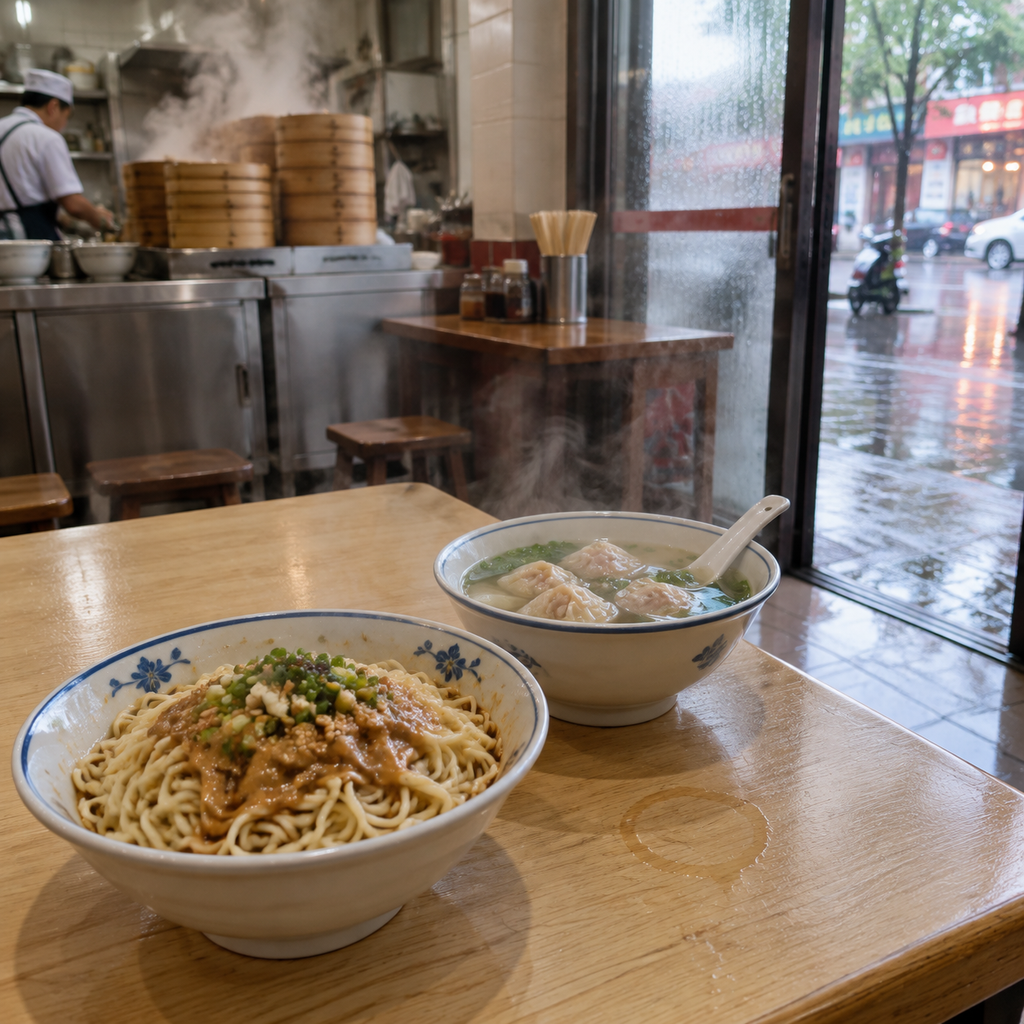
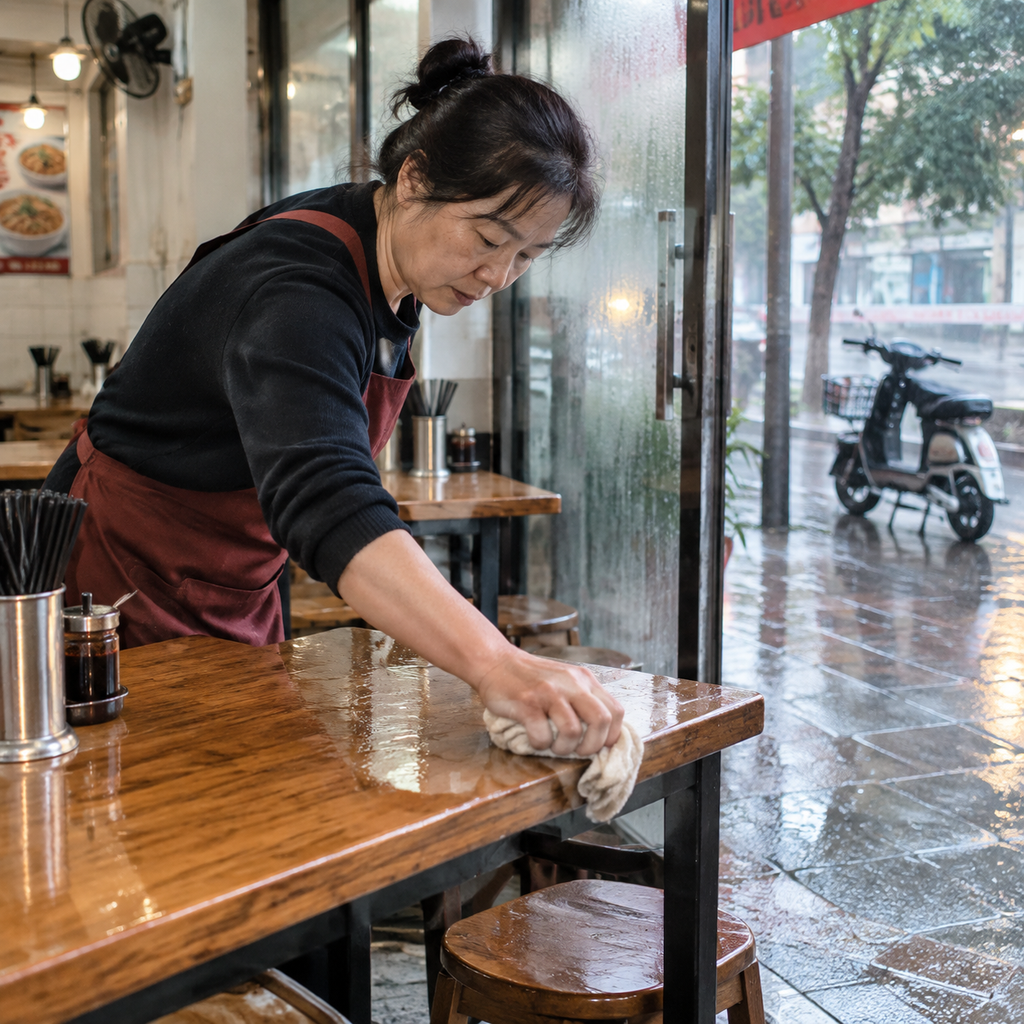
我第一次认真看见那张桌子,是在一个下着细雨的上午。街边的沙县小吃店不大,玻璃门上凝着一层潮气,门口的地砖被来回踩得发亮。我推门进去时,店主正把一块浅色抹布拧干,沿着四方桌的边缘慢慢擦过去。桌面并不新,浅木纹里留着多年使用后的细小划痕,靠近墙的一角还有被热碗烘出的淡淡圆印,可它被擦得干净、干燥,手掌放上去时没有油腻的黏感。那一刻我没有急着找座位,反而站在门边看了几秒:一间小吃店怎样接住一顿饭,似乎就从这张桌子的状态开始。
I noticed that table properly for the first time on a drizzly morning. The Shaxian snack shop was small, its glass door clouded with damp air and its pavement polished by passing feet. When I entered, the owner was wringing out a pale cloth and slowly wiping the edges of a square table. It was not new. Fine scratches ran through the light wood grain, and a faint circle near the wall showed where a hot bowl had rested over the years. Yet the surface was clean and dry, without the sticky film of grease. I did not immediately look for a seat. I stood by the door for a few seconds, thinking that perhaps a small shop begins to hold a meal in the condition of its table.
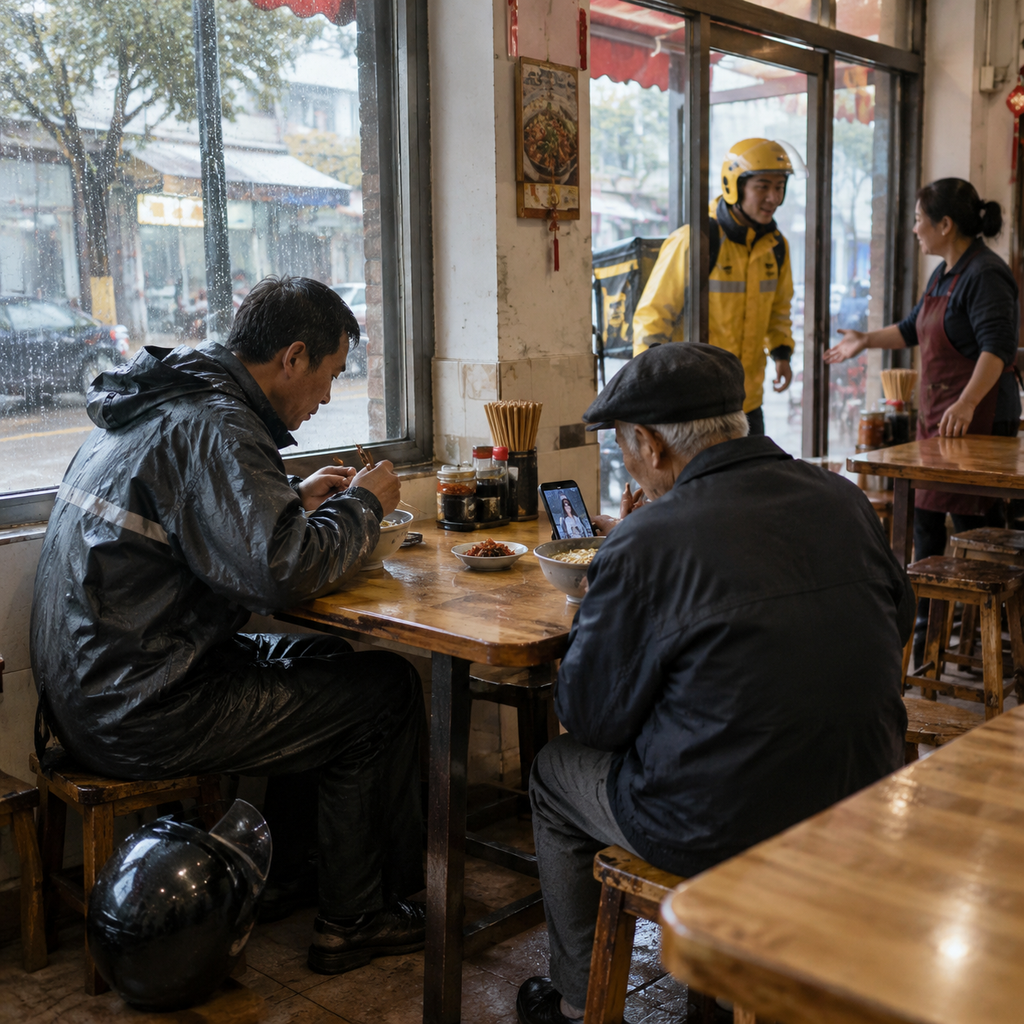
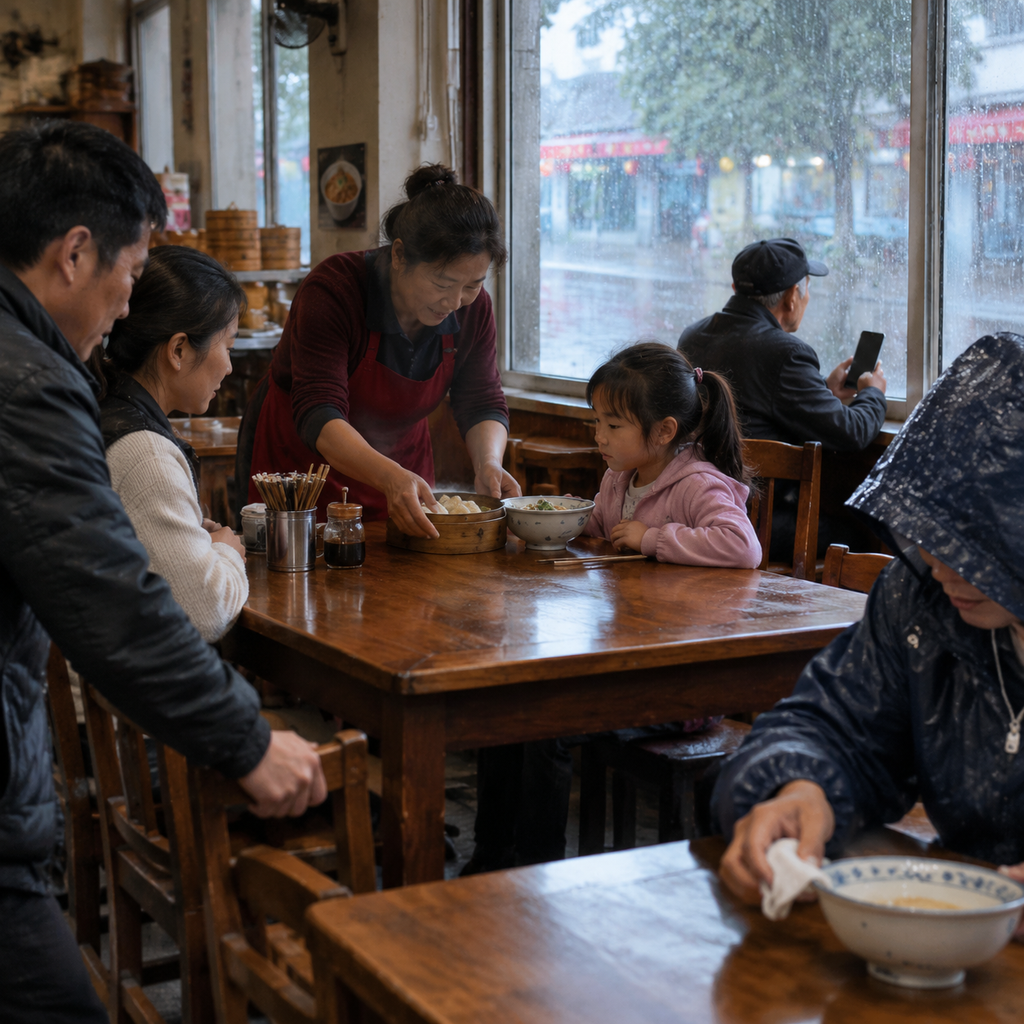
靠窗的位置已经坐着两位熟客。一位穿着雨衣的中年人把电动车头盔放在脚边,另一位老人将手机搁在碗旁,屏幕上停着没有看完的短视频。他们没有大声聊天,只在店主端来食物时抬一下眼睛,随后把碗往自己面前挪。这样的默契让我觉得自己误入了一个有固定节拍的房间:谁坐哪儿、先吃什么、碗空了以后是否再要一点,并不需要解释。店主认得他们,却没有表演热情,只是顺手多放了一小碟调味料,又把靠门的位置让给刚进来的外卖骑手。熟悉在这里不是称呼,而是动作变少了。
Two regulars were seated by the window. A middle-aged man in a raincoat had left his electric-scooter helmet by his feet; an older man had placed his phone beside the bowl, a short video paused halfway through. They did not talk loudly. When the owner brought their food, they merely looked up and pulled the bowls closer. I felt I had stepped into a room with a settled rhythm: who sat where, what came first, and whether to order more after finishing did not need explaining. The owner knew them but did not perform friendliness. She simply added a small dish of seasoning and kept the seat near the door clear for a delivery rider. Here, familiarity was not a form of address; it was a reduction in unnecessary movements.
我点了拌面和扁肉,没有要求店主替我推荐,因为菜单上的名字已经足够直接。拌面端上来时,碗底的花生酱、酱油和油香先被热面条带起,细长的面被筷子拨开,表面裹着一层不厚的酱。它不是靠复杂配料制造存在感的食物,碗里只有面、酱、葱花以及一点让香气更立体的碎料。扁肉则躺在清汤里,皮薄,边缘被水汽润得发亮,汤面浮着零星葱末。两只碗摆在擦亮的桌子上,色彩并不喧闹,热气却一阵阵往上冒,把窗上的雾重新推厚。
I ordered拌面, noodles dressed in sauce, and扁肉, delicate dumplings in broth. I did not ask the owner to choose for me; the menu names were plain enough. When the noodles arrived, the heat lifted the aroma of peanut sauce, soy sauce, and oil from the bottom of the bowl. The thin strands were loosened with chopsticks and coated, but not buried, in sauce. The dish did not rely on elaborate toppings: noodles, seasoning, scallions, and a little crushed ingredient gave it depth. The扁肉 rested in a clear soup, its thin edges shining with moisture and flecked with scallions. On the polished table, the colors were quiet, but steam kept rising and thickening the mist on the window.
我先吃了一口面,才发现自己原先对“拌面”的想象太轻率。它不是把面煮熟后随便拌一下,而是一种需要控制比例的日常手艺:酱不能多到压住面香,也不能少到只剩干涩;筷子要从碗底翻起,让沉在下面的调味料均匀附着;入口时要有花生酱的厚,却不能拖住咀嚼。店主没有站在旁边教我,是隔壁桌的老人看了我两次翻面动作,伸手指了指碗底。我照着做,果然最后几口比开头更顺。这个小小的提醒没有被说成礼仪课程,却让我明白,许多地方食物的吃法藏在桌边的观察里。
After the first bite, I realized how casually I had imagined拌面. It was not simply cooked noodles tossed with something at the last moment. It required the quiet control of everyday craft: enough sauce to give body without hiding the noodles, enough mixing to lift the seasoning from the bottom, and enough looseness to keep the peanut paste from making each bite heavy. The owner did not stand over me. An older man at the next table watched me turn the noodles twice, then pointed toward the bottom of my bowl. I followed his gesture, and the final bites were smoother than the first. The correction was not presented as a lesson in etiquette, but it reminded me that the way a local food is eaten is often learned by watching the table beside you.
扁肉给我的感觉又不同。皮在汤里柔软,却没有散开;咬破以后,馅的咸香很快被温热的汤接住,口腔里留下的是轻而干净的回味。那碗汤没有用浓烈味道抢走注意力,所以我能听见店里其他声音:蒸笼盖子碰到台面的闷响,塑料袋被提起时的窸窣,门外雨水落在遮棚上的细碎声。吃这种食物需要把速度放慢一点。面适合趁热拌匀,扁肉却让我在每一口之间停一下,感觉汤的温度从舌尖退到喉咙,再看一眼桌面上被水汽映亮的木纹。
The扁肉 felt different. Its wrapper was soft in the broth but held together; once bitten, the savory filling was carried by warm, clean soup, leaving a light aftertaste. Because the broth did not shout for attention, I could hear the other sounds in the shop: the dull knock of a steamer lid against the counter, the rustle of a plastic bag being lifted, and rain tapping the awning outside. This food asked me to slow down. The noodles wanted to be mixed while hot, while the扁肉 invited a pause between bites—to feel the warmth move from the tongue toward the throat, then glance at the wood grain brightened by condensation.
我后来把注意力放到了蒸笼上。它们叠在操作台旁,竹圈和金属边缘被蒸汽熏出不同的颜色,盖子揭开时,白雾会先冲出来,接着才看清里面的点心。店主用夹子把食物取出,手腕动作很快,但并不慌乱。蒸笼的秩序像一面小型时钟:哪一层刚出锅,哪一层需要再等,哪些食物适合堂食,哪些要装进带孔的盒子里,都由经验维持。蒸汽把店内的气味揉在一起,面粉、肉馅、葱油和清汤各自可辨,却没有谁完全压过谁。
Later I paid closer attention to the steamers. They were stacked beside the work counter, their bamboo rings and metal rims darkened in different ways by years of steam. When a lid was lifted, white vapor rushed out before the food became visible. The owner removed items with tongs, her wrists quick but never frantic. The stack worked like a small clock: which layer had just come out, which needed more time, which foods belonged on a dine-in plate, and which should go into a vented takeaway box. Steam blended the shop’s smells—flour, meat filling, scallion oil, and clear broth—while allowing each one to remain recognizable.
店里来了一位年轻人,衣服上还带着雨点。他没有坐下,只把手机上的订单页面递给店主确认,然后靠着墙等餐。与此同时,一个背着书包的小女孩被家人带进来,她盯着蒸笼看了很久,最后挑了一份自己能够一口吃下的小点心。店主把餐盘推到她面前,又把筷子换成勺子。没人把这个动作说成照顾,孩子的家人也没有客套地道谢,只是把椅子往里挪了挪。对我来说,这些细节比“服务周到”更准确:店铺记住的是人的使用方式,而不是一套统一表情。
A young man entered with rain still on his clothes. He did not sit down; he showed the owner his order on his phone, waited against the wall, and watched the counter. At the same time, a little girl came in with her family and stared at the steamers before choosing a small item she could eat in one bite. The owner slid the plate toward her and replaced chopsticks with a spoon. No one announced this as special care. The family did not perform a formal thank-you; they simply moved the chair inward. To me, these details were more precise than saying the service was good. The shop remembered how people used things, rather than offering everyone the same expression.
我问店主,熟客是不是每天都会来。她只给了一个概括的回答:有人上班前来,有人午间来,有人下班后顺路带走。她没有列出固定时间,也没有把小店包装成某种传奇。她擦完那张桌子,又擦下一张,抹布经过桌角时短暂停了一下,把一粒葱花推到掌心里。她的回答让我想起,所谓日常并不是每天完全相同,而是同一间店能够容纳不同人的重复需要。有人需要快一点,有人坐下来慢慢吃,有人只要一份熟悉的味道带回家。
I asked the owner whether regulars came every day. Her answer stayed general: some came before work, some around midday, and some stopped by after work to take food home. She did not list exact hours or turn the shop into a legend. After wiping one table, she moved to the next, pausing at the corner to sweep a stray piece of scallion into her palm. Her answer reminded me that daily life is not identical repetition. It is the ability of one shop to receive different recurring needs: someone in a hurry, someone lingering over a bowl, and someone carrying a familiar taste home.
这家店让我想到沙县小吃的出发点。它首先不是一个被设计出来的全国品牌故事,而是地方居民能够反复吃、反复做、反复调整的一种生活。沙县小吃常被概括为拌面、扁肉、蒸饺等品类,但真正使它容易进入别人的城市的,或许是那套简单而有弹性的组合:面食可以独自成餐,汤食能让一顿饭变得轻一些,蒸点适合添上一份,口味也留有调整空间。它不要求食客先懂一大套地方知识,坐下、点名、等待、端碗,就可以进入其中。
The shop made me think about where Shaxian snacks begin. They are not first a nationwide brand narrative designed in an office. They are a form of local life that residents can eat repeatedly, prepare repeatedly, and adjust repeatedly. Shaxian food is often summarized through拌面,扁肉, steamed dumplings, and related dishes, but what helps it travel into other cities may be the simple flexibility of the combination. Noodles can stand alone as a meal, soup makes the meal lighter, steamed items can be added, and the seasoning leaves room for adjustment. A diner does not need a long introduction to local culture. Sit down, name the dish, wait, and lift the bowl—that is enough to enter the rhythm.
从地方日常走向全国连锁,并不只靠把招牌复制到更多街道。还要把后厨的动作、食物的分量感、桌椅的摆法、点单的语言和出餐的顺序,变成不同城市都能理解的日常界面。连锁化会带来统一,也会带来变化:有些店的门面更明亮,菜单更丰富,设备更现代;有些店仍然保留窄窄的操作台和几张桌子。对顾客来说,真正有用的不是所有门店长得一模一样,而是走进陌生城市后,仍能猜到一碗面大致会如何端来,知道汤碗该放在哪里,知道吃完后怎样把桌面留给下一位。
Moving from local routine to a national chain requires more than copying a sign onto more streets. The kitchen movements, sense of portion, table arrangement, ordering language, and serving sequence must become an everyday interface that people in different cities can understand. Chain expansion brings consistency, but also variation: some shops have brighter fronts, broader menus, and newer equipment, while others retain a narrow counter and only a few tables. For customers, the useful part is not that every shop looks identical. It is that in an unfamiliar city, they can still roughly imagine how the noodles will arrive, where to place the soup bowl, and how to leave the table ready for the next person.
我曾经以为全国连锁意味着地方味道被削平,后来在这张桌子旁,我觉得事情没有那么简单。标准化确实可能让做法更稳定,也让一个刚到陌生城市的人减少试错;但地方感不会只藏在配方里。它还藏在店主擦桌子的力度、熟客把碗放回哪一侧、有人把辣椒调到什么程度、蒸笼盖子打开时大家先看哪一层。相同的名字进入不同社区以后,会被新的顾客习惯重新解释。连锁提供了可识别的入口,日常则在入口之后继续塑形。
I used to think that national chains necessarily flatten local flavor. Sitting beside this table, I found the matter less simple. Standardization can make preparation more dependable and reduce uncertainty for someone arriving in an unfamiliar city. Yet local character does not live only in a recipe. It also appears in how firmly an owner wipes a table, which side a regular places a bowl, how much chili someone mixes in, and which steamer layer people inspect first when the lid opens. Once the same name enters different neighborhoods, new customers reinterpret it through their own habits. The chain offers a recognizable entrance; everyday use continues shaping what lies beyond it.
那位穿雨衣的熟客吃得很快。他把最后一根面挑入口中,用纸巾把碗沿擦了一下,再把碗放到桌子的右上方。店主经过时顺手收走,动作自然得像接过一件已经用完的工具。老人则慢很多,扁肉吃完后还端起汤碗喝了两口,手机里的视频不知什么时候已经自动播完。他没有急着离开,只把手机屏幕按黑,坐在原处看窗外的雨。我没有询问他们的生活,甚至不知道他们的名字,但他们的吃法让我看见小店与社区之间的关系:一顿饭有时只是补充体力,有时也提供一个不必解释的停留处。
The raincoat-wearing regular ate quickly. He lifted the final strand of noodles, wiped the rim of his bowl with a tissue, and placed the bowl at the upper right corner of the table. Passing by, the owner collected it as naturally as taking back a used tool. The older man was slower. After finishing the dumplings, he raised the soup bowl for two more sips; by then, the video on his phone had ended. He did not hurry away. He darkened the screen and continued watching the rain. I never asked about their lives and did not know their names, but their different eating speeds revealed something about the relationship between a shop and its neighborhood. A meal can restore energy, but it can also offer a place to pause without explaining why.
我把筷子放下时,桌面上留下了几滴汤水和一点酱色。我下意识想用纸巾擦,店主却从旁边递来抹布,示意我把碗往里推。她自己把桌面重新擦了一遍,先处理水,再处理酱,最后用干的一面带走残留的湿气。这个顺序很不起眼,却让我注意到一张桌子承受的东西:热碗、冷雨、油酱、手肘、手机、书包,还有不同人带来的匆忙。被擦亮并不代表它没有经历过使用,恰恰相反,那层光泽证明它一次次被使用,又一次次恢复到可以迎接下一顿饭的状态。
When I set down my chopsticks, a few drops of soup and a trace of sauce remained on the table. I instinctively reached for a tissue, but the owner handed me a cloth and gestured for me to move the bowl inward. She wiped the surface again: water first, sauce next, and finally the remaining dampness with the dry side of the cloth. It was an unremarkable sequence, yet it made me notice what a table absorbs—hot bowls, cold rain, oily sauce, elbows, phones, schoolbags, and the hurry each person brings. Being polished does not mean it has never been used. The shine proves the opposite: it has been used again and again, then restored so it can receive another meal.
我离开前又看了一眼蒸笼。盖子合上以后,里面的热气暂时看不见了,可操作台上仍有水珠,竹圈的缝隙里藏着湿润的光。门外的雨比刚才小,街上有人提着打包盒走过,盒盖轻轻晃动。那一刻我不再把沙县小吃只当作一种“方便的中国小吃”来理解。方便当然重要,但方便不是空洞的快捷,它由一套反复磨合的细节组成:面条怎么拌,汤怎么入口,蒸笼怎样保持节奏,店主怎样认出熟客的需要,桌子怎样在一顿饭后重新变得清爽。
Before leaving, I looked once more at the steamers. After the lids closed, their heat disappeared from sight, but droplets remained on the counter and damp light sat in the gaps of the bamboo rings. The rain had weakened. Someone passed outside carrying a takeaway box, its lid gently rocking. I no longer understood Shaxian snacks merely as convenient Chinese food. Convenience matters, but it is not an empty kind of speed. It is made from details refined through repetition: how the noodles are mixed, how the broth reaches the mouth, how the steamers keep their rhythm, how an owner recognizes a regular’s need, and how a table becomes clean and ready again after a meal.
后来我在别的城市也吃到过沙县小吃。有的店开在居民楼下,有的靠近办公区,有的藏在菜市场旁边。门面、灯光和桌椅各不相同,拌面的酱香、扁肉的汤感也会因店而有细微差别,但我总会先看桌面,再看蒸笼,最后观察谁在店里吃得最熟练。这个顺序不是判断好坏的标准,只是我在那场雨里养成的观看方式。它让我把连锁理解成一张可以展开的地图:招牌把我带进来,食物让我坐下,人的动作和店铺的维护则告诉我,这个名字在这里究竟怎样生活。
Later I ate Shaxian food in other cities as well. Some shops were beneath apartment buildings, some near office districts, and some beside wet markets. Their fronts, lights, tables, and chairs differed, and the sauce of the noodles or the feel of the broth could vary slightly from shop to shop. Still, I began by looking at the table, then the steamers, and finally at the person who seemed most practiced at eating there. This was not a standard for judging quality; it was simply the way I learned to look on that rainy morning. It helped me understand a chain as a map that can unfold. The sign brings me in, the food makes me sit, and the movements of people and the care of the shop reveal how that name actually lives in this particular place.
如果有人问我沙县小吃为什么能成为许多人的日常,我不会先说规模,也不会急着列举品牌故事。我会想起那张桌子:它没有新家具的光滑,也没有为了拍照而摆出的整齐,却在一次次擦拭后保持着适合吃饭的触感;我会想起蒸笼打开时短暂的白雾,想起拌面碗底需要翻上来的酱,想起扁肉汤里轻轻散开的葱香;也会想起熟客不必多说的动作。所谓日常,可能就是这样被做出来的——不是靠一场盛大的宣告,而是让下一位进门的人,仍然能够在一张清爽的桌子旁,安心地吃完自己的那一碗。
If someone asked why Shaxian snacks have become part of so many people’s daily lives, I would not begin with scale or rush to recite a brand history. I would remember that table: not as smooth as new furniture and not arranged for a photograph, but kept comfortable for eating through repeated wiping. I would remember the brief cloud of steam when the lid opened, the sauce waiting at the bottom of the noodle bowl, the scallion scent spreading gently through the扁肉 broth, and the movements regulars made without many words. Perhaps everyday food is made in exactly this way—not through a grand announcement, but by allowing the next person through the door to finish a bowl in peace beside a clean, familiar table.
雨停之后的桌边秩序 | The Table’s Order After the Rain
雨势变小以后,店里的客人反而多了起来。一个骑车的男人把湿手套搭在椅背上,先用袖口擦了擦手指,再从口袋里摸出几枚硬币。店主没有催他,他也没有站到收银台前挡住别人,而是把硬币排成一小列,报出一份拌面和一碗扁肉。店主听完,转身从蒸笼边取出一只空碗,碗底在灯光下泛着温白的光。男人把手套翻过来,让里面潮湿的一面朝外,随后坐在最靠墙的位置。桌面上原本有一圈水印,他用纸巾压了两下,没有把纸巾揉成团,而是折成小方块放到桌角。这个动作让我注意到,人在熟悉的店里会自觉参与维护秩序,哪怕只是一点点不妨碍别人的克制。
When the rain eased, more customers began to arrive. A cyclist draped his wet gloves over a chair, wiped his fingers with his sleeve, and counted a few coins from his pocket. The owner did not hurry him. He also kept away from the register so others could pass, lining up the coins and ordering one bowl of mixed noodles and one bowl of dumplings in broth. The owner turned toward the steamers and took out an empty bowl, its surface catching the light with a warm, pale sheen. The cyclist turned his gloves inside out to let the damp lining dry, then chose the seat against the wall. A ring of water marked the table. He pressed it twice with a tissue, folded the tissue into a small square instead of crumpling it, and placed it at the corner. In a familiar shop, people quietly help preserve the order around them, often through small acts that do not inconvenience anyone else.
我留意到桌上那只调料碟已经被不同的人使用过。辣椒油的红色停在边缘,醋瓶口挂着一粒透明的酸液,花生碎落在小勺旁边,像几颗没有被及时收回的砂砾。店主经过时没有立刻把它们全部撤走,而是先看每张桌子的进食状态:有人正把面拌开,有人还在等蒸点,有人已经把空碗推远。她把仍在使用的调料碟往里挪了一寸,再把一张空桌上的瓶瓶罐罐集中到托盘里。调料并非装饰,它们随着人的口味移动,也随着一顿饭的进度改变位置。一个常来的人不用询问,就知道哪瓶辣椒油最沉,摇匀前要轻轻晃几下;第一次进店的人则会先看别人怎么拿、怎么放。
I noticed that the small condiment dish on the table had passed through several hands. Red chili oil clung to its rim, a clear bead of vinegar hung from the bottle mouth, and crushed peanuts rested beside the spoon like grains of sand not yet swept away. When the owner came by, she did not remove everything at once. She first read the state of each table: someone was still loosening noodles, someone was waiting for a steamed item, and someone had pushed an empty bowl aside. She moved the condiments still in use slightly inward, then gathered the bottles from an empty table onto a tray. Seasonings were not decoration. They moved with people’s preferences and changed position as a meal progressed. A regular knew that the chili oil settled heavily and needed a few gentle shakes; a newcomer first watched how others picked up and replaced the bottle.
蒸笼打开的一分钟 | One Minute When the Steamer Opens
中午前,蒸笼里的节奏更紧。店主把最上面的盖子掀起一条缝,先用手背试了试热气,再把盖子完全移开。白雾扑到她的眼镜上,她向后偏了一下头,等雾气散开才用夹子夹起一只蒸饺。蒸饺的皮被水汽撑得柔亮,底部贴着一小片蒸纸,夹起来时纸边发出轻微的撕裂声。她没有把蒸饺直接堆在盘中央,而是沿着盘边放成一圈,中间留出位置给蘸料。紧接着,下一层的盖子被揭开,里面的热气更浓,几个等候打包的客人同时向前半步,又在柜台边停住。没人发号施令,蒸汽本身就成了提醒:食物已经到了可以被看见、被夹起、被带走的时候。
Before noon, the steamer’s rhythm tightened. The owner lifted the top lid a narrow distance, tested the heat with the back of her hand, and then removed it completely. White vapor fogged her glasses. She tilted her head back and waited for the cloud to thin before lifting a dumpling with tongs. Its wrapper had become smooth and luminous from the steam, and a small piece of paper clung to its base, making a faint tearing sound as it rose. She did not pile the dumplings in the center. She arranged them around the edge of the plate, leaving room for dipping sauce. Then she opened the next tier, where the vapor was denser. Several customers waiting for takeaway stepped forward together and stopped at the counter. No one needed to give an instruction. The steam itself announced that the food could now be seen, lifted, and carried away.
我站在不妨碍出餐的位置,看到蒸笼外壁有一道道深浅不一的水痕。较新的竹圈颜色偏浅,靠近火源的部分已经变成柔和的褐色,边缘有一点起毛。店主用湿布擦去外侧的汤汁,又把盖子倒扣在不锈钢台面上,让里面的水汽先流掉。她的动作没有观赏性,甚至带着厨房工作特有的重复:抬起、查看、夹取、摆盘、擦拭、合盖。但在旅行中,恰恰是这种重复让我判断一个地方是否真正把食物当作生活来处理。景点里的食物常被安排在镜头前,店里的食物则要面对蒸汽、等待、打包、碰撞和下一锅的时间压力。
I stood where I would not obstruct the serving line and saw water marks of different depths running down the steamer’s outer walls. The newer bamboo rings were pale; the sections nearest the heat had turned a soft brown, with a little fuzz along the edges. The owner wiped broth from the outside with a damp cloth, then inverted the lid on the stainless-steel counter so water could drain from its inner surface. Her movements had no theatrical quality. They repeated the practical sequence of kitchen work: lift, inspect, pick up, plate, wipe, close. During travel, this kind of repetition helps me tell whether food is being treated as part of life. Food at a scenic spot may be arranged for a camera; food in a working shop must withstand steam, waiting, packaging, bumps, and the pressure of the next batch.
一碗拌面里的时间 | Time Held in a Bowl of Noodles
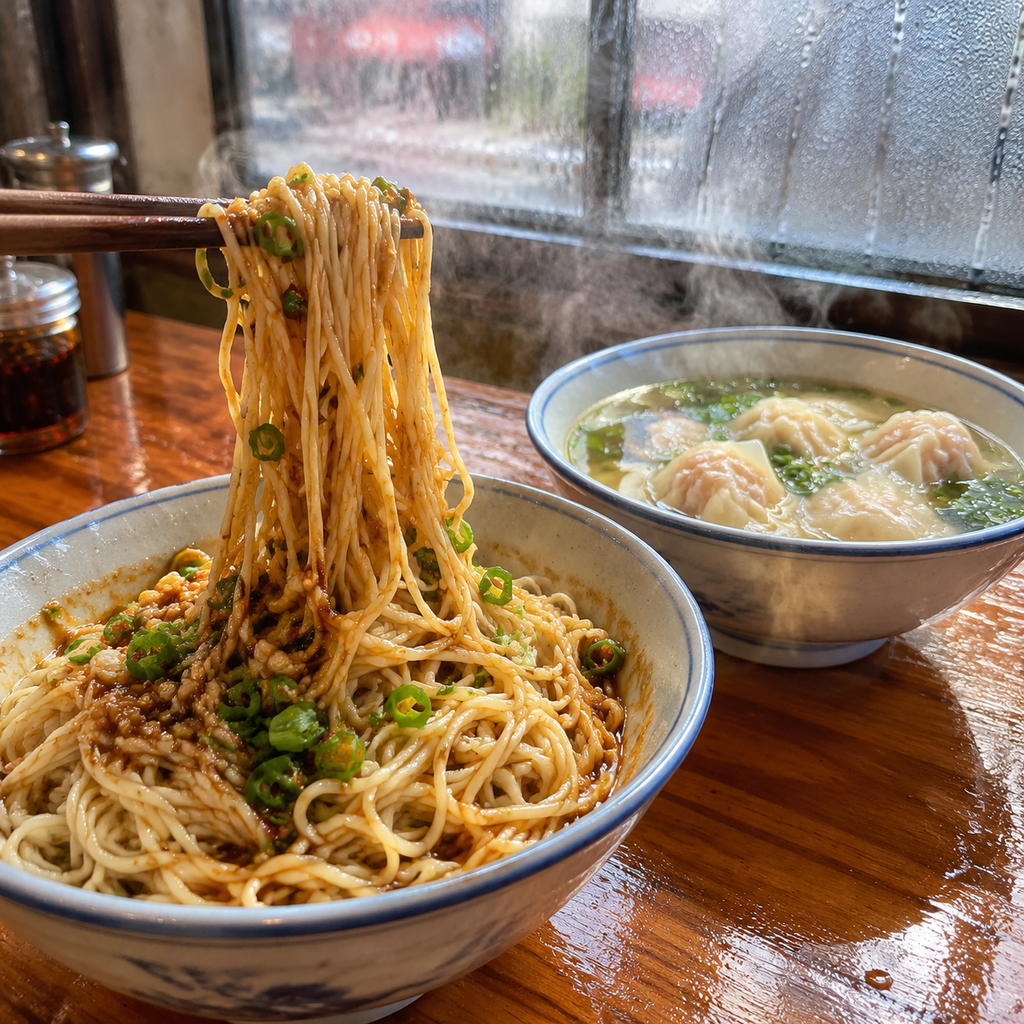
那位骑车的男人端到拌面后,没有马上吃。他先把碗靠近自己,用筷子沿着碗壁刮了一圈,把粘在边缘的酱带回面里,然后从中心向外挑起。第一下挑得很高,面条落下来时溅出一点油光,他便把碗往里收了收。第二次动作短一些,筷子夹住面束后快速旋转,花生酱和酱油在热气里变得顺滑。店主从他旁边走过,只看了一眼,没有提醒。男人吃第一口时微微皱眉,似乎觉得咸味集中在底部;他又翻了几下,第三口入口后眉头舒展开来。调味不是端上来就完成的,食客要用自己的筷子把它补齐。对一个外地人而言,碗底往往藏着当地饮食最具体的操作说明。
The cyclist did not eat immediately after his mixed noodles arrived. He drew his chopsticks around the inner wall, bringing sauce stuck to the rim back into the noodles, then lifted from the center outward. His first lift was too high, and a sheen of oil flicked onto the surface, so he pulled the bowl closer. The second movement was shorter. He twisted the chopsticks quickly, allowing peanut sauce and soy sauce to loosen in the heat. The owner passed beside him and glanced over without offering advice. He tasted the first bite and tightened his brow, perhaps finding the salt concentrated at the bottom. After several more turns, his face relaxed at the third bite. The seasoning was not finished when the bowl arrived; the diner completed it with a pair of chopsticks. For a traveler from elsewhere, the bottom of the bowl can contain the most concrete instructions about how local food is meant to be handled.
我也照着他的顺序重新拌了一遍。面条在碗里相互缠住,筷子分开它们时,能感觉到酱的阻力从黏稠变成柔软。花生酱先给舌头一种厚重的坚果香,随后酱油的咸鲜从后面追上来,葱花带来短促的清气,油香则把几种味道连成一条较长的余韵。若是只吃表面,入口会显得偏淡;挖到碗底,才会有一小团更深的褐色,像湿润的泥土。那一团不能整口吞下,得把它分散到剩余面条里。于是,一碗看似简单的拌面让人不断调整手腕的角度、筷子的力度和入口的分量,食物的地方性便不再是标签,而是舌头和手一起完成的过程。
I mixed my own bowl again in the same order. The noodles had knotted together, and as the chopsticks separated them I could feel the sauce change from resistant and sticky to loose and smooth. Peanut paste gave the tongue a dense nutty aroma; soy sauce followed with salt and savor; scallions supplied a brief freshness, while oil joined the flavors into a longer finish. If I ate only from the surface, the noodles seemed mild. At the bottom was a darker brown patch, almost like damp earth. It could not be swallowed as one concentrated mouthful; it had to be dispersed through the remaining noodles. A bowl that looked simple therefore required constant adjustment of wrist angle, chopstick pressure, and bite size. Local character was not merely a label. It was completed jointly by hand and tongue.
扁肉汤里的停顿 | Pauses in the Dumpling Broth
扁肉的皮薄到能看见汤色在边缘透过去。店主端来时,先用勺背把几只扁肉轻轻拨开,避免它们挤在一起。勺子碰到碗底,发出很轻的瓷响。老人吃扁肉的方式很慢:先舀一点汤润口,再用勺子托住扁肉,咬开一角,让馅料和汤在口中混合。他不会把整只扁肉一口吞掉,也不急着追问馅里有什么。肉馅的咸味并不尖,带着一种被汤水削薄后的鲜;皮没有面团的厚重,咬下去时只留下柔软的阻力。葱末浮在汤面上,随着勺子的移动聚到一边,又散回中央。这样一碗汤食把吃饭的速度改得很轻,连店里的嘈杂都像退到了碗外。
The wrapper of the bianrou was thin enough for the color of the broth to show through at its edges. When serving it, the owner used the back of a spoon to separate the dumplings so they would not crowd together. The spoon touched the bowl with a faint ceramic note. The older man ate slowly: a little broth first to moisten his mouth, then a dumpling supported by the spoon, opened at one corner so the filling and liquid could meet. He did not swallow each dumpling whole or hurry to identify every ingredient. The filling’s salt was not sharp; it carried a savor softened by the broth. The wrapper offered little resistance, nothing like a heavy dough. Scallion pieces gathered to one side as the spoon moved, then drifted back toward the center. This bowl quietly changed the speed of eating, making even the shop’s noise seem to recede beyond its rim.
我把勺子停在碗边,先闻到的是热水汽里很细的肉香,接着才是葱和胡椒一样的辛清感。汤不浓,却有持续的温度,喝到第二口时,喉咙已经适应了它的热。扁肉被咬开后,里面的馅料比想象中更紧,细碎的纤维很快散开,不需要费力咀嚼。旅行途中常有这样的时刻:人原本只想迅速填饱肚子,却被一碗清汤迫使自己坐稳。窗外的车辆驶过湿路,轮胎把水声推向远处;店内的勺子一次次碰到碗底,声音小得像有人在桌下敲指节。地方食物的力量有时不在于惊艳,而在于它能把一个漂在路上的人暂时放回身体里面。
I rested the spoon against the bowl and first smelled a fine meatiness rising with the heat, followed by a clean sharpness resembling scallion and pepper. The broth was not thick, but its warmth persisted. By the second sip, my throat had adjusted to the temperature. Once opened, the filling was firmer than expected, its fine fibers separating without demanding much chewing. Travel often contains moments like this: one intends only to fill an empty stomach quickly, yet a clear soup makes one sit properly. Outside, tires pushed water along the wet road; inside, spoons touched the bottoms of bowls again and again, as soft as fingers tapping under a table. The strength of local food is not always surprise. Sometimes it is the ability to return a person who has been moving through the world to the feeling of inhabiting a body.
店主与熟客之间的省略 | What the Owner and Regulars Leave Unsaid
午饭高峰时,店主几乎没有完整说完一句话。有人在门口问有没有空位,她用下巴朝里侧抬了一下;有人要打包,她把带孔的盒子放到案板边;熟客刚坐下,她已经把常用的碗放在炉旁。一个年轻女职员进门,摘下口罩后只说了“老样子”,店主便拿笔在单子上点了两下。女职员把零钱压在手机下面,站到蒸笼前看时间。几分钟后,她端着拌面和扁肉坐下,先喝两口汤,再把面拌开,吃到一半看了一眼手表。店主没有追问她是否赶时间,只在她起身时把打包袋的提手打了一个更牢的结。熟悉让语言变短,却没有让注意力变少。
At the lunch rush, the owner rarely completed a full sentence. When someone asked about a seat, she lifted her chin toward the inside. When another customer wanted takeaway, she placed a vented container beside the cutting board. A regular had barely sat down before the owner had set the usual bowl near the stove. A young office worker removed her mask and said only, “The usual.” The owner marked the order twice with her pen. The woman placed her change beneath her phone and watched the steamers while checking the time. A few minutes later, she sat with mixed noodles and dumplings in broth, drank two sips of soup, mixed the noodles, and glanced at her watch halfway through. The owner did not ask whether she was in a hurry. When the woman stood, the owner tied the takeaway bag with an extra-secure knot. Familiarity shortened language without reducing attention.
熟客也在替店主分担一些小事。靠门的男人看见一位外卖骑手抱着两只保温箱,便把自己的椅子向内推,空出通道;老人吃完后没有马上离开,而是把邻桌被风吹落的纸巾捡起,放进垃圾桶。一个孩子把勺子碰掉在地上,坐在旁边的人先用脚把它拨远,避免有人踩到,再提醒店主更换。没人把这些动作说成热心,也没有人因此得到额外称赞。小店的空间很窄,桌脚、蒸笼、椅背和人的肩膀总会相遇,大家便用一点观察力让相遇不至于变成阻碍。对我这个路过的旅人来说,社区感并不是墙上的介绍,而是人们如何在一平方米的过道里彼此让开。
Regulars also carried part of the owner’s small workload. When the man near the door saw a delivery rider carrying two insulated boxes, he pushed his chair inward to clear the passage. The older customer did not leave immediately after eating; he picked up a tissue blown from the next table and put it in the bin. A child dropped a spoon, and the person beside him nudged it away with a foot before anyone could step on it, then called for a replacement. No one described these actions as kindness or expected praise. The shop was narrow, so table legs, steamers, chair backs, and shoulders inevitably met. A little awareness kept those meetings from becoming obstacles. For a traveler passing through, a sense of community was not an explanation on the wall. It was the way people made room for one another in a one-square-meter passage.
作为日常食物的地方逻辑 | The Local Logic of Everyday Food
沙县小吃在店里呈现出的地方逻辑,并不只是某一种调味比例。它首先承认一顿饭可能有很多尺度:赶着上班的人需要几分钟内吃完一碗面,带孩子的人要一份容易入口的蒸点,夜里收摊的摊主需要热汤,独居的老人可能把两种小食分开慢慢吃。拌面、扁肉和蒸笼里的食物可以彼此搭配,却不要求每个人都按同一套顺序进食。店面也因此不必很大,只要能让人完成点单、等待、落座、取餐、加调料和离开。它适合嵌入居民楼、车站周边、办公街和菜市场边缘,因为它不要求城市先为它准备一块特殊的文化空间。
The local logic visible in a Shaxian shop is not only a matter of seasoning ratios. It begins with the recognition that a meal can have many scales. A worker rushing to the office needs noodles that can be finished in minutes; a parent may need a steamed item easy for a child to eat; someone closing a stall at night may need hot soup; an older person living alone may divide two small dishes and eat slowly. Mixed noodles, bianrou, and steamer items can be combined without requiring everyone to follow one sequence. The shop therefore need not be large. It only needs enough room for ordering, waiting, sitting, collecting food, adding seasoning, and leaving. That makes it fit naturally beneath apartments, around stations, along office streets, and beside wet markets, without asking the city to prepare a special cultural space first.
我在外地吃过一碗味道相近却气氛不同的拌面。那家店的桌面是灰色石材,摸上去凉,蒸笼被放在玻璃柜内,客人只能隔着玻璃看见白雾。面端来时,酱已经拌匀,碗边还放着一小撮腌菜。它和沙县小吃店里的拌面并不完全一样,却仍然给了我一种可辨认的进入方式:先找座位,再看调料,最后用筷子确认碗底有没有沉下去的味道。地方感没有因为空间改变就消失,它在新的桌面上寻找可以继续工作的动作。旅行观察的意义,也许正在于看见同一套生活工具怎样适应不同城市的温度、租金、客流和人的用餐时间。
In another city I ate mixed noodles with a similar flavor but a different atmosphere. The tables there were gray stone and cool to the touch; the steamers sat inside a glass cabinet, so customers could see the vapor only through the pane. The noodles arrived already mixed, with a small portion of pickled vegetables at the side. They were not identical to the bowl in the Shaxian shop, yet the entry was still recognizable: find a seat, inspect the seasonings, and use chopsticks to discover whether flavor had settled at the bottom. Local character had not vanished when the room changed. It searched for new movements through which it could keep working on a different tabletop. Travel observation may matter precisely because it shows how the same everyday tools adapt to a city’s temperature, rent, traffic, and meal schedules.
从柜台到街道的观察 | From Counter to Street
吃完以后,我没有马上走到街上,而是在门口站了一会儿。店主把空蒸笼一层层拆开,竹圈放到通风处,金属盘端到水槽边。她把还剩一点汤的碗分出来,先倒掉液体,再用水冲洗,避免油膜留在池壁。柜台旁的打包盒被重新摞好,勺子按大小插进不同的筒里。外卖骑手来取餐时,她不用找单号,只看保温箱上的贴纸颜色,就把对应的袋子递出去。门开合之间,湿空气和葱油香交替进入店里。街上的人把这里当作一个短暂节点:有人进来补一顿,有人带走晚饭,有人只是站在屋檐下避雨。食物从柜台出发,沿着不同人的路线继续扩散。
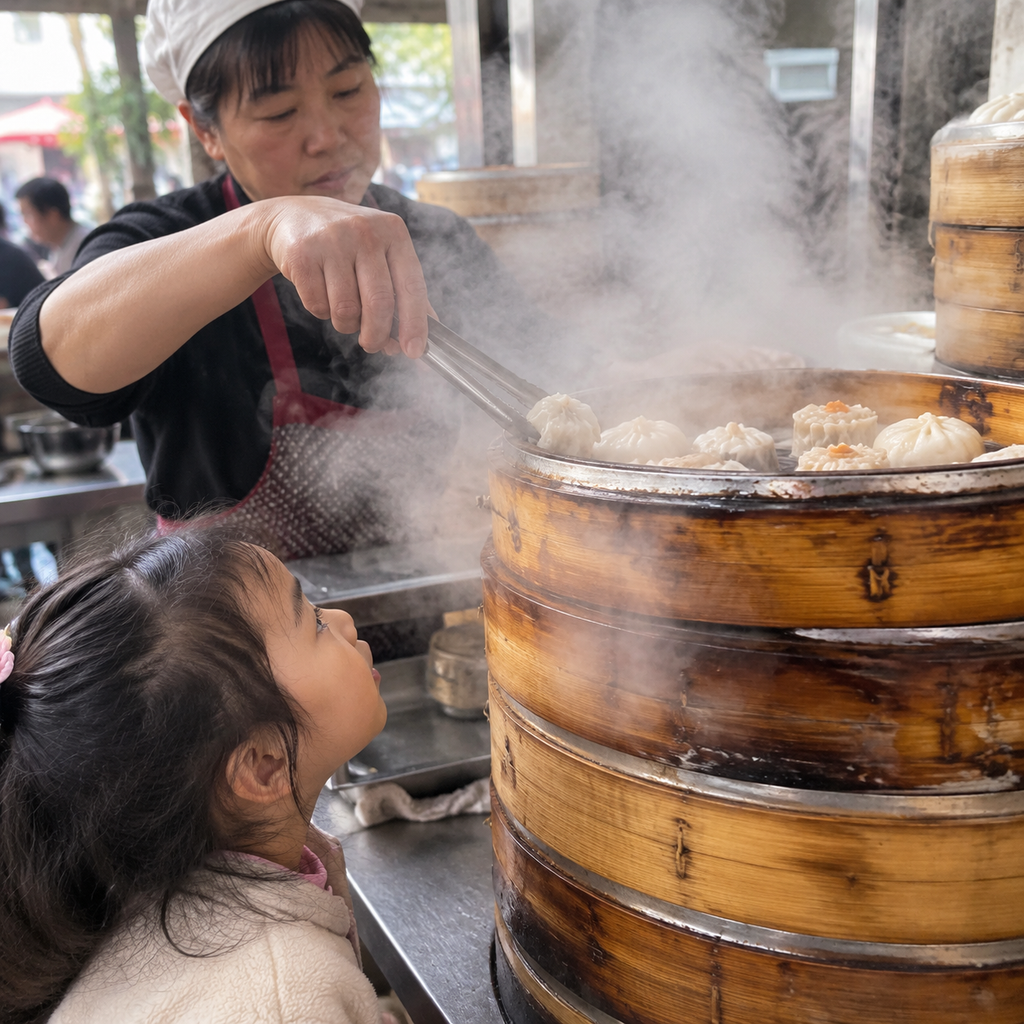
After eating, I did not immediately step into the street. I stood near the entrance while the owner dismantled the empty steamers tier by tier. The bamboo rings went to a ventilated area; the metal trays went beside the sink. She separated bowls that still held a little broth, poured out the liquid first, and then rinsed them so an oily film would not settle on the basin. Takeaway containers were restacked, and spoons were sorted by size into separate holders. When a delivery rider arrived, she did not search for an order number. She matched the bag to the color of the sticker on his insulated box. Each time the door opened, damp air and scallion oil alternated in the room. People on the street treated the shop as a brief point in their routes: a place to fill a meal, collect dinner, or shelter from rain beneath the awning. Food began at the counter and continued outward along many different paths.
我沿着街道往前走,经过一排晾在屋檐下的雨伞和几辆靠墙停放的电动车。拎着打包盒的人没有边走边拍照,他们通常把袋子夹在手腕和身体之间,另一只手接电话、推车或撑伞。塑料盒里仍有热气,袋壁被蒸得发软,提手却被店主打结的位置牢牢固定。这样的细节让我想到,旅行者看到的“地方食物”往往已经离开店铺才真正进入生活:它被带进办公室的休息间,被放在出租屋的小桌上,被家人分到不同的碗里,也可能在夜班开始前匆匆吃完。店里的桌面是起点,城市中的许多私人桌面才是它完成一顿饭的地方。
I walked along the street past umbrellas drying beneath awnings and electric scooters parked against the wall. People carrying takeaway boxes were not photographing them as they walked. They tucked the bags between wrist and body while using the other hand to answer a call, push a cart, or hold an umbrella. Steam still softened the plastic, but the handles stayed secure where the owner had tied them. Such details reminded me that the “local food” a traveler notices often enters daily life only after leaving the shop. It is carried into an office break room, placed on a small table in a rented room, divided among family bowls, or eaten hurriedly before a night shift. The shop table is the starting point; many private tables across the city are where the meal is completed.
一家小店如何留住重复的人 | How a Small Shop Keeps Receiving the Same People
第二天早上我又经过那家店,门还没有完全打开,店主已经把第一层蒸笼放上去。她用木夹把一张张蒸纸压平,指尖碰到纸边时立刻收回,避免被湿热烫到。桌面上没有昨晚留下的痕迹,调料瓶擦得发亮,靠窗的椅子倒扣在桌上。一个穿校服的男孩在门外等,书包带滑到手肘,他不断抬头看蒸汽从半开的门缝里出来。店主看见他,伸手把一只小碗放到柜台边。男孩进门后没有点单,只把书包放下,先喝了几口温水,再等自己的食物。熟客关系在这里并不需要热烈欢迎,它表现为店里提前留出一只合适的碗。
The next morning I passed the shop again before the door was fully open. The owner had already placed the first steamer over the heat. With wooden tongs she flattened sheets of steaming paper, pulling her fingers back whenever they touched the damp heat. The tables showed no trace of the previous evening. Condiment bottles shone, and the chairs by the window were inverted on the tabletops. A boy in school uniform waited outside, his backpack strap sliding toward his elbow as he watched steam escape through the half-open door. The owner saw him and placed a small bowl near the counter. He entered without ordering, set down his bag, drank several sips of warm water, and waited for his food. A relationship between shop and regular does not require a dramatic welcome. Here it appeared as one appropriately sized bowl already set aside.
我没有追问男孩吃的是什么,也没有把店主的动作解释成某种感人故事。她只是按照每天早晨的顺序工作,男孩也只是按照自己的习惯等候。正因为没有谁需要把它说出来,这个场景才显得可靠。对居民而言,一家日常小吃店的价值常常不在“值得专程前往”,而在于它可以被顺路经过、被临时想起、被疲惫时依赖。沙县小吃的地方逻辑就在这里显露出来:它把食物做得足够明确,让陌生人容易选择;又把空间留得足够灵活,让熟悉的人能够按照自己的生活节奏使用。店主、蒸笼、桌面和一碗汤面共同构成的,不是展示性的风景,而是一种每天可以重新开始的街区关系。
I did not ask what the boy was eating, and I did not turn the owner’s movement into a sentimental story. She was simply following the morning sequence of her work, and he was simply waiting according to his habit. Because neither needed to explain it, the scene felt dependable. For residents, the value of an everyday snack shop is often not that it deserves a special journey, but that it can be passed on the way, remembered suddenly, and relied upon when one is tired. This is where the local logic of Shaxian snacks becomes visible: the food is clear enough for strangers to choose easily, while the room remains flexible enough for regulars to use according to their own schedules. Owner, steamers, tabletop, and bowl of soup together form not a display, but a neighborhood relationship capable of beginning again each day.
旅行者坐下时看见的细节 | Details Seen When a Traveler Sits Down
我后来明白,自己反复观察桌面,并不是因为桌子比食物更重要,而是桌面把一间店的使用痕迹放在最容易看见的地方。酱汁滴落的位置、椅子被推开的角度、蒸笼边留下的水珠、纸巾是否被折好、店主擦拭时先后处理什么,都让一顿饭有了空间上的轮廓。旅行者若只拍一碗色彩漂亮的拌面,当然也能留下记忆;但坐下来以后,手肘碰到略带温度的桌面,听见邻桌把扁肉汤碗轻轻放回去,再看店主将下一笼点心推近火口,才会知道食物怎样与时间相处。味道从舌头进入,动作从眼睛进入,地方经验往往在两者交会处变得清晰。
I later understood that I kept watching the table not because it mattered more than the food, but because it displayed a shop’s traces of use in the most visible way. The places where sauce had fallen, the angles of pushed-back chairs, droplets beside the steamers, folded tissues, and the owner’s order of wiping all gave a meal a spatial outline. A traveler can certainly remember a colorful bowl of noodles through a photograph. Yet only after sitting down, feeling the slightly warm surface under an elbow, hearing a neighboring soup bowl return gently to the table, and watching the owner move the next steamer closer to the heat can one understand how food lives with time. Flavor enters through the tongue, movement through the eyes, and local experience becomes clear where the two meet.
离开那家店很久以后,我仍然会在陌生街区辨认类似的信号:门口是否有一小块被雨水洗亮的地面,柜台旁是否堆着正在轮换的蒸笼,桌上是否同时出现拌面用的筷子和扁肉用的勺子,店主是否能在几个客人同时开口时仍然记住每个人的顺序。它们不能替代真正的品尝,也不能保证每家店都合乎我的口味,却能让我更快理解一个地方如何接待日常。等面时,我会先看酱有没有沉在碗底;喝汤时,我会注意葱末如何随着勺子散开;吃完后,我会把碗推到不挡路的位置。那些动作来自一次雨天的停留,如今已经成为我在路上与陌生小店相处的方式。
Long after leaving that shop, I continued to recognize similar signals in unfamiliar neighborhoods: a small patch of pavement brightened by rain, a rotating stack of steamers beside the counter, chopsticks for noodles appearing alongside spoons for bianrou, and an owner who could remember each customer’s sequence while several people spoke at once. These signs could not replace tasting and could not guarantee that every shop would suit my preferences, but they helped me understand more quickly how a place received everyday life. While waiting for noodles, I looked for seasoning settled at the bottom. While drinking broth, I watched scallion pieces move with the spoon. After eating, I pushed the bowl somewhere that would not obstruct the next person. Those movements began during one rainy pause and gradually became the way I shared space with small unfamiliar shops on the road.
午后空桌与再一次擦拭 | Empty Tables in the Afternoon
午后两点左右,店里的声音降了下来。蒸笼不再连续打开,柜台后的锅只发出细小的沸响,靠窗的桌子空出一半。店主趁着间隙把椅子一张张搬开,先用刮片收走桌面上已经干掉的酱痕,再用湿布擦过边角。干掉的花生酱比刚滴下来时更难处理,她用指甲轻轻挑起一小块,放到纸巾上,随后才把整块桌面擦匀。水痕沿着木纹往下走,灯光照在湿处,显出一道比周围更深的线。她最后用干布横向带过,把水汽收在布面里。桌子在没人吃饭时也没有真正闲着,它在等待下一位客人的过程中被重新整理。
Around two in the afternoon, the shop grew quieter. The steamers no longer opened continuously, the pot behind the counter gave off only a faint simmer, and half the tables by the window were empty. During the pause, the owner moved the chairs aside one by one. She used a scraper to lift sauce that had dried onto the surface, then wiped the corners with a damp cloth. Dried peanut paste was harder to remove than a fresh drop. She loosened a small piece with her fingernail, placed it on a tissue, and then wiped the tabletop evenly. Water followed the wood grain in a darker line. Finally, she passed a dry cloth across the surface, gathering the moisture into its fabric. Even when no one was eating, the table was not truly idle; while waiting for the next customer, it was being prepared again.
我坐在刚擦过的桌边,能闻到湿布留下的淡淡清洁气味,过了片刻,蒸笼里的竹香又慢慢回来。窗外的太阳从云缝里露出一点,门口地面上的积水亮了一阵,随后被路人的鞋底切成不规则的碎片。一个送菜的人把纸箱放到门外,店主出来清点,手指按在箱盖的缝隙上确认没有受潮。她把新来的青菜放进操作台下方,把旧的面粉袋往前挪,留出能够转身的宽度。店里每一个位置都有用途,空桌不只是供人坐,墙边也不只是用来靠椅子;它们共同决定店主能否在狭窄空间里连续完成取料、煮面、端汤和收拾。旅行者常说一间店“很有烟火气”,而我更愿意看它怎样安排一只碗、一把椅子和一块抹布的去处。
I sat beside the freshly cleaned table and smelled a faint trace of the damp cloth. After a while, the bamboo scent from the steamers returned. A little sunlight appeared through the clouds, brightening the puddle at the entrance until passing shoes broke it into irregular fragments. A supplier set boxes outside while the owner came out to check them, pressing a finger along a lid to make sure the contents had not become damp. She put new greens beneath the counter and shifted an older flour sack forward, leaving enough room to turn around. Every position in the shop had a purpose. An empty table was not merely a place to sit, and the wall was not merely somewhere to lean chairs. Together they determined whether the owner could repeatedly reach ingredients, boil noodles, carry soup, and clean up in a narrow room. Travelers often call such a shop full of everyday warmth; I would rather watch where a bowl, a chair, and a cloth are placed.
熟客带来的小份量 | The Small Portions Regulars Bring
下午来了一位戴布帽的女人,她没有点完整的一餐,只要半份拌面,再加几只扁肉。店主把面分进小碗时,先用夹子估量,发现第一夹略多,便挑回一部分放进锅边的漏勺里。女人坐下后,把扁肉汤放在左手侧,拌面放在右手侧,先吃两口面,再喝一口汤。她每次只夹很少的面,筷子在碗里停留的时间很短,像是已经知道自己下午需要多少油香、多少温热,而不需要一碗满满的满足。店主从她身边经过,顺手把汤碗往里推了半指宽,免得女人抬手接电话时碰倒。日常食物也可以是小份量的,不必把胃口和价格都推到最大。
A woman in a cloth cap arrived in the afternoon and ordered no complete meal. She asked for a half portion of mixed noodles and several bianrou dumplings. When dividing the noodles into a smaller bowl, the owner judged the first portion slightly too large, so she returned some to the strainer near the pot. The woman placed the broth on her left and the noodles on her right. She ate two bites of noodles, then drank a sip of soup. Each time she lifted only a small amount, keeping the chopsticks in the bowl briefly, as if she already knew how much oil, salt, and warmth she needed that afternoon. Passing by, the owner pushed the soup inward by half a finger’s width so the woman would not knock it over while answering a call. Everyday food can also be modest in portion; neither appetite nor price has to be enlarged to the maximum.
这让我重新看待菜单上那些看起来相近的选择。拌面和扁肉并不是只能组成一套固定套餐,它们可以被拆开、减量、加上一份蒸点,也可以被两个人分着吃。店主的手艺不仅体现在把面煮熟、把扁肉包好,还体现在理解客人今天的身体状态:有人胃口好,有人只想喝热汤,有人需要带走给家人,有人吃得慢,怕刚出锅的东西太烫。沙县小吃进入日常,靠的不是让每个人接受同一个标准答案,而是让一份食物能够在桌边被重新组合。对旅人而言,这种弹性比菜单上的品类数量更能说明小店为什么容易被不同社区接纳。
This made me reconsider the apparently similar choices on the menu. Mixed noodles and bianrou did not have to form one fixed set. They could be separated, reduced, paired with a steamed item, or shared between two people. The owner’s skill was not limited to boiling noodles and wrapping dumplings. It also involved reading a customer’s condition that day: someone with a strong appetite, someone wanting only hot broth, someone carrying food home, or someone eating slowly because the fresh items were still too hot. Shaxian snacks enter daily life not by making everyone accept one correct answer, but by allowing a dish to be recombined at the table. For a traveler, this flexibility says more about a shop’s place in different communities than the number of items listed on its menu.
Public Source Notes
本文为基于个人现场观察与公开常识的原创叙事。文中未引用无法核实的精确价格、营业时间或人物原话;关于沙县小吃由地方饮食走向跨地域经营的部分,仅作概括性观察,未列入不确定网址。
This is an original narrative based on personal observation and broadly available public knowledge. It does not give unverifiable exact prices, opening hours, or fabricated quotations. Its comments on Shaxian snacks moving from local food culture into cross-regional business are intentionally general, and no uncertain URLs are listed.

- 云贵川大环线15日自驾 | 15-Day Yunnan-Guizhou-Sichuan Road Trip
- 广州最厉害的地方,是你很难说清自己到底是在逛街,还是已经坐进了一顿饭里 | Guangzhou’s Gift Is That You Can Hardly Tell Whether You Are Walking the City or Already Sitting Inside a Meal
- 黄山云海与迎客松:四季皆美 | Huangshan Sea of Clouds & Welcome Pine: Beautiful in All Seasons
- 我第一次把扫码付款练成一种低压力习惯 | How I Turned QR Payment into a Low-Stress Habit
- 中国纪念品选购指南 | Chinese Souvenirs Guide
- 重庆让国外大博主上头的,从来不只是洪崖洞那一层灯火 | What Hooks Major Foreign Creators in Chongqing Is Never Only the Glow of Hongyadong
- 烤鸭不只是一道菜,它是北京给世界的一封信 | More Than a Dish: Peking Duck as Beijing's Letter to the World
- 我在青岛学会把海边步行和补水当成一件事 | In Qingdao I Learned to Treat Waterfront Walking and Hydration as One Task
- 我第一次在中国寄快递,把纸箱、胶带和身份证明全学会了 | My First Time Shipping a Parcel in China: Boxes, Tape, and ID Checks
- 我为什么开始放心把手机拿在手里:在中国街头学到的日常安全判断 | Why I Began Carrying My Phone in My Hand Without Fear: Everyday Safety Judgments I Learned on Chinese Streets
Comments (0)