
扇面书画体验:我第一次觉得“留白”也可以是一种邀请 | Fan Painting and Calligraphy: The First Time I Felt Blank Space Could Be an Invitation
扇面书画体验:我第一次觉得“留白”也可以是一种邀请 | Fan Painting and Calligraphy: The First Time I Felt Blank Space Could Be an Invitation
- 编号: 13
- 类别: 6
- 主题: 民艺 / Folk Art
- 对比国家: 日本
如果把我来中国之前对“扇子”的印象说得老实一点,那大概就是:一种优雅、实用、适合夏天和拍照的小物件。我知道中国扇文化很丰富,也知道扇面上常常会有书法和绘画,可我一直没有真正理解,为什么这样一块不大的空间,能承载那么多审美意味。直到我第一次参加扇面书画体验,看老师把墨色落在半圆形扇面上,我才忽然明白,扇子在中国并不只是物件,它更像一个可以被握在手里的小型审美场域。
If I am honest about my impression of fans before coming to China, it was probably this: an elegant and practical object, suitable for summer and for photographs. I knew that Chinese fan culture was rich, and I knew that fan surfaces often carry calligraphy and painting, but I had never truly understood why such a small area could hold so much aesthetic meaning. Only when I joined a fan painting and calligraphy workshop for the first time, and watched an instructor place ink onto the semicircular surface, did I suddenly understand that in China a fan is not merely an object. It is a small aesthetic field that can be held in the hand.
这次体验最先打动我的,不是画什么,而是“位置”这件事。老师展开一把白色折扇给我们看,说扇面和普通纸张不一样,因为它有开合、有弧线、有扇骨分隔,所以构图时必须先考虑气口、重心和展开之后的观看方式。她只是轻轻指了几个地方,我就已经开始紧张了。原来在纸上画一枝竹子,和在扇面上画一枝竹子,完全不是同一回事。扇面不是缩小版的画纸,它有自己的节奏和边界。
What moved me first in this workshop was not what to paint, but where to place it. The instructor opened a white folding fan and explained that a fan surface differs from ordinary paper because it opens and closes, contains curved edges, and is divided by ribs. Composition therefore has to consider breathing space, center of gravity, and how the image will be seen once the fan is opened. She only pointed to a few areas lightly, and I was already nervous. Painting a branch of bamboo on paper and painting a branch of bamboo on a fan are not the same thing at all. A fan is not a miniature sheet of paper. It has its own rhythm and boundaries.
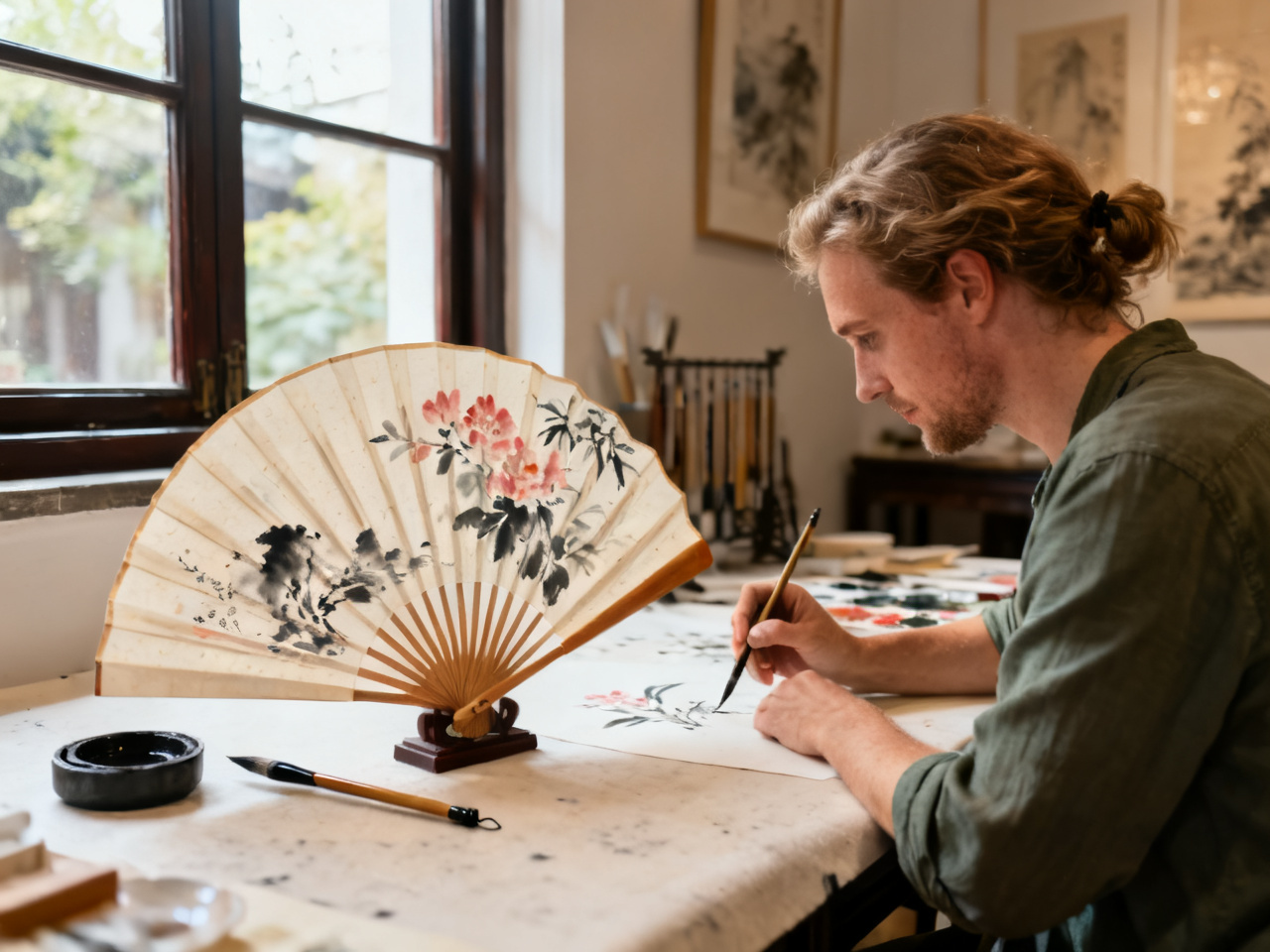
我选的是比较基础的内容:几笔兰叶,加上两三个字的题写。听起来非常简单,可真正落笔的时候,我才知道这种“简单”有多难。因为扇面太容易显得拥挤,也太容易显得空。叶子如果太多,会堵住扇骨之间的呼吸;字如果写得太重,会压坏整把扇子的轻盈感。老师一边示范,一边提醒我们不要急着填满。我以前当然听过“留白”这个词,但那天是我第一次在手上真正理解它:空出来的地方不是没画好,而是让风、眼睛和想象都能进去。
I chose a relatively basic design: a few orchid leaves with two or three written characters. It sounds very simple, but when I actually placed the brush down, I discovered how difficult that kind of simplicity is. The fan surface becomes crowded very easily, yet it can also feel too empty. Too many leaves block the breathing room between the ribs; characters written too heavily can ruin the lightness of the entire fan. The instructor kept reminding us not to rush to fill everything. Of course I had heard the term “blank space” before, but that day was the first time I truly understood it in my own hand: the empty area is not unfinished. It is where wind, the eye, and imagination are allowed to enter.
写字的部分对我来说尤其有挑战。作为外国人,我对汉字书写一直怀有一种敬畏,因为你会很清楚地感觉到,线条不只是线条,它还带着速度、停顿和态度。哪怕只是写很短的几个字,只要用毛笔落在扇面上,整个画面的气质都会被改变。老师写给我们看时,我最惊讶的是她控制轻重的能力:某一笔明明很快,可末端却能稳稳收住;某一点明明很小,却像替整幅扇面把节奏钉住了一样。那种节制让我非常佩服。
The calligraphy was especially challenging for me. As a foreigner, I have always felt a kind of awe toward writing Chinese characters, because you can clearly sense that a line is never just a line. It carries speed, pause, and attitude. Even if you write only a few short characters with a brush on a fan, the temperament of the whole composition changes. What surprised me most while watching the instructor was her control of weight. A stroke could move quickly yet end in complete stability. A tiny dot could somehow pin down the rhythm of the whole fan. I admired that restraint deeply.
我也因此想到日本的扇子与书画传统。因为我的家乡是日本,所以我对扇面之美并不陌生,我们同样有很成熟的折扇、团扇和附着其上的书写与装饰传统。但这次中国扇面书画体验还是给了我一种不一样的感觉。日本很多相关审美更强调季节感、物哀、细致情绪和装饰中的秩序,而中国扇面书画给我的印象更偏向“笔墨气息本身就是主角”。也就是说,它当然也在乎季节和雅致,但更明显地把书写性、气韵和文人式的留白意识放在前面。
This naturally made me think of Japanese fan and painting traditions. Because I come from Japan, I am not unfamiliar with the beauty of fan surfaces. We also have mature traditions of folding fans, round fans, and the writing and decoration attached to them. Yet this Chinese workshop still gave me a different feeling. In Japan, related aesthetics often emphasize seasonality, delicate emotion, and order within decoration. Chinese fan painting and calligraphy, by contrast, struck me as placing the life of brush and ink itself at the center. It certainly cares about season and elegance, but more visibly foregrounds brushwork, vital energy, and a literati-style consciousness of blank space.
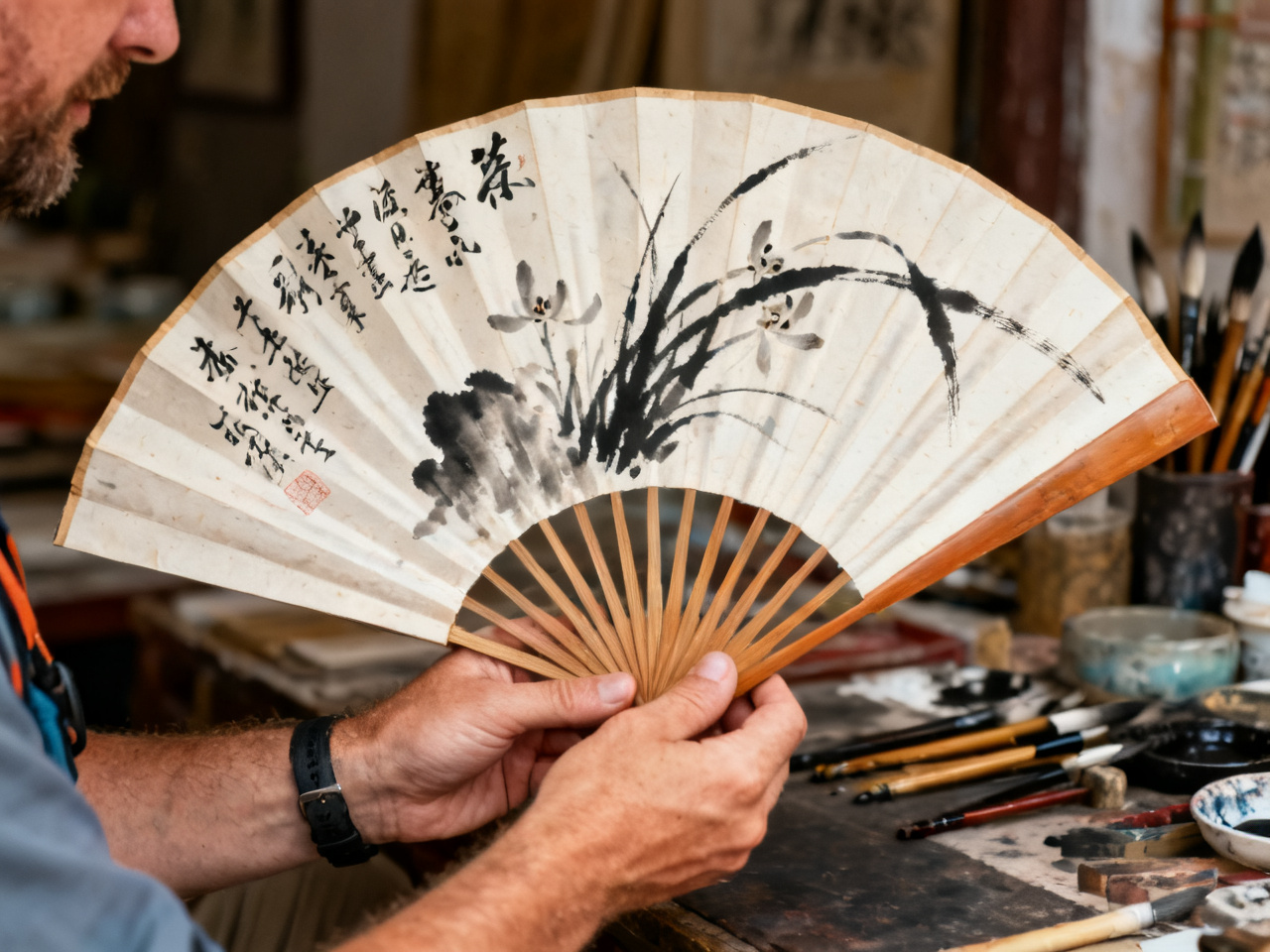
体验过程中我最喜欢的一个瞬间,是把扇子完全展开之后再退后一步看。平放在桌上时,你还容易把它当作一张小画;可一旦它被真正打开,扇骨撑开弧度,墨色随着褶面起伏,那种“物与画是一体”的感觉就立刻出来了。它不是先有一张画,再勉强附着到扇子上,而是从一开始就按照扇子的身体去安排线条和节奏。对我来说,这种统一感非常高级,也非常中国。
My favorite moment during the workshop came when I opened the fan completely and then stepped back to look at it. When it lies flat on the table, you can still mistake it for a small painting. But once it is truly opened, the ribs create their arc, the ink moves with the folds, and the feeling that object and image form a single body appears immediately. It is not that a painting exists first and is then attached to a fan. The lines and rhythm are arranged from the beginning according to the fan’s own physical form. To me, that unity felt both sophisticated and distinctly Chinese.
我最后做出的扇面其实很简单,甚至可以说有一点过于保守。可也正因为如此,我记住了老师说的一句话:宁可少一点,也不要让扇子喘不过气。对我这样的外国体验者来说,这句话几乎比技法本身更有价值。它让我意识到,中国很多审美传统并不急于把信息塞满,而是愿意给观看者留下停顿、给器物留下余地、给气息留下流动空间。
The fan I finished was actually quite simple, perhaps even too cautious. But that is exactly why I remembered something the instructor said: better a little less than a fan that cannot breathe. For a foreign participant like me, that sentence was almost more valuable than technique itself. It made me realize that many Chinese aesthetic traditions are not eager to fill every space with information. They are willing to leave pause for the viewer, room for the object, and movement for breath.
如果有朋友问我,哪一种中国民艺最能帮助外国人理解“雅”不是抽象概念,我会推荐扇面书画。它体量不大,却把构图、书写、绘画、器物和使用方式全部连在了一起。你做完以后,不只是得到一把扇子,而是开始明白为什么中国人会把一件日常小物看成审美修养的延伸。对我来说,这次体验最深的收获,就是学会尊重空白。原来有些美,不是靠加出来的,而是靠克制留下来的。
If friends asked me which Chinese folk-art experience best helps a foreigner understand that refinement is not an abstract idea, I would recommend fan painting and calligraphy. Its scale is small, yet it connects composition, writing, painting, objecthood, and use all at once. After finishing, you do not only walk away with a fan. You begin to understand why a daily object can be treated in China as an extension of cultivated taste. For me, the deepest lesson of this experience was learning to respect emptiness. Some forms of beauty are not created by adding more, but by what restraint chooses to leave behind.
- 都江堰的水没有被堵住:我沿着分流口看一座工程怎样工作 | Dujiangyan’s Water Was Not Blocked: How I Read Its Flow
- 在成都点微辣,我才知道辣度不是翻译能完全解决的 | Ordering Mild Spice in Chengdu Taught Me Translation Cannot Fully Explain Heat
- 潮州早茶的一张小桌 | A Small Table at Chaozhou Morning Tea
- 杭州西湖边那阵风,提醒我热门景区也要会躲人流 | A Breeze by West Lake Reminded Me How to Dodge Crowds at Famous Attractions
- 我在和田河边捡了一块石头,然后掉进了八千年的坑 | I Picked Up a Stone by the Hetian River and Fell Into an 8,000-Year Rabbit Hole
- 如何在中国使用网约车应用 | How to Use Ride-Hailing Apps in China
- 免签来中国前,我把这张“入境准备清单”发给了朋友 | Before Coming to China Visa-Free, I Sent This Entry Checklist to a Friend
- 广州真正上镜的,不只是早茶和烧味,而是吃这件事怎样带着整座城往前走 | What Truly Films Well in Guangzhou Is Not Only Dim Sum and Roast Meats but the Way Eating Pulls the Whole City Forward
- 在中国穷游要花多少钱?每日预算全拆解 | How Much Does It Cost to Travel China on a Budget?
- 黄山云海与迎客松:四季皆美 | Huangshan Sea of Clouds & Welcome Pine: Beautiful in All Seasons
Comments (0)