
我在夜里的重庆,学会把害怕也当成风景 | In Chongqing at night, I learned to treat fear as part of the view
我在夜里的重庆,学会把害怕也当成风景 | In Chongqing at night, I learned to treat fear as part of the view
开场 / Opening
如果白天的重庆像一座结构复杂的城市,那么夜里的重庆更像一场立体的梦。我傍晚抵达时,天色正从灰蓝色慢慢往深处沉,楼群一层层叠上去,桥梁从江面上跨过去,灯一点点亮起来,像有人正在巨大模型里依次按下开关。作为第一次来这里的外国人,我兴奋得几乎忘了自己方向感很差,直到导航把我带上一段看起来永远走不完的坡道,我才重新意识到:这座城市不会轻易让你“掌控”。
If Chongqing in the daytime feels like a city of complicated structure, then Chongqing at night feels more like a three-dimensional dream. When I arrived at dusk, the sky was sinking from gray-blue into something deeper. Buildings stacked upward in layers, bridges stretched across the river, and lights flickered on one by one as if someone were pressing switches inside an enormous model. As a foreigner visiting for the first time, I was so excited that I almost forgot how poor my sense of direction was—until my map led me onto a slope that seemed like it would never end. Then I remembered: this city does not let itself be “mastered” easily.
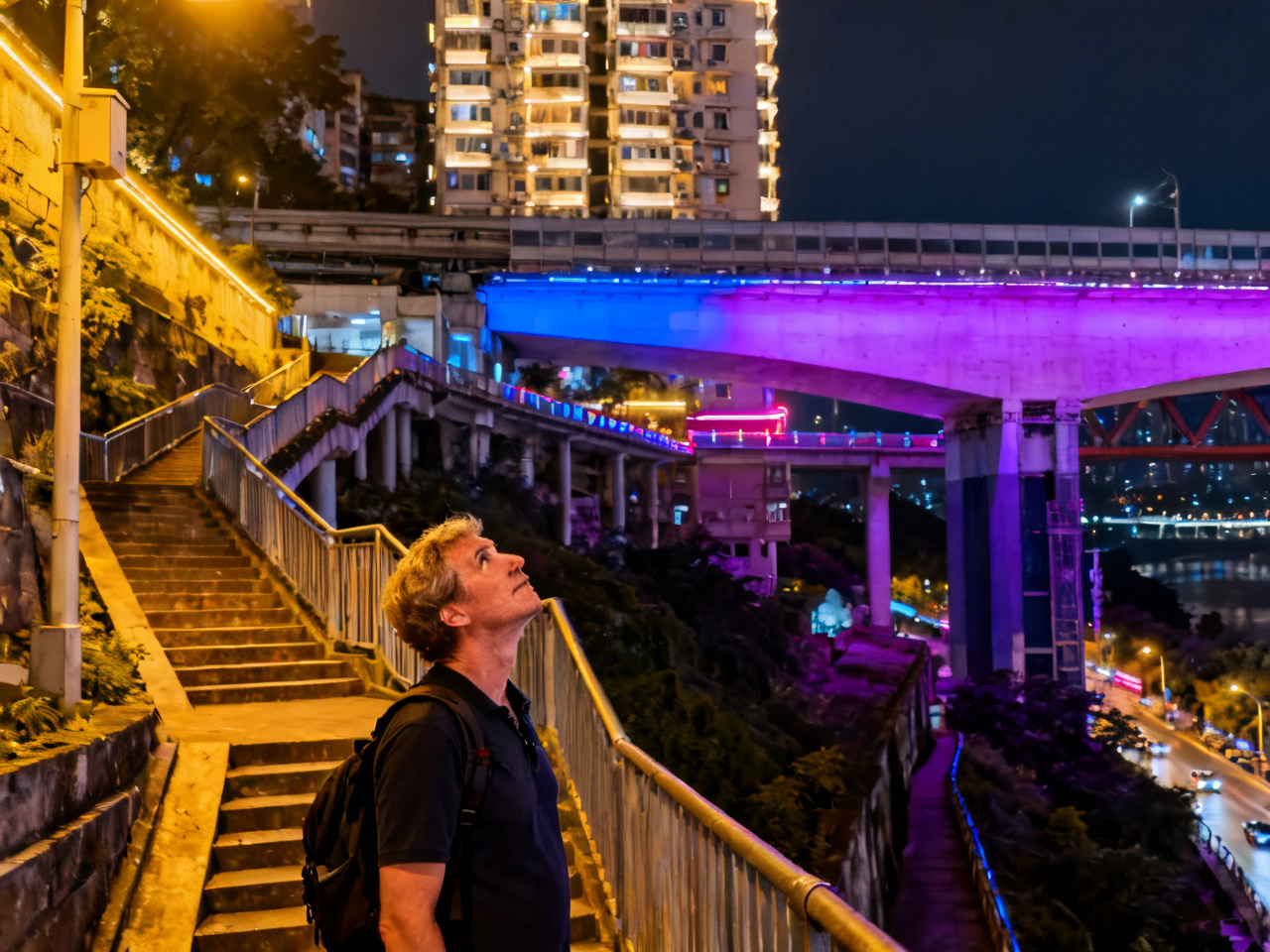
场景一:在坡道和楼梯之间迷路 / Scene 1: Getting lost among slopes and stairways
我以为自己只是去一家江边的小店吃晚饭,结果却在楼梯、天桥、拐角和平台之间绕了快半小时。同一个位置,我似乎从不同高度路过了三次。地图上的蓝点不断移动,但我对“我到底在哪一层”毫无概念。路边一个阿姨看我停在原地,主动问我要去哪儿。我把手机给她看,她先笑了,然后用一种对重庆人来说可能很普通、对我来说却像解谜一样的方式指路:“你先下,再穿,再上,到了轻轨下面往左。”
I thought I was simply heading to a small riverside restaurant for dinner, but I ended up wandering for almost half an hour among staircases, overpasses, corners, and platforms. I seemed to pass the same place three times from three different heights. The blue dot on my map kept moving, but I had no idea which level I was actually on. A middle-aged woman on the street saw me standing still and asked where I was trying to go. I showed her my phone. She laughed first, then gave directions in a way that was probably perfectly ordinary for Chongqing locals and completely puzzle-like to me: “Go down first, then through, then up again. When you get under the rail line, turn left.”
我照做了,居然真的到了。那一刻我又累又想笑,甚至有一点点后怕。独自旅行时,迷路有时不只是浪漫,也会让人短暂怀疑自己是不是高估了适应能力。但重庆很奇怪,它让这种慌张变成了体验的一部分。你不是在一张平面地图上行走,而是在一座会不断折叠、展开、又突然把你送到江边的城市里穿梭。
I followed her instructions and, somehow, actually arrived. In that moment I was tired, amused, and just a little shaken. When you travel alone, getting lost is not always romantic; sometimes it makes you briefly question whether you have overestimated your ability to adapt. But Chongqing does something strange: it turns that nervousness into part of the experience. You are not moving across a flat map. You are traveling through a city that folds, unfolds, and suddenly delivers you to the riverside.
场景二:火锅店里的热度和距离感消失 / Scene 2: In a hotpot restaurant, warmth replaces distance
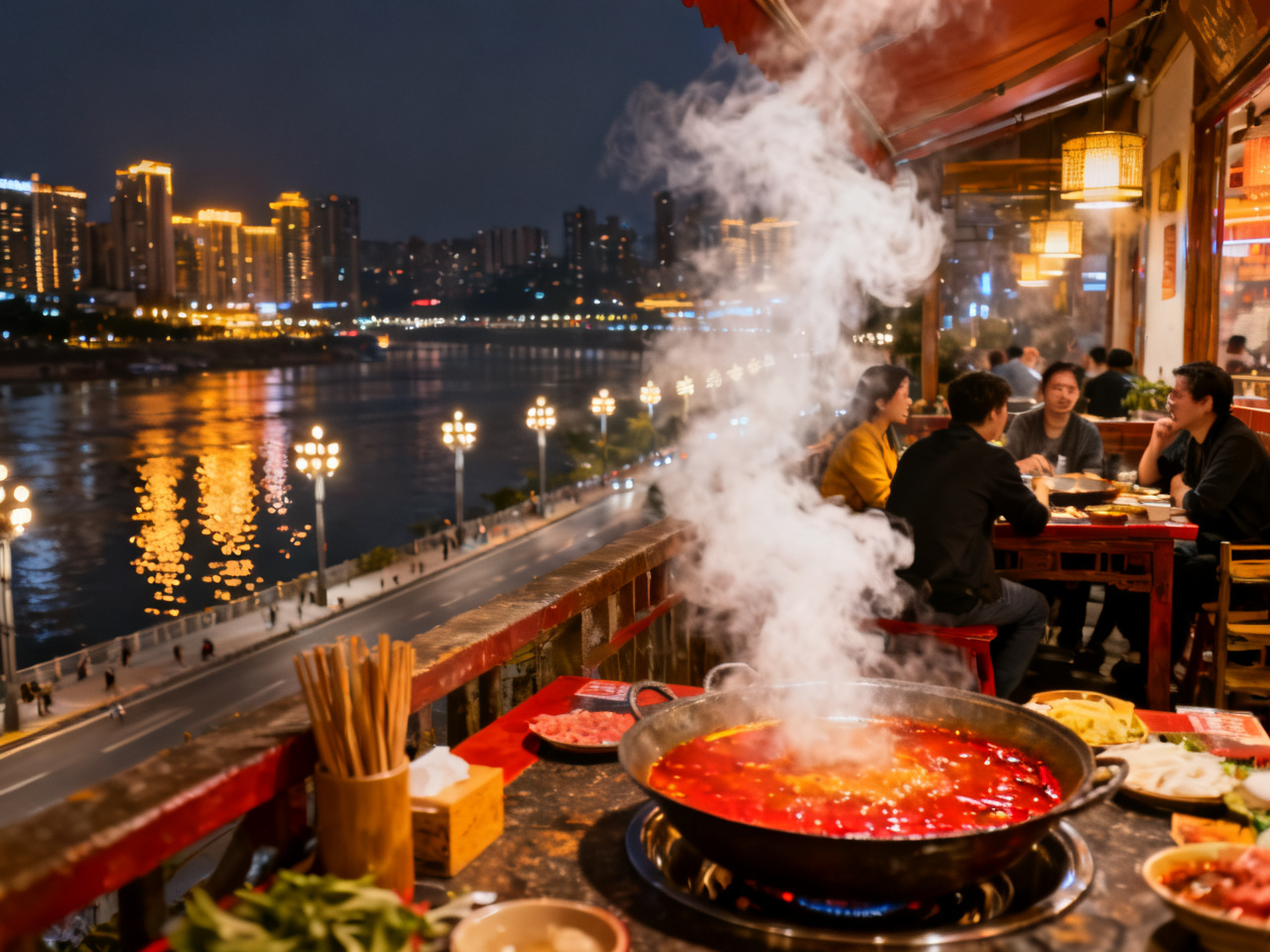
找到店之后,我坐进一间热气腾腾的火锅馆。门一关上,外面的江风和复杂路线像被隔在另一个世界。店里很吵,锅底翻滚,空气里有辣椒、牛油、蒜和花椒的气味。我本来有点紧张,担心自己一个外国人独自坐着会显得奇怪,但周围的人都忙着吃,根本没有人真的在意我。服务员看我研究菜单太久,直接过来帮我选了“比较适合第一次”的锅底和菜。
After I found the place, I sat down in a hotpot restaurant full of steam and noise. Once the door closed, the river wind and the city’s complicated routes felt sealed away in another world. Inside, the broth boiled furiously, and the air smelled of chili, beef fat, garlic, and Sichuan pepper. I had been a little nervous, wondering whether it would feel strange to sit alone there as a foreigner, but everyone around me was busy eating. No one actually cared. When the server saw me studying the menu for too long, she came over and chose a broth and dishes that were, in her words, “good for a first time.”
第一口下去,我差点被辣得咳出来,隔壁桌几个人立刻笑着递给我一杯豆奶,还教我怎么调更“救命”的蘸料。我们语言并不完全通,但那种围着热锅产生的临时亲近感非常直接。辣、麻、烫、笑声、玻璃杯碰撞声,全都把人与人之间原本存在的距离压缩了。旅行中有些连接不是靠深度谈话,而是靠一起被同一口热气冲击。
With my first bite, I nearly coughed from the heat, and the people at the next table immediately laughed, handed me a soy drink, and showed me how to mix a dipping sauce that would be, in their words, “more life-saving.” We did not fully share a language, but the temporary closeness created around the boiling pot was immediate. The spice, the numbing heat, the steam, the laughter, the clinking glasses—all of it compressed the distance that normally exists between strangers. Some travel connections are not made through deep conversation, but through being hit by the same wave of heat.
场景三:洪崖洞之外,江边真正的夜色 / Scene 3: Beyond Hongyadong, the riverbank night itself
饭后我走到江边。游客聚集的地方当然很热闹,灯光把建筑照得像电影布景,手机屏幕一片片亮着。但我继续往旁边走了一段,离开最拥挤的观景点后,夜晚忽然安静下来。风从江面吹过来,带着一点潮意。远处的桥还是亮的,游船还在走,楼群也没有熄灭,可我的心情却从“必须多看一点”慢慢变成“这样站着就很好”。
After dinner, I walked toward the river. The famous tourist area was lively, of course. Lights made the buildings look like a movie set, and phone screens glowed everywhere. But I kept walking a little farther to the side, and once I left the most crowded viewpoint, the night suddenly became quieter. Wind came off the river carrying a trace of dampness. The distant bridges were still lit, the boats were still moving, and the towers had not gone dark, yet my mood changed from “I need to see more” to “standing here like this is enough.”
我想,也许这就是重庆最打动我的地方。它并不温柔,也不容易;它会让你迷路、流汗、喘气,甚至在某些瞬间感到渺小。但正因为如此,当你终于找到自己的节奏时,那种被城市接住的感觉会格外真实。夜色没有让我变得更勇敢,却让我承认:旅行里的害怕,本来就是风景的一部分。
I think that may be what moved me most about Chongqing. It is not gentle, and it is not easy. It makes you get lost, sweat, climb, and at times feel small. But precisely because of that, once you finally find your own rhythm, the feeling of being held by the city becomes unusually real. The night did not make me braver, exactly—but it did help me admit that fear, in travel, is already part of the view.
结尾 / Closing
回酒店的时候,我的鞋底已经走得发热,头发里也像还带着火锅味和江风。那一晚的重庆没有给我一种被安排好的“完美体验”,却给了我更珍贵的东西:一种混合了迷路、辣味、陌生人善意和城市压迫感的真实记忆。很多地方是看过就算了,但重庆会留下来,因为它不是让我轻松地喜欢上它,而是让我先被它弄晕,再慢慢理解它。
By the time I returned to my hotel, the soles of my shoes felt hot from walking, and my hair still seemed to carry the smell of hotpot and river wind. That night in Chongqing did not give me a neatly arranged “perfect experience.” It gave me something more valuable: a real memory made of getting lost, sharp spice, strangers’ kindness, and the city’s overwhelming scale. Many places can simply be seen and moved past, but Chongqing stays with you, because it does not invite easy affection. It confuses you first, and only then allows itself to be understood.
TravelCN 文案摘要 / TravelCN Summary
中文: 这是一段我独自在重庆过夜的真实体验:在山城夜色中迷路,在火锅热气里和陌生人拉近距离,最后在江边学会接受旅行里的紧张与渺小。重庆不是容易的城市,却会给人极深的记忆。
English: This is my real story of spending a night alone in Chongqing: getting lost in the mountain city after dark, finding warmth among strangers over hotpot, and finally learning by the river to accept anxiety and smallness as part of travel itself. Chongqing is not an easy city, but it leaves a deep and lasting impression.
- 西藏:世界屋脊 | Tibet: The Roof of the World
- 一碗面,走遍中国 | One Bowl of Noodles, One Country
- 元旦跨年旅游目的地盘点 | New Year's Eve Travel Destinations Roundup
- 苏州园林不是用来赶场的,我在一扇漏窗前停了十分钟 | Suzhou Gardens Are Not for Rushing; I Stopped Ten Minutes Before One Lattice Window
- 景德镇陶瓷伴手礼选购指南 | Jingdezhen Ceramics Souvenir Buying Guide
- 第一次在中国社区医院挂普通门诊,我先学会的不是看病,而是先找分诊台 | The First Thing I Learned at a Chinese Community Hospital Was Not the Consultation, but Finding Triage First
- 在中国保持联网 | Staying Connected in China
- 我在上海小学门口等放学时,第一次真正听懂“你吃了吗”为什么不是在问饭 | Waiting Outside a Shanghai Primary School, I Finally Understood Why “Have You Eaten?” Is Not Really About Food
- 我在和田河边捡了一块石头,然后掉进了八千年的坑 | I Picked Up a Stone by the Hetian River and Fell Into an 8,000-Year Rabbit Hole
- 7天经典华东行程:上海-杭州-苏州 | 7-Day East China Itinerary: Shanghai-Hangzhou-Suzhou
Comments (0)