
学打中国结之后,我终于理解“吉祥”为什么可以握在手里 | After Learning Chinese Knotting, I Finally Understood How Auspicious Meaning Can Be Held in the Hand
学打中国结之后,我终于理解“吉祥”为什么可以握在手里 | After Learning Chinese Knotting, I Finally Understood How Auspicious Meaning Can Be Held in the Hand
在来中国之前,我对中国结的印象一直有点表面化。我知道它常常是红色的,会挂在门边、车里、礼物上,也知道很多外国游客会把它当作一种很“有中国特色”的装饰纪念品买回家。但直到我真正坐下来学着打一两个基础结,我才发现,中国结之所以能长期留在日常生活里,并不是因为它只是好看,而是因为它把秩序、寓意和手工耐心编进了同一个小小的结构里。
Before coming to China, my impression of Chinese knots was somewhat superficial. I knew they were often red, hung by doors, in cars, or on gifts, and I knew many foreign visitors bought them home as distinctly “Chinese” souvenirs. But only when I actually sat down and tried tying a few basic knots did I realize that the reason Chinese knotting remains present in everyday life is not simply that it looks beautiful. It is because it weaves order, symbolism, and handmade patience into one small structure.
课堂一开始,老师先没有让我们急着上手,而是把几种常见结式摆在桌上让我们看:有的对称端正,有的层层相扣,有的下面垂着流苏,看上去既规整又灵活。她说,中国结最迷人的地方之一,是它很多时候用一根绳就能不断回转、穿绕、固定,最后形成完整图案。听到这里,我立刻被吸引了。因为这种工艺的美,不来自材料的昂贵,而来自路线本身的聪明。
At the beginning of the lesson, the instructor did not rush us into tying. Instead, she placed several common knot forms on the table for us to examine. Some were symmetrical and upright, some interlocked in layers, and some ended in tassels, looking both orderly and flexible. She said that one of the most fascinating things about Chinese knotting is that a single cord can be turned, threaded, looped, and secured again and again until it forms a complete pattern. The moment I heard that, I was captivated. The beauty of this craft comes not from expensive materials, but from the intelligence of the path itself.
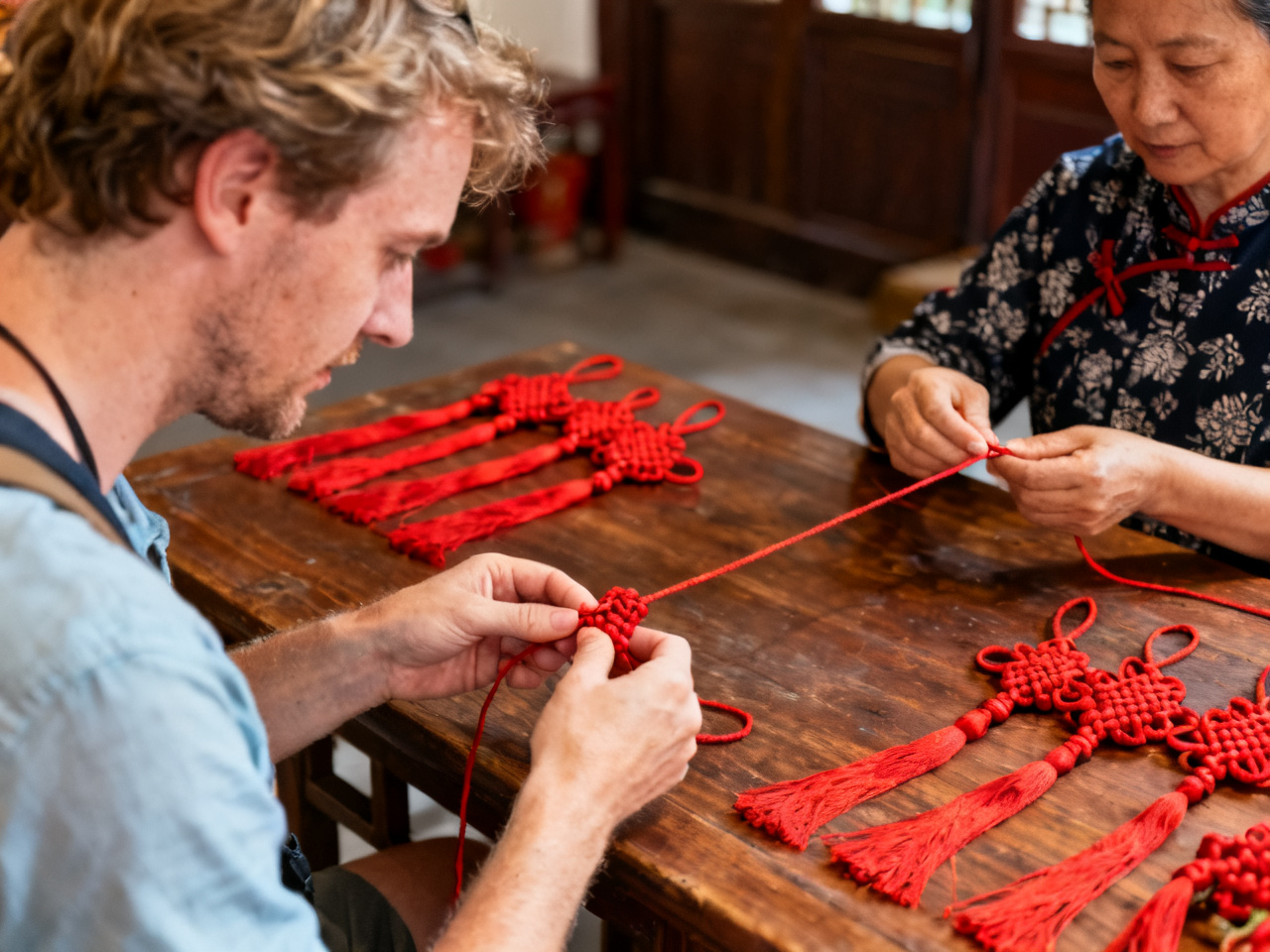
真正开始学的时候,我才知道自己低估了“路线”这件事。看老师示范时,绳子似乎很听话,从这边绕过去,再从那边穿回来,每一步都显得理所当然。可一到我手里,问题马上出现:方向反了,圈压错了,上下顺序乱了,稍不留神整个结构就会拧掉。最有意思的是,它并不是那种越用力越有用的手工。你拉得太急,结会变形;你收得不匀,左右就失衡。中国结教我的第一课不是速度,而是克制。
Once I actually began learning, I discovered that I had underestimated the importance of the path. When the instructor demonstrated, the cord seemed obedient, looping one way and threading back another, every step appearing perfectly natural. But in my own hands, problems came immediately: the direction reversed, the wrong loop was pressed down, the upper and lower order became confused, and with one small mistake the whole structure twisted out of shape. What interested me most was that this is not a craft in which more force leads to better results. If you pull too quickly, the knot deforms. If you tighten unevenly, the two sides lose balance. The first lesson Chinese knotting taught me was not speed, but restraint.
我做的是一个基础结再加一个小流苏,不算复杂,却已经足够让我感受到这门民艺的性格。它要求你脑子里有图,手上有轻重,还要愿意反复调整。结还没收紧之前,看上去总有点乱,甚至让人怀疑到底能不能变好看;可一旦每个环都被慢慢理顺、每一段线都收回到合适位置,结构突然就成立了。那种成形的瞬间非常满足,像是混乱终于找到了自己的秩序。
I made a basic knot with a small tassel attached. It was not complicated, yet it was already enough to let me feel the personality of this craft. It requires you to hold an image in the mind, maintain sensitivity in the hand, and remain willing to adjust repeatedly. Before the knot is tightened, it often looks messy, even doubtful, as if it may never become beautiful at all. But once each loop is gradually straightened and each section of cord is guided back into place, the structure suddenly holds. The moment it comes together is deeply satisfying, like watching disorder finally discover its own order.
老师后来还讲到中国结为什么常常和吉祥寓意联系在一起。红色本身就有喜庆意味,而不同结式、搭配方式和悬挂场景,也常常进入婚礼、新年、生日、乔迁这些重要时刻。也就是说,中国结并不只是“一个结”,它是可以进入生活礼仪的小型视觉语言。这个特点让我很喜欢,因为它说明民艺在中国并没有完全退到展览馆里,它仍然可以自然地挂在日常空间里,继续传递祝愿。
Later the instructor explained why Chinese knots are so often associated with auspicious meaning. Red itself carries festive significance, and different knot forms, combinations, and hanging contexts often appear in weddings, New Year celebrations, birthdays, and housewarmings. In other words, a Chinese knot is not simply a knot. It is a small visual language that can enter the rituals of life. I liked this very much, because it shows that folk craft in China has not retreated entirely into museums. It can still hang naturally in everyday spaces and continue to carry wishes forward.
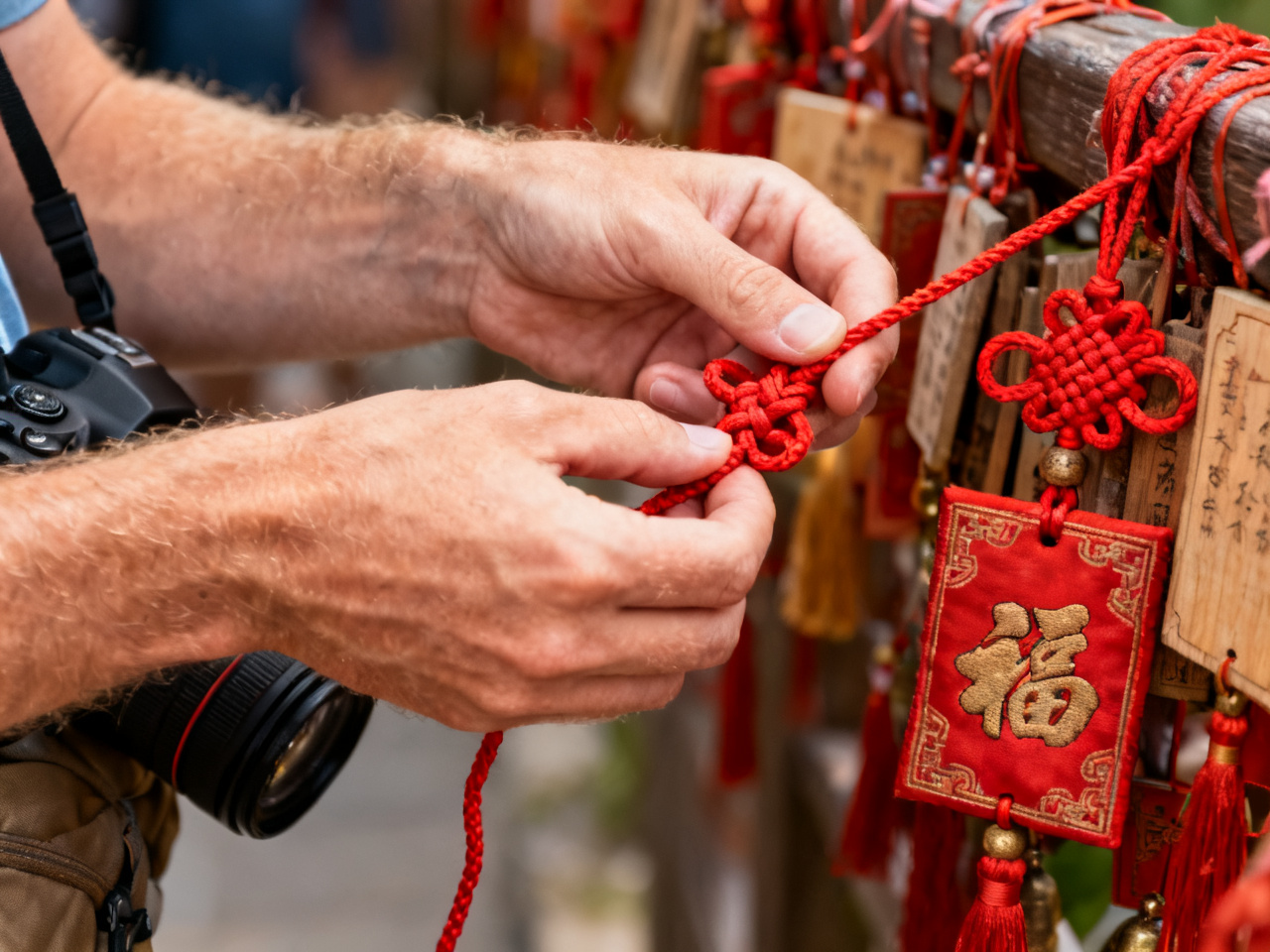
因为我来自爱尔兰,我很自然会想到凯尔特结纹。爱尔兰文化里也有非常著名的结饰传统,很多图案同样强调连续、回环、交织和没有明显终点的线性美感。我从小就对那种无尽回绕的图案不陌生,也知道它们常常和历史、信仰、身份感联系在一起。所以第一次认真学中国结时,我立刻感到一种亲近:原来不同文化都知道,线条如果组织得足够好,本身就能承载意义。
Because I come from Ireland, I naturally thought of Celtic knot patterns. Irish culture also has a famous knot tradition, with many motifs that emphasize continuity, looping, interweaving, and line that seems to have no obvious ending. I grew up familiar with that endless turning quality and with the way such patterns connect to history, belief, and identity. So the first time I seriously learned Chinese knotting, I felt an immediate sense of closeness. Different cultures, I realized, both understand that if a line is organized well enough, it can carry meaning by itself.
但两者给我的感觉还是不一样。凯尔特结纹更多出现在平面图案、石刻、书页装饰和象征系统里,重点常常在“看见”那种无尽交织;中国结则更偏向立体、可触摸、可悬挂,它不仅被看,也被拿在手里、送给别人、放进家庭和节日环境中。一个更像符号化的纹样世界,一个更像进入现实生活的结体手工。对我来说,这种差别非常迷人。
But the two traditions still feel different to me. Celtic knotwork more often appears in flat design, stone carving, manuscript ornament, and symbolic systems, where the emphasis is often on seeing the endless interweaving. Chinese knotting is more three-dimensional, touchable, and hangable. It is not only seen, but held in the hand, given to others, and placed into homes and festive settings. One feels more like a symbolic world of pattern, while the other feels more like a structural handcraft that enters real life. I find that distinction deeply fascinating.
如果今天有外国朋友问我,哪一种中国民艺最适合带回去提醒自己“慢一点”,我会推荐中国结。因为它看起来小,真正做起来却会逼你认真对待每一个方向和每一次收线。等我把那只并不完美的小结放进掌心时,我突然明白,为什么这么多人喜欢它。它不是夸张的大型艺术,也不是遥远的古老遗存,而是一种可以被握住、被悬挂、被赠送的秩序感。对我来说,学打中国结最珍贵的收获,不是我学会了一个纪念品做法,而是我终于理解:原来“吉祥”在中国真的可以被一根线慢慢编出来,也可以被人稳稳地握在手里。
If foreign friends asked me today which Chinese folk craft is best for reminding yourself to slow down, I would recommend Chinese knotting. It looks small, but once you begin, it forces you to take every direction and every tightening seriously. When I finally placed my imperfect little knot in my palm, I suddenly understood why so many people love it. It is not an exaggerated monumental art, nor a distant relic from the past. It is a sense of order that can be held, hung, and given away. For me, the most valuable thing I gained from learning Chinese knotting was not simply the method for making a souvenir. It was finally understanding that in China, auspicious meaning really can be braided slowly from a single cord and then held steadily in the hand.
- 遵义老城坡道上,我把台阶数错了 | I Lost Count of the Steps on Zunyi’s Old-Town Slopes
- 我在大理的风里,重新听见自己说话 | In Dali’s wind, I heard myself speak clearly again
- 香包制作:我第一次发现香气也可以被一针一线缝起来 | Scented Sachet Making: The First Time I Realized Fragrance Could Be Sewn Together with Needle and Thread
- 丝绸制品购买攻略:围巾旗袍与丝巾 | Silk Shopping Guide: Scarves, Qipao & Accessories
- 北京三日线:第一次来中国,怎么走才不赶路 | Beijing in 3 Days: A First-Time Route Without Rush
- 我在上海地铁早高峰里学会先站稳再看地图 | In Shanghai Morning Rush Hour, I Learned to Stand Still Before Reading the Map
- 第一晚住进朋友家前,我先把住宿登记这件事弄明白了 | Before Staying at a Friend’s Place in China, I Learned How Accommodation Registration Really Works
- 我在中国高铁上学会安静地分享空间,不是靠规则,而是靠先读懂别人的节奏 | On a Chinese High-Speed Rail Trip, I Learned to Share Space Quietly Not Through Rules, but by Reading Other People’s Rhythm First
- 夜市不是景点,是一座城市的另一副面孔 | Night Markets Aren't Tourist Attractions — They're a City's Other Face
- 木偶戏后台的一晚:我第一次知道“线”也能有性格 | One Night Behind a Puppet Theatre: The First Time I Learned That Strings Can Have Personality
Comments (0)