
香包制作:我第一次发现香气也可以被一针一线缝起来 | Scented Sachet Making: The First Time I Realized Fragrance Could Be Sewn Together with Needle and Thread
香包制作:我第一次发现香气也可以被一针一线缝起来 | Scented Sachet Making: The First Time I Realized Fragrance Could Be Sewn Together with Needle and Thread
我原本以为,香气这种东西最适合被装进瓶子里。作为一个来自法国的人,我从小对香味的理解,更多来自香水、香皂、香薰蜡烛,或者衣柜里那些带着淡淡草本气息的小香袋。它们通常已经是完成品:你买回来,打开,闻到,使用,很少会去想“香味是怎么被做成一件手工艺品的”。可是在中国第一次坐下来做香包时,我突然意识到,这里关于香气的想象完全不同。香味不是被封存在玻璃瓶中,而是被缝进布料里,被包进一只小小的囊袋里,再通过颜色、纹样、针脚和系绳,变成一种可以佩戴、可以赠送、也可以寄托愿望的民间手艺。
As someone from France, I had always assumed that scent belonged naturally in bottles. My understanding of fragrance came from perfume, soap, scented candles, or small herb sachets tucked into wardrobes. They were usually finished products: you bought them, opened them, smelled them, and used them. You rarely stopped to ask how fragrance might become a handmade object. But the first time I sat down in China to make a scented sachet, I realized that the imagination surrounding scent here is very different. Fragrance is not sealed in glass. It is sewn into cloth, wrapped inside a tiny pouch, and transformed through color, pattern, stitching, and cords into a folk craft that can be worn, gifted, and filled with wishes.
我第一次明白,香包不是“有香味的小袋子”那么简单 | I realized for the first time that a sachet is far more than a small fragrant pouch
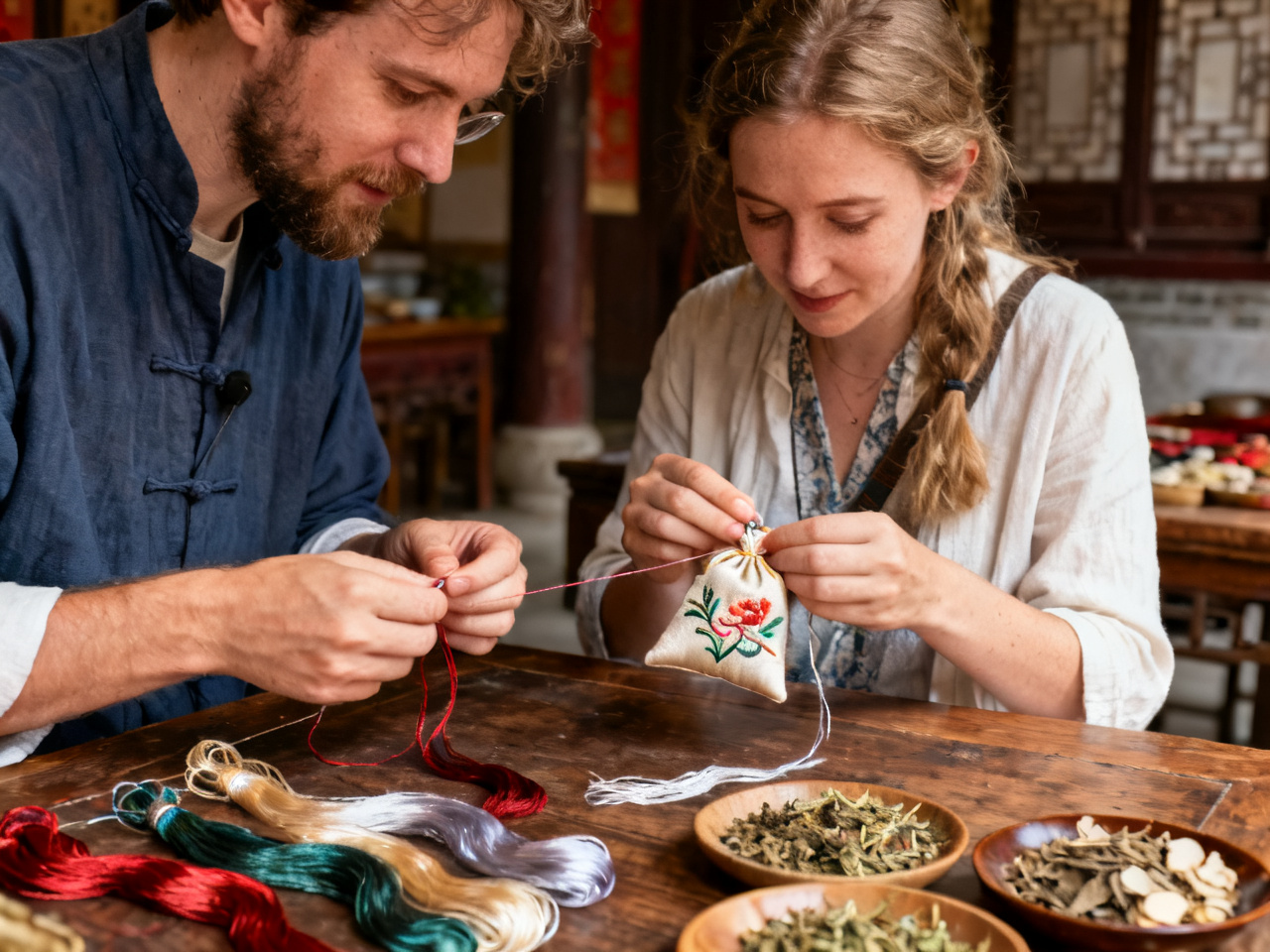
体验课的桌上摆着碎花布、素色布、丝线、针、流苏、小珠子,还有一碟碟已经配好的香料和草本材料。老师先让我们闻,不急着缝。有人喜欢艾草的清气,有人更偏爱桂花和陈皮混在一起的甜润味道,还有一些配方带着很明显的中草药气息,闻起来不像“香水”,却让人觉得安定。老师说,中国香包常常不只是为了好闻,它还和节令、护佑、驱秽、祝福有关,尤其在端午前后,很多地方都有佩戴香包的习惯。听到这里,我就知道这件东西和我熟悉的法式香囊不一样了。
On the workshop table were floral fabrics, plain cloth, silk thread, needles, tassels, tiny beads, and small dishes filled with pre-mixed herbs and aromatics. The instructor asked us to smell everything first instead of rushing into sewing. Some people preferred the sharp freshness of mugwort. Others liked the softer sweetness of osmanthus mixed with dried citrus peel. Some blends had a distinct medicinal quality that did not smell like perfume at all, yet somehow felt calming. The instructor explained that in China, a sachet is often not made simply to smell pleasant. It is tied to seasons, protection, warding off impurity, and blessing. Around the Dragon Boat Festival in particular, many places have traditions of wearing sachets. At that moment I understood that this object was not the same as the fragrant pouches I knew from France.
法国也有香囊传统,尤其是薰衣草袋这类和家居、织物保存相关的小物件。它们很实用,也很优雅,常常强调气味本身的层次和舒适度,或者与某种生活方式审美联系在一起。但中国香包最打动我的,是它把香气和象征意味缝在了一起。它的形状可以是葫芦、粽子、元宝、花朵,也可以做成虎头、如意、圆球等带有明确吉祥意味的样子。你拿起它,先看到的往往是颜色和造型,然后才是香味慢慢散出来。也就是说,它不是“为了香味做一个容器”,而是先做成一件有文化表情的手工艺品,再让香气住进去。
France also has its own sachet tradition, especially lavender bags associated with home interiors and textile storage. They are practical and elegant, often emphasizing the layered quality of scent itself or a certain lifestyle aesthetic. What moved me in the Chinese sachet, however, was the way fragrance and symbolism were stitched together. The sachet can take the shape of a gourd, a zongzi, an ingot, a flower, or even a tiger head, an auspicious knot, or a rounded ornament carrying clear good-luck meanings. When you pick one up, you usually notice the color and form first, and only then does the fragrance slowly emerge. In other words, it is not simply a container made for scent. It is first created as a handcrafted object with cultural expression, and then fragrance is invited to live inside it.
真正开始动手后,我才知道小东西为什么最考验耐心 | Once I began making one, I understood why small objects demand the most patience
老师给我选的是一个相对基础的香包样式:两个对称的布面,中间缝合,留出填香料的小口,最后再加流苏和系带。听起来很简单,做起来却一点都不轻松。布料小,边缘又弯,针脚如果太大,看起来就粗;太小,又容易把自己缝得很慢,甚至把线打结。我以前总觉得大型工艺更难,做了香包之后反而改变了这个想法。越是小巧的东西,越没有出错空间。针脚歪一点,边缘就不整齐;棉花或香料塞得不匀,整体就会鼓得很奇怪;流苏位置不对,整个平衡感都会被破坏。
The instructor chose a relatively simple design for me: two symmetrical fabric pieces sewn together, a small opening left for the aromatic filling, and then a tassel and cord added at the end. It sounded easy, yet it was not easy at all. The fabric pieces were small, the edges curved, and if my stitches were too large they looked clumsy. If they were too small, I slowed down too much and the thread kept tangling. I had always assumed that larger crafts were necessarily harder, but making a sachet changed that idea. The smaller the object, the less room there is for error. If the stitches tilt even slightly, the edges lose neatness. If the cotton or herbs are unevenly packed, the shape bulges awkwardly. If the tassel sits in the wrong place, the whole balance is disturbed.
最有意思的一步,是往里面填香料。老师没有让我把材料一股脑塞进去,而是提醒我要先想“我希望它闻起来是什么性格”。这句话让我很喜欢。原来香包也有性格:有人喜欢清凉一点的,有人喜欢温和一点的,有人希望更偏节令草本感,也有人希望更接近花香。这个过程让我想起法国人在调配香味时对前调、中调、余味的讲究;但中国香包的逻辑明显更贴近生活经验和身体感受,它不一定追求复杂层次,而是更重视一种朴素、贴身、安心的气味关系。
The most interesting step was filling the sachet with aromatics. The instructor did not let me stuff everything in randomly. Instead, she asked me to think first about what kind of personality I wanted the scent to have. I loved that phrase. Apparently, a sachet has personality too. Some people prefer something cooling, others something gentle. Some want a distinctly seasonal herbal scent, while others want something closer to floral sweetness. This reminded me of the French attention to top notes, middle notes, and lingering accords. Yet the logic of the Chinese sachet felt much more closely tied to daily life and bodily comfort. It does not always pursue complexity. It values a plain, intimate, reassuring relationship with smell.
我最佩服的,是它把实用、装饰和祝愿放进同一个小体积里 | What impressed me most was how it combines use, decoration, and blessing in such a tiny form
我做完之后,把香包放在手心里,第一反应就是:它真的很小。但也正因为小,它才显得特别浓缩。你在它身上能同时看到布料搭配、针线工整、香料选择、造型寓意和佩戴方式。很多民艺会先让你感受到“美”,然后再慢慢理解“用”;香包则是美和用从一开始就缠在一起。它既能闻,也能看;既可以是孩子身上的一个小佩饰,也可以挂在包上、放在屋里,甚至成为节庆礼物的一部分。它不像某些装饰品那样只是为了被陈列,它是真的要进入生活,被带着走,被身体感知到。
When I finished mine and held it in my palm, my first thought was how small it really was. Yet precisely because it was small, it felt intensely condensed. Within it I could see fabric choice, neat stitching, fragrance selection, symbolic shape, and the method of wearing or hanging it. Many folk crafts let you feel beauty first and function later. The sachet intertwines beauty and use from the very beginning. It can be smelled and seen. It can sit on a child’s clothing, hang from a bag, rest in a room, or become part of a seasonal gift. Unlike some decorative objects that exist mainly for display, this one is meant to enter life, to travel with the body, and to be sensed physically.
老师还给我们看了一些更复杂的香包,有的是立体的小动物,有的是层层拼接的花瓣结构,还有一些用细密刺绣把表面做得非常丰富。那时我才更清楚地理解,这门手艺虽然“体积小”,但并不简单。它背后连接的是女红传统、节令习俗、儿童佩饰文化、吉祥图像和草本经验。一个外地游客如果只是随手在摊位上买一个,当然也可以觉得它可爱;但只要你亲手缝过一次,就会知道这份可爱其实是被很多耐心支撑起来的。
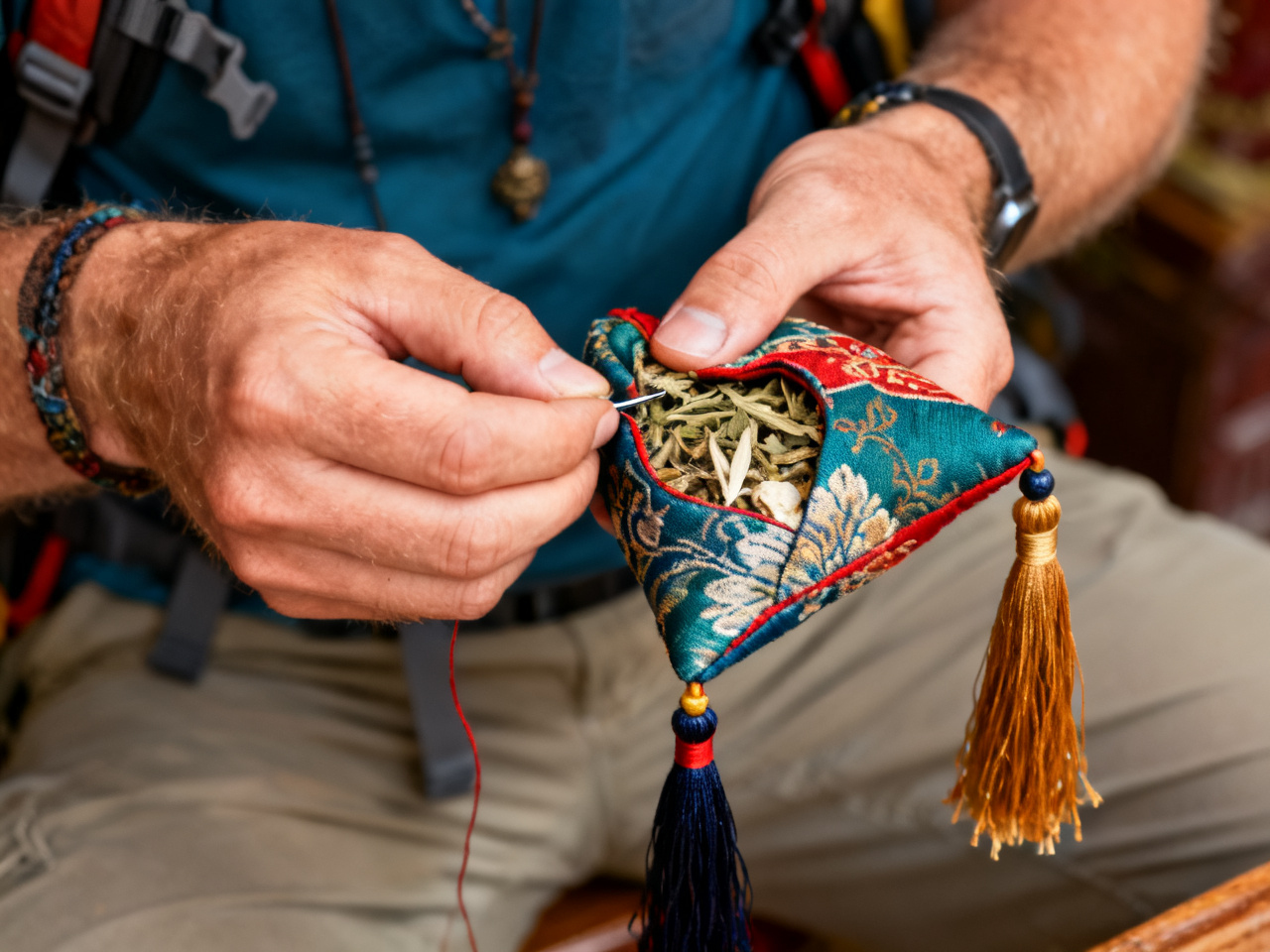
The instructor also showed us more complex sachets: some were shaped like little animals, some had layered petal structures, and some were covered with very intricate embroidery. At that point I understood even more clearly that although the craft is small in scale, it is not simple. Behind it stand women’s needlework traditions, seasonal customs, children’s adornment culture, auspicious imagery, and generations of herbal knowledge. A traveler can certainly pick one up at a market and think it is charming. But once you have sewn one yourself, you understand that the charm is being held up by a great deal of patience.
如果拿它和法国香囊相比,我会说它更“外向”也更“有故事” | Compared with French sachets, it feels more outward and more narrative
如果一定要做一个来自我家乡的比较,我会说法国香囊往往更安静。它们常常待在抽屉、衣橱、床边或室内空间里,主要功能是留香、驱潮或让生活更舒适。它们当然也可以很漂亮,但那种漂亮通常比较克制。中国香包则更愿意把自己展示出来:它有明显的颜色对比,常带流苏和绳结,有时还故意做成讨喜的象征形状。它会被挂出来、戴出来、送出来,让别人一眼就看见。这种“外向”并不浮夸,而是很典型的民间表达方式——把祝福做得可见,把心意做得具体。
If I had to compare it to something from home, I would say French sachets are often quieter. They tend to stay in drawers, wardrobes, near the bed, or elsewhere in interior space, serving mainly to scent, protect, or soften everyday life. They can certainly be beautiful, but that beauty is often restrained. Chinese sachets, by contrast, are more willing to show themselves. They often use strong color contrast, tassels, knots, and symbolic shapes meant to be recognized at a glance. They are made to be hung, worn, and given. This outwardness is not excessive. It is a distinctly folk way of expression: making blessing visible and turning feeling into something concrete.
也许正因为如此,我会觉得中国香包特别适合旅行者理解。它不会像大型建筑或表演那样给你压倒性的第一印象,但只要你坐下来做一只,就会很快意识到中国民间文化里有一种很迷人的能力:把抽象的东西——香气、季节、平安、祝愿——慢慢做成可以贴身携带的小物件。对我来说,这比“买一件纪念品”更有意义,因为它让我摸到了传统真正进入日常生活的方式。
Perhaps that is exactly why I think Chinese sachets are so rewarding for travelers. They do not overwhelm you the way a massive building or a spectacular performance might. But once you sit down and make one, you quickly realize that Chinese folk culture has a remarkable ability to turn abstract things—fragrance, season, safety, blessing—into small intimate objects that can be carried on the body. For me, that means much more than buying a souvenir. It reveals how tradition actually enters daily life.
如果你在中国旅行时遇到香包,我建议你不要只闻一下就走 | If you encounter sachets while traveling in China, do not just smell them and move on
现在如果我在集市或民俗馆里再看到香包,我已经不会只把它当成“闻起来不错的小挂件”了。我会先看它的形状,猜它想表达什么寓意;再看针脚和配色,想象做的人花了多少时间;最后才靠近闻一闻,感受里面放的草本是不是偏清凉、偏温和,或者偏节庆气息。它让我重新认识了一件事:有些民艺真正迷人的地方,不在于材料有多贵,也不在于规模有多大,而在于它用最朴素的方法,把生活过得更有意义一些。
Now, when I see sachets again in markets or folk museums, I no longer treat them simply as nice-smelling little ornaments. I first look at the shape and guess what blessing it might express. Then I study the stitching and color choices and imagine how much time went into making it. Only after that do I lean in to smell it and sense whether the filling is cooling, gentle, or distinctly festive. This craft taught me something important: the most moving folk arts are not necessarily those made from expensive materials or those built on a grand scale. Often they are the ones that use simple means to make everyday life feel a little more meaningful.

- 重阳登高:全国最美山岳推荐 | Chongyang Hiking: China's Most Beautiful Mountains
- 国庆出行避坑指南 | National Day Travel Tips: Avoiding the Crowds
- 带爸妈游中国七日:一份不累不赶的行程单 | 7 Days in China with Aging Parents: A No-Rush Itinerary
- 文创好物推荐:故宫文创到地方博物馆 | Creative Souvenirs: Palace Museum to Local Museums
- 洛阳牡丹花期里,我学会把热闹拆成几个小时 | During Luoyang Peony Season, I Learned to Divide Crowds by the Hour
- 长江游轮:独特旅行体验 | Yangtze River Cruise: A Unique Experience
- 中国园林美学:苏州拙政园到北京颐和园 | Chinese Garden Art: Suzhou to Beijing's Summer Palace
- 西安夜市排队课:别盲追最长队伍 | A Xi’an Night Market Lesson: Don’t Chase the Longest Queue Blindly
- 长沙一碗米粉的早晨,教我别只看招牌菜 | One Morning Bowl of Rice Noodles in Changsha Taught Me Not to Only Chase Signature Dishes
- 广州夜里最好走的那条线,往往不是最热闹的,而是最知道什么时候该坐下的 | Guangzhou’s Best Night Route Is Rarely the Loudest One but the One That Knows When to Sit Down
Comments (0)