
小区门口那段广场舞音乐,让我第一次不再把它只当成噪音 | The Square Dance Music at My Compound Gate Was the First Time I Stopped Hearing It as Just Noise
小区门口那段广场舞音乐,让我第一次不再把它只当成噪音 | The Square Dance Music at My Compound Gate Was the First Time I Stopped Hearing It as Just Noise
我刚搬到成都一个普通居民小区时,傍晚最不适应的不是湿热,也不是楼下烧烤摊的油烟,而是每天差不多同一时间响起来的广场舞音乐。太阳刚落到楼房后面,树影被路灯拉长,小区门口那块空地就会慢慢聚起人。先是有人把便携音箱推出来,接着是试音时那几下突兀的鼓点,然后熟悉的节奏忽然放大,穿过电动车停放区、保安亭和便利店门口,一下子把我本来还算安静的傍晚切成两半。作为一个刚到中国不久的外国人,我最初的反应非常直接:这也太吵了。那时候在我脑子里,广场舞只是城市背景里最著名、也最容易被外人误解的一种噪音。
When I first moved into an ordinary residential compound in Chengdu, the thing I struggled with most in the evening was not the humidity, and not even the smoke from the barbecue stall downstairs, but the square dance music that began at almost the same time every day. As the sun dropped behind the apartment blocks and tree shadows stretched under the streetlights, people slowly gathered in the open space by the compound gate. First someone rolled out a portable speaker. Then came a few abrupt test beats. Then the familiar rhythm suddenly grew loud and cut through the parked scooters, the security booth, and the convenience store entrance, dividing my previously calm evening in two. As a foreigner still new to China, my first reaction was extremely simple: this is too loud. At that stage, square dancing existed in my mind only as one of those famous urban noises that outsiders are quick to misunderstand.
有一天傍晚,我本来打算绕开那片空地,去街角买瓶水再回家。那天的天色有点发灰,白天残留的热气还闷在墙面和地砖之间,几个阿姨已经排成两排,站在路灯下面活动手腕和肩膀。我低着头,准备从最边上快速穿过去,结果还没走几步,靠外侧的一位阿姨朝我摆了摆手,不是赶我走,而是示意我站到旁边一点,别被后面突然展开的队形碰到。我愣了一下,就真的停在边上看了几十秒。也就是那几十秒,让我第一次没有只把注意力放在音量上,而是看见了音乐到底在为谁服务。
One evening, I was planning to avoid that open area altogether, buy a bottle of water at the corner shop, and go straight back upstairs. The sky was dull and gray that day, and the day’s trapped heat still lingered in the walls and paving stones. Several aunties had already formed two rows under the streetlights, rotating their wrists and shoulders to warm up. I kept my head down and tried to slip past along the edge, but before I had taken more than a few steps, one woman on the outside waved to me. She was not telling me to leave. She was signaling that I should stand a little farther aside so I would not get bumped when the formation opened up. I paused, then actually stayed there and watched for half a minute. And in that short half minute, for the first time, I stopped focusing only on the volume and started seeing whom the music was actually serving.
我慢慢发现,广场舞开始前的小区门口,像一台先预热再运转的晚间机器。有人提着刚买的菜路过,顺手和熟人打招呼;有人把孙子先交给旁边长椅上的老人,再快步走进队伍;保安坐在岗亭边看手机,但偶尔也会抬头确认大家别挡住主路;便利店门口冰柜一开一关,冷气和汽水瓶碰撞的声音混进节奏里。那些阿姨并不是一群突然出现、只负责制造音量的人,她们是这个时间段里小区生活的一部分。有人白天带孩子,有人上了一整天班,有人刚把晚饭做得差不多,趁这四十分钟出来活动一下。音乐对她们来说不是侵入,而像一把钥匙,把各自分散的一天重新拧到一起。
I slowly realized that the compound entrance before square dancing begins is like an evening machine warming itself up before fully running. Someone passes by carrying vegetables and casually greets an acquaintance. Someone hands a grandchild to an older relative on a bench and then hurries into position. The security guard sits by the booth looking at his phone, but now and then glances up to make sure the main path is not blocked. The convenience store freezer keeps opening and closing, and the rush of cold air and clink of drink bottles blend into the beat. Those women were not simply a group that appeared out of nowhere to produce noise. They were part of the compound’s life at that hour. Some spent the day caring for children. Some had worked a full shift. Some had just about finished preparing dinner and came out for forty minutes of movement. For them, the music was not an intrusion. It was more like a key that tightened their separate days back into one shared moment.
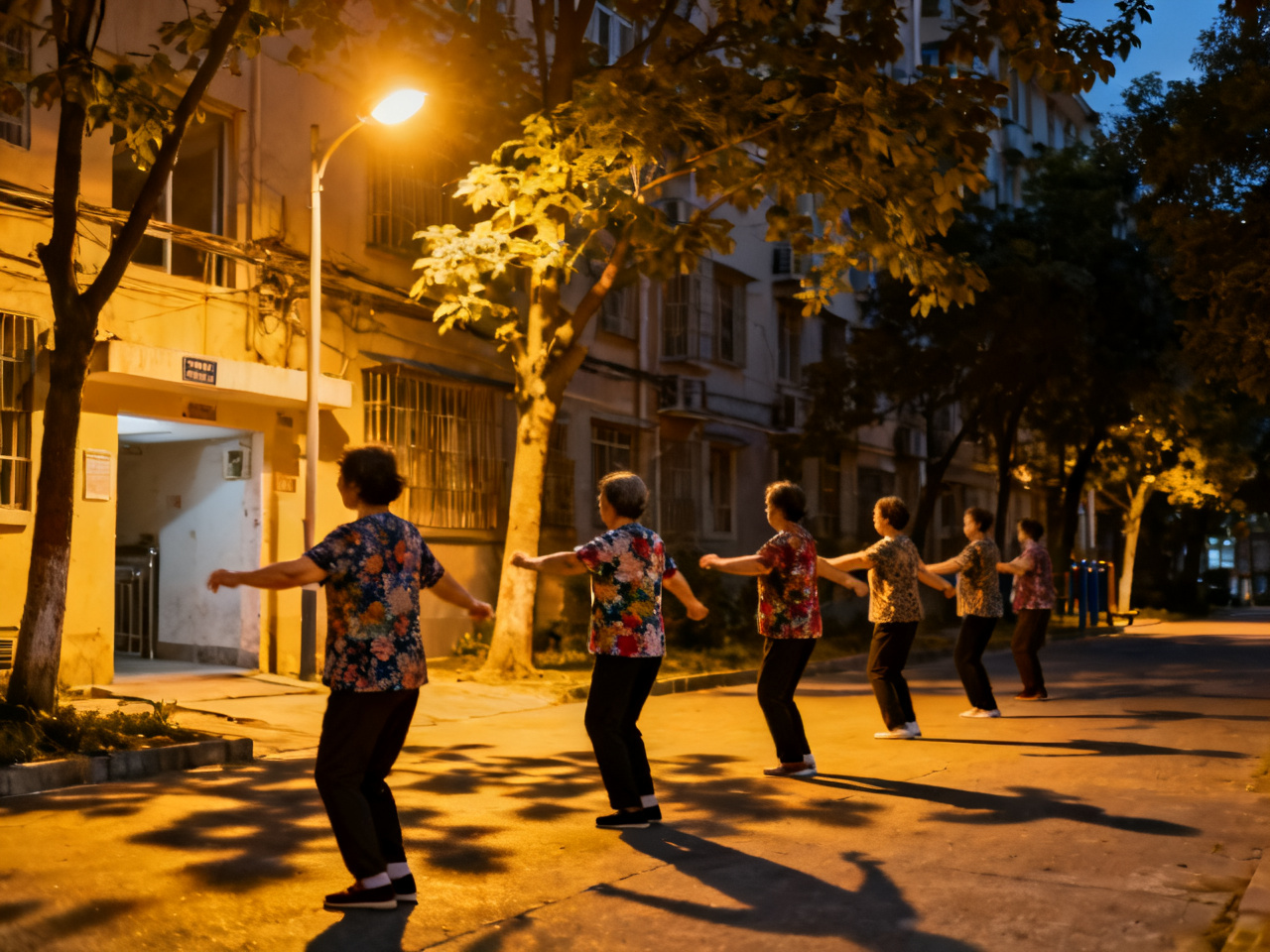
真正改变我看法的,不只是“理解她们为什么跳”,而是我站在旁边时看到的那种秩序感。音乐一响,最前排几个人会下意识留出边线,不让队形压到盲道;晚一点到的人会自动站到后面,不会硬往前插;如果有外卖车或抱孩子的人要经过,靠边那一排常常会默契地收一下胳膊,等人过去再重新展开动作。有一次一个小男孩追着球冲进空地,最近的阿姨立刻停下来把球踢回给他,还笑着说慢点跑。整个场面当然谈不上绝对安静,可它也绝不是我以前想象的那种只顾自己、不管别人的喧闹。更准确地说,它是一种被反复练熟了的公共占用方式:热闹,但努力不失控;显眼,但尽量给别人留缝。
What changed my mind was not only understanding why they danced, but noticing the sense of order while I stood there watching. Once the music started, the women in the front row instinctively left a boundary so the formation would not spill onto the tactile paving. Those who arrived late automatically took places in the back instead of forcing their way forward. If a delivery scooter or someone carrying a child needed to pass, the row nearest the path often drew in their arms for a moment and then resumed. Once a small boy chased a ball straight into the open area, and the nearest auntie immediately stopped, kicked the ball gently back to him, and laughed, telling him to run more slowly. The scene was certainly not silent, but it was also nothing like the selfish chaos I had once imagined. More accurately, it was a form of public occupation that had been practiced into familiarity: lively, but trying not to spill out of control; highly visible, but still leaving a gap for others.
我后来跟一位住在同一栋楼里的邻居阿姨聊过一次。她一边收折扇,一边告诉我,自己退休前在医院上班,站了一辈子,肩膀和膝盖都不太好,可如果整天待在家里,人会更闷。她说跳舞不一定是为了跳得多漂亮,很多时候只是为了出来见见人,出出汗,顺便把心情从白天那些家务、看病、接送孩子的事情里拎出来。我听她这么说时,忽然想到,作为外来者,我之前一直只从“我听见了什么”出发,却很少问“别人靠这个获得了什么”。当我把问题换一下,广场舞的声音就不再只是压过我耳朵的分贝,而开始带上一种生活重量。
Later I spoke once with a neighbor auntie from my building. While folding up her fan, she told me that before retirement she had worked in a hospital and spent half her life on her feet, leaving her shoulders and knees in poor shape. But staying inside all day, she said, made a person feel even more stifled. Dancing was not always about looking graceful. Often it was just about coming outside, seeing people, sweating a little, and lifting one’s mood out of the day’s chores, hospital visits, and school pickups. Hearing her say that, I suddenly realized that as an outsider I had been starting only from the question of what I was hearing, and had rarely asked what other people were gaining from it. Once I changed the question, the sound of square dance music stopped being just a number of decibels pressing on my ears and began to carry the weight of ordinary life.
当然,我也不是一下子就变成了广场舞爱好者。有些歌我还是觉得过于重复,有时我在家开会,楼下的节奏也确实会钻进窗缝里,让我分神。但现在我经过那里时,心态已经完全不同了。我会注意到谁今天没来,谁换了新鞋,谁带了保温杯放在花坛边;我会发现有些阿姨动作永远快半拍,有些人总在转身时忍不住笑;我甚至能从试音的前几秒判断,今天放的是怀旧金曲,还是节奏更硬一点的新编舞曲。噪音没有神奇地消失,可一旦你认识了制造声音的人,声音本身也会长出轮廓,不再只是模糊的干扰。
Of course, I did not instantly become a square dance enthusiast. Some songs still strike me as too repetitive, and when I am in an online meeting at home, the rhythm from downstairs still sometimes slips through the window and distracts me. But now, when I pass that space, my attitude is entirely different. I notice who did not come that evening, who is wearing new shoes, and who placed a thermos by the flower bed. I see that some women are always half a beat early, and some cannot help smiling at the moment they turn. I can even tell from the first few seconds of sound check whether that evening’s playlist will be nostalgic old hits or a newer dance track with a heavier beat. The noise has not magically vanished. But once you begin to recognize the people making it, the sound itself grows edges and shape. It stops being a blur of annoyance.
顺着这个判断方法继续看,中国小区公共空间里的默契和在中国生活时先观察再判断也能互相印证。
Following the same way of reading a scene, 中国小区公共空间里的默契 and 在中国生活时先观察再判断 also reinforce this habit from other angles.
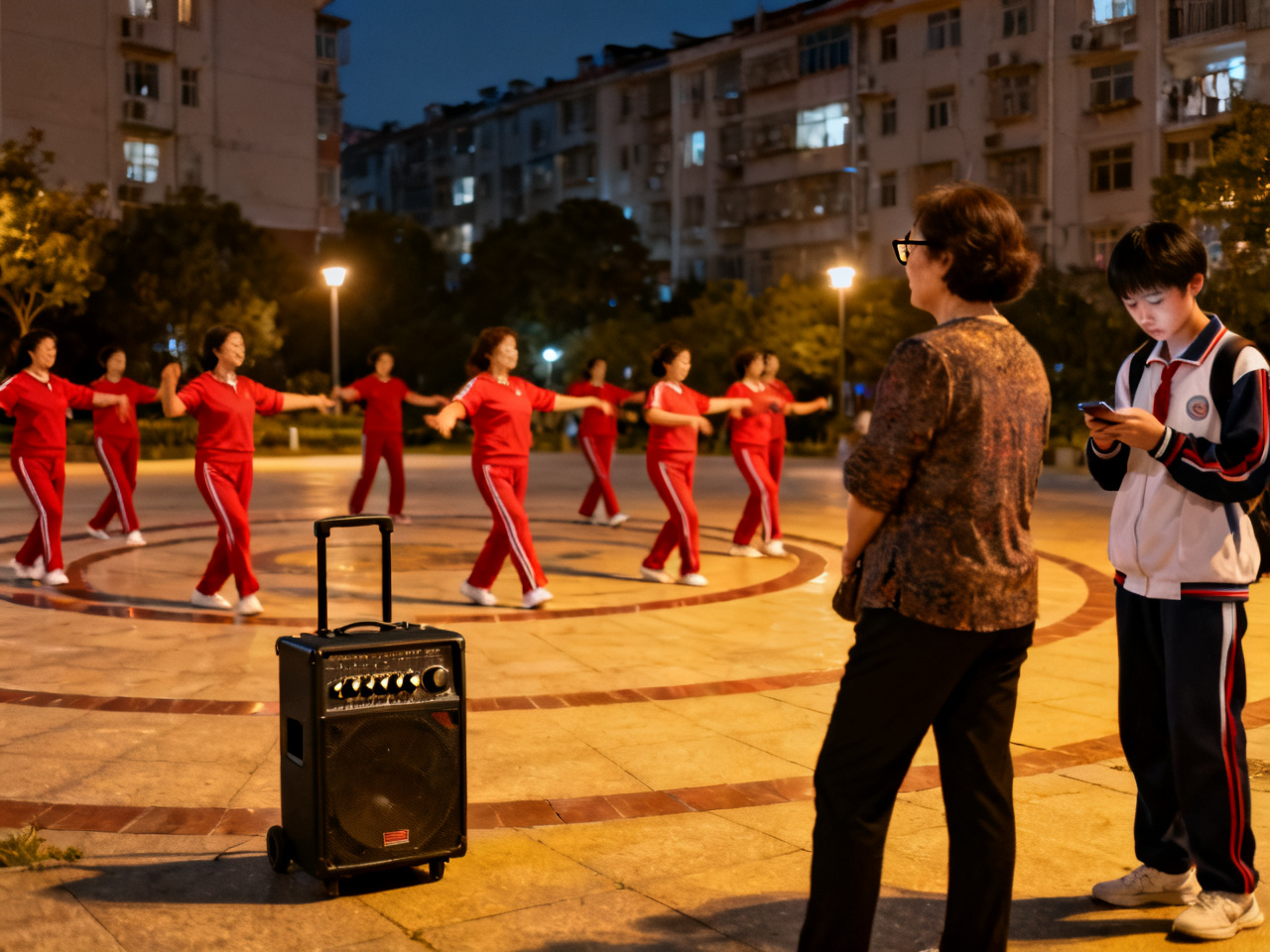
现在如果有刚到中国的外国朋友问我,怎么看待小区门口的广场舞,我不会再简单地说“习惯就好”,也不会假装它完全没有打扰。我更愿意说,先别急着给它下定义。找一个傍晚,在旁边站一会儿,看看音乐响起之前和结束之后那里发生了什么。你可能会发现,自己原本以为只是背景噪音的东西,其实连接着一群人的身体状态、邻里关系和一天中最放松的那段时间。对我来说,这种理解很重要,因为它提醒我,在中国生活时,很多最容易被外来者嫌弃的声音,并不只是声音本身,它们常常是某种公共日常的外壳。学会先看一眼里面装着什么,再决定喜不喜欢,往往比立刻皱眉更接近真实。
Now if a foreign friend newly arrived in China asks me how to think about the square dancing by a compound gate, I no longer say simply, “you just get used to it,” and I do not pretend it never causes disturbance either. What I prefer to say is: do not define it too quickly. Pick an evening and stand nearby for a while. Watch what happens before the music starts and after it ends. You may discover that what you assumed was only background noise is actually tied to people’s bodies, neighborly relationships, and the loosest, most relaxed part of their day. To me, that understanding matters, because it reminds me that in China, many sounds that outsiders are quickest to dislike are not just sounds. They are often the outer shell of some shared public routine. Learning to look once at what is inside before deciding whether you like it gets much closer to reality than frowning immediately.

- 我在青岛学会把海边步行和补水当成一件事 | In Qingdao I Learned to Treat Waterfront Walking and Hydration as One Task
- 西安兵马俑与古城墙全攻略 | Xi'an: Terracotta Army & Ancient City Wall
- 中国书法用品 | Chinese Calligraphy Supplies
- 带爸妈游中国七日:一份不累不赶的行程单 | 7 Days in China with Aging Parents: A No-Rush Itinerary
- 去济南之前,我先把会让人慌张的那几样信息收进同一屏 | Before Jinan, I Gathered the Few Panic-Making Essentials onto One Screen
- 十个值得你慢下来的中国古镇 | Ten Chinese Ancient Towns Worth Slowing Down For
- 广东广西10日海陆游 | 10-Day Guangdong-Guangxi Sea & Land Tour
- 一根提线停在掌心时,我在泉州听见了海风 | When a Puppet String Rested in a Palm, I Heard the Sea Wind in Quanzhou
- 在武汉,我把酒店地址和求助用语先放到了手机最前面 | In Wuhan, I Put My Hotel Address and Help Phrases at the Front of My Phone
- 围炉而坐,这顿饭没有终点 | The Meal That Never Ends: China's Hot Pot Ritual
Comments (0)