
陶艺课上的半天:我第一次知道一团泥为什么也有“火后的性格” | Half a Day in a Pottery Workshop: The First Time I Learned That Clay Has a Personality After Fire
陶艺课上的半天:我第一次知道一团泥为什么也有“火后的性格” | Half a Day in a Pottery Workshop: The First Time I Learned That Clay Has a Personality After Fire
- 编号: 09
- 类别: 6
- 主题: 民艺 / Folk Art
- 对比国家: 日本
我一直以为,陶艺的魅力主要在成品上。作为一个来自日本的外国人,我从小并不缺少与陶器相处的经验:家里有饭碗、茶杯、小盘子,旅行时也常会去看各地窑口和器物展。我们很习惯谈论器形、釉色、手感,甚至会很自然地比较一只杯子适不适合喝茶。可是在中国第一次真正坐进陶艺体验教室、把双手按进一团湿泥里时,我才意识到,陶艺真正迷人的地方,并不只是最后那件器物有多好看,而是泥土、手、旋转和火,怎样一步步把“东西”慢慢变成“性格”。
I had always assumed that the charm of pottery lay mainly in the finished object. As a foreigner from Japan, I grew up surrounded by ceramic ware: rice bowls, teacups, little plates, and trips to kiln towns or craft exhibitions were never unfamiliar to me. We are used to discussing vessel shape, glaze color, and hand feel, and it feels natural to compare whether one cup is better suited to tea than another. But the first time I truly sat down in a pottery workshop in China and pressed both hands into a lump of wet clay, I realized that the real fascination of ceramics is not only how beautiful the final piece looks. It lies in how earth, hands, rotation, and fire gradually turn a thing into a personality.
真正坐上拉坯机的时候,我才知道“圆”为什么这么难 | Once I sat at the wheel, I understood why roundness is so difficult
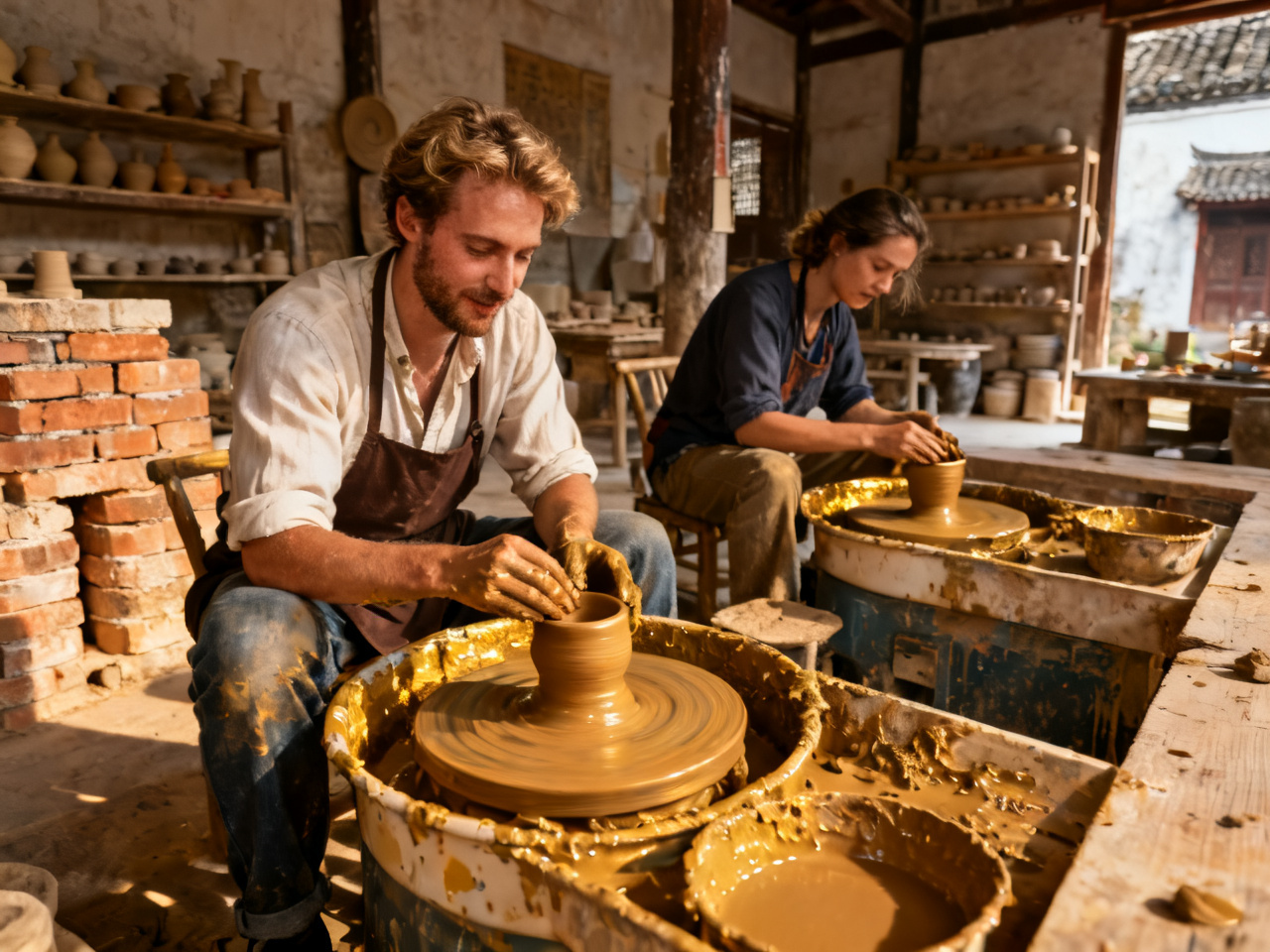
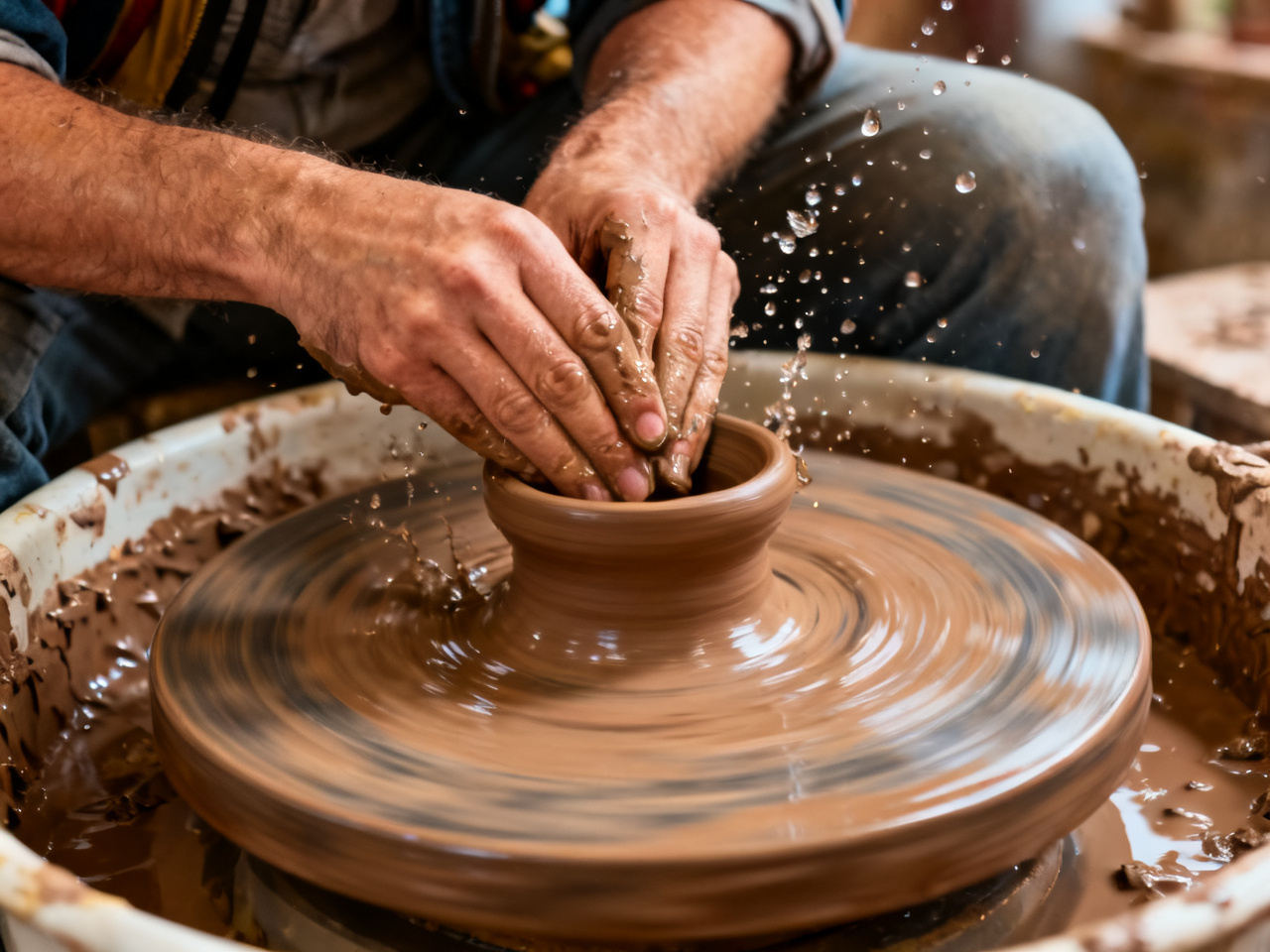
老师先给我们示范拉坯。她把泥团“啪”地一下放到转盘中央,手掌压住,脚下控制速度,那团本来笨重的泥很快就安静下来,像突然愿意听话一样。她先定中心,再往上提,再慢慢把中间掏开,一个小碗的轮廓几乎是从旋转里自己长出来的。站在旁边看时,我甚至有一点误会,以为陶艺也许比想象中更直观。可轮到我自己坐下,双手一碰到那团泥,我就立刻明白,事情完全不是那么简单。
The instructor first demonstrated wheel throwing. She slapped the clay onto the center of the wheel, steadied it with her palms, adjusted the speed with her foot, and the lump that had looked heavy and stubborn suddenly became calm, almost obedient. She centered it, lifted it upward, then opened the middle, and the shape of a small bowl seemed to grow almost by itself out of the rotation. Watching from the side, I briefly made the mistake of thinking pottery might be more intuitive than I had imagined. But the moment I sat down myself and touched the clay, I immediately understood that it was nothing like that.
泥只要稍微没有在正中心,就会开始晃;手上力度一不均匀,器壁马上厚薄不一;我本来想做一个小杯子,结果开口越拉越大,差点变成一只歪掉的小碗。最让我紧张的是,陶艺不像画画那样可以一直停下来重新判断。转盘在动,泥在动,你的手也必须跟着保持稳定。那几分钟里,我一直觉得自己不是在“制作”,而是在和一种还没成形的力量谈条件。
If the clay was even slightly off center, it began to wobble. If the pressure in my hands became uneven, the wall thickness changed immediately. I had intended to make a small cup, but the opening grew wider and wider until it nearly became a crooked bowl. What made me especially nervous was that pottery does not let you pause and reconsider in the same way drawing sometimes does. The wheel moves, the clay moves, and your hands must remain stable within that movement. For those few minutes, I felt less like I was making something and more like I was negotiating with a force that had not yet agreed to become a form.
我最佩服的,是老师总在强调“不要跟泥较劲” | What impressed me most was how often the instructor said, “Don’t fight the clay”
老师看我手越来越僵,笑着提醒我:不要跟泥较劲,要先让它在你手里稳下来。这句话我后来一直记得。很多传统手艺都会让人误以为,技巧就是更用力、更精准、更快速地控制材料;但陶艺给我的感觉正好相反。泥太软时,你不能急;泥壁已经薄了,你不能再硬撑;边口有点塌时,有时最好的办法不是继续修,而是承认它已经走到另一个方向。也就是说,这门手艺并不奖励蛮力,它更奖励判断和克制。
Seeing my hands grow stiffer and stiffer, the instructor smiled and reminded me not to fight the clay, but to let it settle first inside my hands. I kept remembering that sentence afterward. Many traditional crafts can make outsiders assume that technique means controlling material with more force, more precision, and more speed. Pottery felt like the opposite. If the clay is too soft, you cannot rush it. If the wall has already become thin, you cannot force it further. If the rim starts collapsing slightly, sometimes the best decision is not to keep correcting it, but to accept that it is already moving in another direction. In other words, this craft does not reward brute force. It rewards judgment and restraint.
我后来试着做第二件时,心态明显变了。我不再一味想把器形做得“标准”,而是更认真去感受泥的湿度、转速和手指接触的位置。结果虽然还是谈不上完美,但那个杯子的线条反而比第一件自然得多。那一刻我突然理解,为什么很多人说陶艺会让人安静下来。它不是神秘,也不是故作疗愈,而是因为你一急,泥就会立刻把你的急躁暴露出来。
When I tried making a second piece, my attitude had clearly changed. I stopped trying so hard to force the shape into some ideal standard and paid more attention to the clay’s moisture, the speed of rotation, and the exact position of my fingers. The result was still far from perfect, but the lines of that second cup felt much more natural than those of the first. In that moment I suddenly understood why people often say pottery makes a person calmer. It is not mystical, and it is not performative therapy. It is simply that the moment you become impatient, the clay exposes your impatience immediately.
中国陶艺最打动我的,是它始终和“用”这件事靠得很近 | What moved me most in Chinese pottery was how closely it remains tied to use
体验空间里除了练习作品,也摆着很多已经烧好的器物:碗、壶、杯、盘、小罐,还有一些表面带着不完全均匀的釉色和火痕。它们没有那种过分想证明自己“高级”的姿态,反而让我很容易想象它们被真正放到餐桌上、茶席上,或者厨房角落里。中国陶艺最让我喜欢的一点,就是它很少把自己完全推向遥远的观赏位置。哪怕是很漂亮的器物,它也常常还保留着一种“请你拿起来用”的亲近感。
The workshop displayed not only practice pieces but also many fired objects: bowls, teapots, cups, plates, and small jars, some with glaze variation and marks left by the kiln fire. They did not carry that overly self-conscious attitude of wanting to prove themselves “refined.” Instead, they made it easy for me to imagine them actually sitting on a dining table, a tea setting, or in a kitchen corner. What I especially love about Chinese pottery is that it rarely pushes itself completely into a distant zone of pure contemplation. Even when a vessel is beautiful, it often still preserves a sense of invitation, as if it were saying: please pick me up and use me.
老师还让我们摸了几件不同胎土、不同釉面的样品。粗一点的,手上会觉得更朴实;细一点的,边口会显得更轻;有些釉色近看并不张扬,但在光下会慢慢显出层次。那种感觉让我意识到,陶艺的美并不一定在第一眼最强烈。很多时候,它更像一种会在使用中慢慢长出来的关系。你今天只是觉得顺手,过几天开始喜欢它的重量,再过一段时间,甚至会因为某个细微的不完美而更愿意一直用下去。
The instructor also let us handle sample pieces made from different clay bodies and finished with different glazes. Rougher clay felt more grounded in the hand. Finer pieces made the rim feel lighter. Some glazes did not look dramatic at first glance, yet gradually revealed layers under the light. That made me realize that the beauty of pottery is not always strongest in the first instant. Very often, it is more like a relationship that grows through use. On the first day you merely find a vessel comfortable to hold. A few days later you begin to like its weight. And after some time, you may even become attached to it precisely because of a small imperfection.
它让我想到日本陶器,但两种“安静”并不完全一样 | It reminded me of Japanese ceramics, but the quietness of the two traditions is not exactly the same
因为我来自日本,我当然会很自然地把这次体验和自己熟悉的陶器文化放在一起比较。日本也非常重视陶器与日常生活的关系,很多器物同样讲究手感、季节感和使用中的变化。我们也很习惯欣赏不完全对称、略带手作痕迹的器形,甚至会把这种不稳定感看成器物生命的一部分。所以在进入中国陶艺教室之前,我原本以为自己对这种材料已经足够熟悉。
Because I come from Japan, I naturally compared this experience with the ceramic culture I know from home. Japan also places great value on the relationship between pottery and daily life. Many vessels similarly emphasize hand feel, seasonality, and the changes that emerge through use. We too are accustomed to appreciating forms that are not fully symmetrical, and we often regard traces of the hand as part of an object’s life. So before entering this pottery classroom in China, I assumed I was already fairly familiar with this kind of material.
可真正接触之后,我还是感到一种明显差别。日本陶器常让我先想到一种较为内敛、节制、偏向个人感受的安静;而中国陶艺给我的印象,至少在这次体验和现场看到的器物里,更接近一种“生活正在这里发生”的安静。它不是退得很远的寂静,而是带着饭菜、茶水、烟火气和待客场景的从容。换句话说,日本陶器有时像把情绪收进器物内部,中国陶艺则更像让器物留在生活中央,但依然保持稳重。
But after real contact, I still felt a clear difference. Japanese ceramics often make me think first of a more inward, restrained, and individually felt quietness. Chinese pottery, at least in this workshop and in the vessels I saw there, felt closer to a quietness in which life is actively happening. It is not a silence withdrawn far from the world, but a composure that still carries food, tea, domestic warmth, and hospitality. In other words, Japanese pottery can sometimes feel as if emotion has been gathered inward into the vessel, while Chinese pottery feels more as if the vessel remains at the center of life and yet stays steady.
这并不是高下之分,反而让我更加喜欢比较这两种传统。因为它们都重视“用”,都尊重材料,也都承认火会带来不可完全控制的变化,只是最后长出来的气质不一样。一个更容易让我想到季节和余白,一个更容易让我想到饭桌、茶桌和人与人之间的来往。也正因为这样,中国陶艺对我来说并不陌生,却仍然足够新鲜。
This is not a matter of one being better than the other. In fact, it made me appreciate both traditions more. They both value use, respect material, and accept that fire produces changes no one can fully control, yet the character that emerges at the end is different. One more readily makes me think of seasonality and emptiness; the other more readily makes me think of the dining table, the tea table, and exchanges among people. That is why Chinese pottery felt not foreign to me, yet still entirely fresh.
等作品进窑之后,我第一次认真想“烧成”为什么这么重要 | Once the pieces were headed for the kiln, I seriously understood why firing matters so much
体验课里最遗憾、也最迷人的部分,恰好是我当场看不到结局。老师告诉我们,真正的变化很多都发生在进窑之后:泥会收缩,颜色会变,釉面会流,原本看上去普通的器形,烧出来之后可能突然很精神;而你以为最稳妥的一件,也可能因为温度和位置的关系出现意料之外的结果。听她这样说时,我突然觉得陶艺和很多手工艺不太一样。你能参与前半段,却不能完全控制后半段。最后完成作品的,不只是手,还有火。
The most frustrating and also the most fascinating part of the workshop was precisely that I could not see the ending immediately. The instructor explained that the real transformation often happens after the piece enters the kiln: the clay shrinks, the color changes, the glaze flows, and a form that looked ordinary before firing may suddenly become vivid, while the piece you considered safest may produce an unexpected result because of temperature and placement. Hearing her explain this, I felt that pottery differs from many other crafts. You can participate in the first half, but you cannot completely control the second. The final object is completed not only by the hand, but also by fire.
这让我特别着迷。因为它意味着陶艺不是把创作者的意志完整压到材料上,而是始终保留了一个“最后还要看火怎么回答”的空间。作为旅行者,我很少在一次短短的文化体验里,如此清楚地感受到“结果并不完全属于我”这件事。可也正因为如此,陶艺反而更真。它让人谦虚,也让人愿意等待。
That idea fascinated me. It means that pottery does not simply press the maker’s will entirely onto the material. It always leaves a final space in which one must wait to see how the fire answers. As a traveler, I rarely feel so clearly in a short cultural activity that the result does not belong entirely to me. Yet that is exactly what makes pottery feel more truthful. It makes a person humble, and it teaches a person to wait.
如果你在中国旅行时遇到陶艺,我建议你一定要亲手碰泥 | If you encounter pottery while traveling in China, I strongly recommend touching the clay yourself
现在如果有外国朋友问我,中国民艺里哪一种最容易让人从“看器物”走到“理解手艺”,我会很愿意推荐陶艺。因为它太直观了:你一摸就知道泥为什么难,一转就知道圆为什么不容易,一塌就知道克制为什么比逞强更重要。更重要的是,陶艺会让你重新看待那些平时最普通的东西——一只碗、一只杯子、一把壶——原来它们之所以安静,并不是因为简单,而是因为背后已经有太多判断被做完了。
If a foreign friend asked me which Chinese folk art most easily leads a person from looking at an object to understanding a craft, I would happily recommend pottery. It is simply too direct. The moment you touch the clay, you understand why it is difficult. The moment the wheel turns, you understand why roundness is hard. The moment a form collapses, you understand why restraint matters more than stubborn force. More importantly, pottery changes the way you look at the most ordinary objects in life—a bowl, a cup, a teapot. Their quietness is not the result of simplicity, but of countless judgments already made behind that calm appearance.
对我这个来自日本、原本就自以为熟悉陶器的人来说,中国陶艺最珍贵的地方,不是让我看到一种完全陌生的材料,而是让我重新认识了熟悉的泥土。原来同样是泥,在不同文化里,会被引向不同的生活语气;同样经过火,也会长出不同的从容。离开教室的时候,我手上沾着一点已经半干的泥,心里却一直在想:也许真正值得纪念的,不是最后那只烧好的杯子,而是我第一次理解了,为什么一件器物会在火之后,才真正开始拥有自己的性格。
For me, as someone from Japan who had mistakenly thought I already knew ceramics well, the most precious part of Chinese pottery was not that it introduced me to a completely unfamiliar material. It was that it made me rediscover familiar clay. The same earth, in different cultures, can be guided toward different tones of life; the same fire can produce different forms of composure. When I left the classroom, a little half-dried clay still clung to my hands, and I kept thinking that perhaps the most memorable thing was not the finished cup that would come later, but the fact that for the first time I understood why a vessel only truly begins to possess its own character after fire.
- 在中国夜间抵达后,我怎样判断回酒店的路最稳妥 | How I Judge the Safest Way Back to My Hotel After Arriving Late in China
- 孩子在北京地铁里第一次自己问路 | When My Child Asked for Directions Alone on the Beijing Subway
- 一块豆腐的两千年旅程 | A Block of Tofu's Two-Thousand-Year Journey
- 潮州早茶的一张小桌 | A Small Table at Chaozhou Morning Tea
- 我在上海小学门口等放学时,第一次真正听懂“你吃了吗”为什么不是在问饭 | Waiting Outside a Shanghai Primary School, I Finally Understood Why “Have You Eaten?” Is Not Really About Food
- 一个普通工作日的公交站,让我学会了中国排队不是只看队形 | On an Ordinary Weekday Bus Stop, I Learned That Queueing in China Is Not Just About the Shape of the Line
- 珠海雨停以后,凤凰木下那条不着急的路比海景更先留住人 | After Rain in Zhuhai, the Unhurried Road Beneath the Flame Trees Held Me Before the Sea Did
- 花椒档案:一个植物学者眼中的四川味觉地图 | The Peppercorn Dossier: Sichuan's Flavor Map Through a Botanist's Eyes
- 五月去绍兴的那场朋友旅行,最后记住我们的不是黄酒,是雨里那段走错的路 | On a May Friend Trip to Shaoxing, What Stayed with Us Was Not the Wine but the Road We Missed in the Rain
- Long Time No See——那些偷偷混进英语的中式表达 | Chinese Expressions That Snuck Into English When Nobody Was Looking
Comments (0)