
张家界最难写的,不是山有多像电影,而是两次惊叹之间身体怎么喘口气 | The Hardest Part of Writing Zhangjiajie Is Not How Cinematic the Peaks Look but How the Body Breathes Between Two Moments of Awe
他们写张家界时最容易先拍“像假的山”,但真正该被拆开的,是奇景之间的过渡 | What Creators Notice First in Zhangjiajie Is the Unbelievable Stone Peaks, but What Truly Needs Breaking Down Is the Transition Between Wonders
张家界在国外博主镜头里,几乎天然带着一种“这地方真的存在吗”的优势。高耸的石峰、云雾、索道、玻璃桥、观景台,这些元素单独拿出来已经足够形成强烈记忆。也正因为如此,很多公开内容一写到张家界,就很容易迅速滑向同一种语气:太像特效、太像电影、太像不该出现在真实世界里的景观。可 TravelCN 如果只接住这层惊叹,文章很快就会变成空转。真正值得拆开的,其实是这些奇景之间的过渡怎么安排。
Zhangjiajie enters foreign creator material with a built-in advantage. Towering stone pillars, mist, cable cars, glass bridges, and dramatic platforms are already strong enough to form instant memory one by one. For that very reason, public content about the area quickly slips into one familiar tone: it looks like special effects, a movie set, or a landscape that should not exist in the ordinary world. But if TravelCN catches only that tone of amazement, the article soon begins spinning in place. What truly deserves to be broken down is how the transitions between these wonders should be arranged.
因为张家界真正难的,从来不是“值不值得去”,而是“怎么不把自己走成连续的高强度景观反应”。对很多第一次来中国的海外读者来说,问题并不是他们不喜欢奇景,而是他们不一定知道,奇景密度太高的时候,人反而会更快疲。景观越强,路线越需要呼吸段,这种逻辑恰恰最适合写成第三方报道体。
The real difficulty of Zhangjiajie has never been whether it is worth going. It is how not to turn oneself into a constant machine of high-intensity scenic reaction. For many first-time overseas readers, the issue is not a dislike of wonder, but a lack of awareness that when wonder density becomes too high, fatigue also arrives faster. The stronger the landscape, the more breathing space the route requires. That logic is exactly what a third-person reported format can explain well.
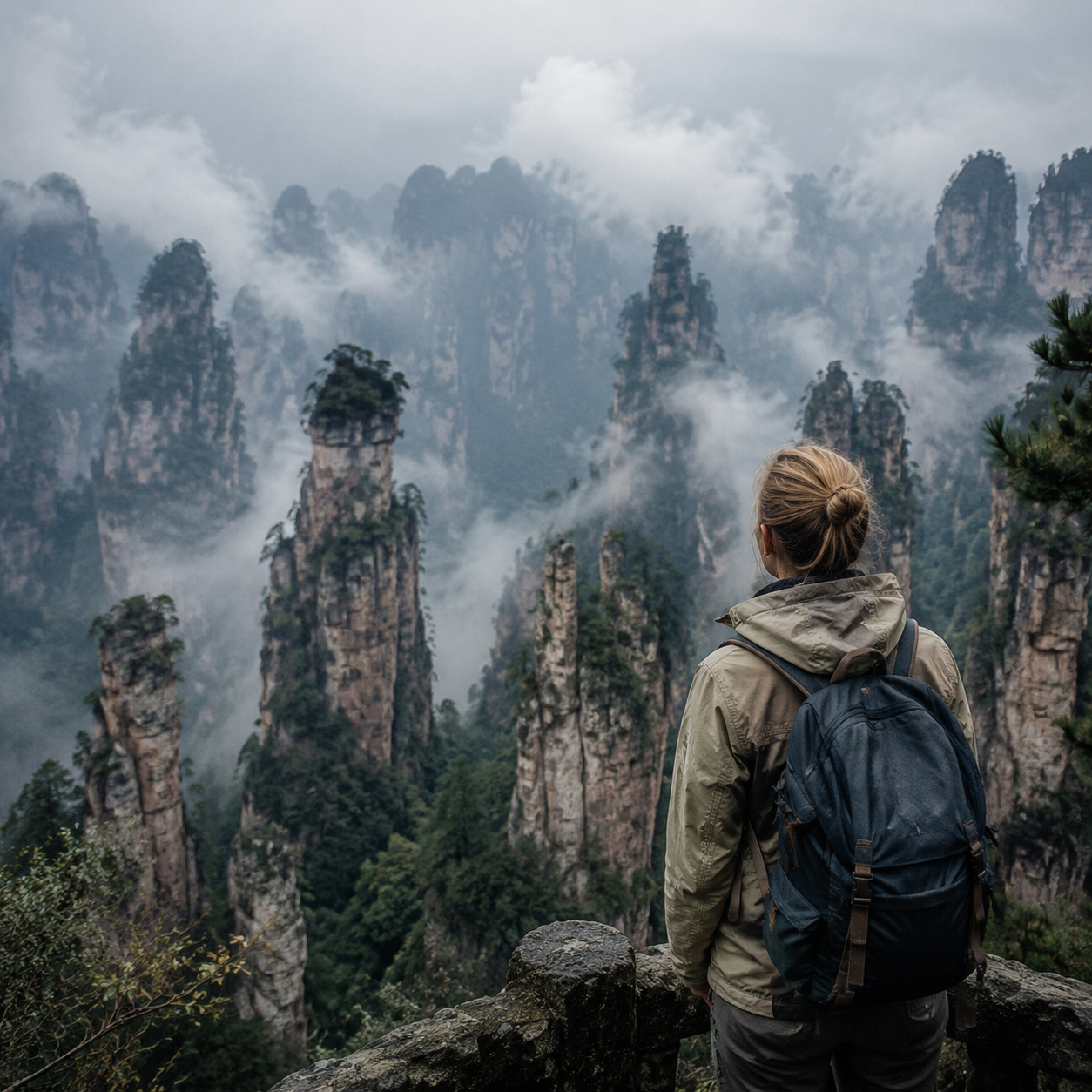
国外博主内容里最容易被忽略的,是“奇景之间不是自动衔接的” / What Is Most Easily Missed in Foreign Creator Material Is That Wonders Do Not Connect Automatically
很多公开视频会把张家界剪得非常顺,一处峰林接一处峰林,一次惊叹接一次惊叹,观众看起来几乎没有任何空档。可站在实际旅行者的角度,这种顺畅大多是叙事顺,而不是身体顺。索道上下、平台之间的步行、等待、回头路、换景区的节奏,都会决定一个人最后记住的是“我真的看到很多”,还是“我一路都在赶下一个更夸张的点”。
Many public videos cut Zhangjiajie into an almost frictionless sequence: one forest of peaks after another, one exclamation following the next, with barely any visible gaps. But from the standpoint of a real traveler, that smoothness is mostly narrative smoothness rather than bodily smoothness. Cable-car ascents and descents, the walking distance between platforms, waiting time, backtracking, and shifts between zones all shape whether a person remembers “I truly saw a lot” or “I spent the whole time rushing toward the next more dramatic point.”
也就是说,真正有价值的文章不该只写“哪里最壮观”,而应该写“壮观和壮观之间该怎么接”。什么时候该在第一个大观景点就把情绪推满,什么时候应该故意把一部分期待留到傍晚,什么时候一条稍微安静一点的栈道反而能把前面那个高峰看得更清楚——这些才是让奇景路线变得耐走的关键。
In other words, a useful article should not stop at which viewpoint is the most spectacular. It should ask how spectacle connects to spectacle. When should the route push emotional intensity fully at the first major viewpoint, and when should part of the anticipation be intentionally saved for evening? When does a quieter walkway actually help the previous summit register more clearly? Those are the questions that make a wonder route durable rather than exhausting.
张家界最该被写明白的,不是“像不像阿凡达”,而是“怎么避免每一眼都抢同一种力气” / What Most Needs Clarifying in Zhangjiajie Is Not Whether It Looks Like Avatar, but How to Keep Every View from Demanding the Same Energy

国外内容很爱拿“像阿凡达”“像 CGI”来形容张家界,这可以理解,因为观众对这种参照很快就能产生反应。但对实际来中国的读者来说,这种参照用一次就够了。后面更需要的是另一种说明:当所有峰都很像“该停下来看”的峰时,旅行者应该如何分配自己的注意力和体力。哪一眼适合站久一点,哪一眼适合只留一个干净印象,哪一段路最好不要在最晒的时候硬走,这些才真正决定体验质量。
Foreign content often reaches for references like Avatar or CGI when describing Zhangjiajie, which is understandable because such comparisons trigger quick recognition in audiences. But for a reader who may actually come to China, that comparison needs to be made only once. What is needed afterward is another kind of explanation: when every peak feels like the kind of peak one ought to stop for, how should attention and physical energy be distributed? Which view deserves a longer stay, which should leave only one clean impression, and which path should never be forced under the harshest sun? Those choices determine the actual quality of the trip.
笔者认为,这恰恰是 TravelCN 转写国外博主张家界内容时最应该补的一层。不要只把他们的惊叹搬过来,而要继续写:这些惊叹该怎么排次序,才能不互相抵消。真正成熟的奇景路线,不是每一分钟都在最高潮,而是它知道什么时候该把人往上推,什么时候该让人先把呼吸找回来。
The writer believes this is exactly the layer TravelCN should add when transforming foreign creator material about Zhangjiajie. The point is not to import their amazement and stop there, but to explain how that amazement should be sequenced so that it does not cancel itself out. A mature wonder route is not one in which every minute tries to become the climax. It is one that knows when to lift the traveler upward and when to let the traveler recover breath first.
对第一次来中国的人来说,张家界不是不能排前面,而是不能排得太满 / For a First-Time Visitor to China, Zhangjiajie Need Not Be Delayed, but It Should Not Be Overpacked
很多人会以为张家界这种地方要么放在最前面“先看最厉害的”,要么放在后面“等适应中国以后再去”。笔者反而觉得,位置不是唯一问题,密度才是。张家界完全可以出现在一次来华早期的行程里,但前提是不要试图把它写成两天连续暴击。只要给足中间的缓冲、留出傍晚的慢段、把索道和步行的体力逻辑想清楚,它完全可以成为读者对中国自然景观建立高标准的第一站。

Many people assume a place like Zhangjiajie must either appear first—see the most intense thing immediately—or appear late, after a traveler has already adapted to China. The writer would argue that position is not the main problem. Density is. Zhangjiajie can absolutely appear early in a China itinerary, but only if no one tries to turn it into two consecutive days of relentless impact. With enough buffer, a slower evening segment, and a clear understanding of how cable-car movement and walking interact physically, it can become the very first place that sets a high standard for China’s natural landscapes.
第三方报道体在这里的任务,就是把“可以很早去”与“不能排太满”这两件事同时讲清楚。这样一来,读者就不会因为视频太震撼而误判路线,也不会因为担心自己撑不住而直接放弃。真正好的中国景观文章,不只是帮人种草,还要帮人避开因为种草过度而造成的错误安排。
The task of a reported-format article here is to explain two truths at once: that one can go early, but one should not overload the route. Once those two ideas are stated together, readers are less likely to misjudge the line because the video was too spectacular, and less likely to abandon the place because they fear they cannot handle it. A truly useful China landscape article should not only inspire desire. It should help readers avoid mistakes caused by desire that has not yet been organized.
公开素材来源 / Public Source Notes
- 基于国外博主公开可见的张家界/中国奇景路线内容切口重写,偏“奇景如何被排成耐走路线”的报道体分析。
- 不做整段搬运,重点转写路线与节奏逻辑。
Public source note:
- Rewritten from publicly visible foreign-creator angles on Zhangjiajie and China wonder routes, focusing on how spectacle is sequenced into a durable itinerary.
- No wholesale reproduction is used; the emphasis is on route rhythm and transition logic.
- 菜市场早餐摊前,我靠一个“这个”吃到了热豆浆 | At a Wet Market Breakfast Stall, One “This One” Got Me Hot Soy Milk
- 雨后的绍兴黄酒馆里,老板一句话让我重新理解“慢” | In a Shaoxing Yellow Wine Tavern After Rain, One Sentence Changed How I Understood Slowness
- 我在服务区吃到一碗热汤,才懂中国公路旅行的细节 | A Hot Soup at a Highway Service Area Showed Me the Details of Road Trips in China
- 新疆最容易拍出大片,可真正决定一条线能不能走顺的是那些留白路段 | Xinjiang Is Easy to Film Spectacularly, but the Blank Stretch Between Highlights Determines Whether the Route Works
- 中国四季节庆日历:每月最佳活动 | China Festival Calendar: Best Events by Month
- 秦淮河灯影之外,我在夫子庙听见一堂夜课 | Beyond Qinhuai's Lantern Reflections, I Found a Night Lesson at Fuzimiao
- 十月赏银杏:满城尽带黄金甲 | October Ginkgo Season: When China Turns to Gold
- 在中国保持联网 | Staying Connected in China
- 我在杭州把西湖走成一天慢电影:从晨雾到夜船都不赶 | I Turned West Lake into a Slow Day Film from Morning Mist to Night Boat
- 中国地理概览 | China Geographic Overview
Comments (0)