
我在中国小区菜市场过了一个早晨,才明白“新鲜”原来是被声音和水气一起托出来的 | One Morning in a Neighborhood Wet Market in China Taught Me That “Fresh” Is Carried as Much by Sound and Moisture as by the Food Itself
我在中国小区菜市场过了一个早晨,才明白“新鲜”原来是被声音和水气一起托出来的 | One Morning in a Neighborhood Wet Market in China Taught Me That “Fresh” Is Carried as Much by Sound and Moisture as by the Food Itself
我第一次在中国小区附近的菜市场待够一个完整早晨,是在杭州一个有点潮的春天。天刚亮不久,地面还有昨夜留下的湿意,市场口已经有人拎着布袋往里走。最先钻进我鼻子里的不是某一种明确的香味,而是一种混在一起的气息:青菜叶上的凉气、鱼摊边的水腥味、豆腐摊那种淡淡的豆香,还有刚出锅早点从门口飘过来的热面气。摊主们讲话都很快,塑料袋被扯开的声音、电子秤报数的声音、案板碰撞的声音,一层压着一层。我以前总把“逛市场”想得很像观光,好像只要看见食材丰富就够了。可那天我站在一排湿漉漉的摊位中间,突然明白这里不是展示台,而是一套还在呼吸的生活系统。
The first time I stayed through a full morning at a neighborhood wet market in China was during a slightly damp spring in Hangzhou. Not long after daybreak, the ground still held last night’s moisture, and people were already entering with cloth shopping bags. The first thing that reached me was not one distinct smell but a combined atmosphere: the coolness on leafy greens, the watery fish scent near the seafood stalls, the faint soybean warmth from the tofu stand, and the steam of fresh breakfast food drifting in from the entrance. Vendors spoke quickly, plastic bags snapped open, digital scales called out numbers, and chopping boards knocked in overlapping layers. I used to imagine “visiting a market” as something close to sightseeing, as if seeing abundant produce were enough. But standing there between those wet stalls, I suddenly understood that this was not a display. It was a living system still breathing.
我很快发现,菜市场里最重要的判断,往往不是盯着某一把菜有多绿,而是先看整个早晨怎么运转。有人一边挑菜一边和摊主闲闲地说前一天的天气,有人熟练地问“今天这个嫩不嫩”,还有阿姨站在肉摊边先不急着买,只是看刀口、看颜色、看老板切的速度。外国人刚进去时,很容易因为信息太多而只顾着拍照或者傻站着看,但如果你多停三分钟,就会发现真正的“新鲜”不只是视觉词。它是水气一直在冒,叶子被翻动时还带弹性,鱼缸边不断有人捞、称、装,豆制品表面还带着刚做出来的温度。我后来越来越理解,很多中国日常场景都得先读节奏,不能只看表面,这和先通过小动作融进去的经验非常像。
I quickly noticed that the most important judgment in a wet market is usually not staring at how green one bunch of vegetables looks, but first seeing how the whole morning is functioning. Some people choose vegetables while casually talking with the vendor about yesterday’s weather. Some ask, with total familiarity, whether something is tender today. An older woman may stand at the meat stall without buying immediately, simply studying the cut surface, the color, and the speed of the vendor’s knife. When foreigners first enter, it is easy to become overwhelmed and do nothing but take pictures or stand there staring. But if you remain for three more minutes, you realize that “fresh” is not only a visual word. It is moisture still rising, leaves that keep springing back when turned, fish tanks where people are constantly scooping, weighing, and packing, and tofu surfaces that still seem to hold the warmth of recent making. Over time I came to understand that many Chinese daily-life spaces must be read through rhythm first, not surface alone, and this feels very close to the lesson of entering through small actions first.
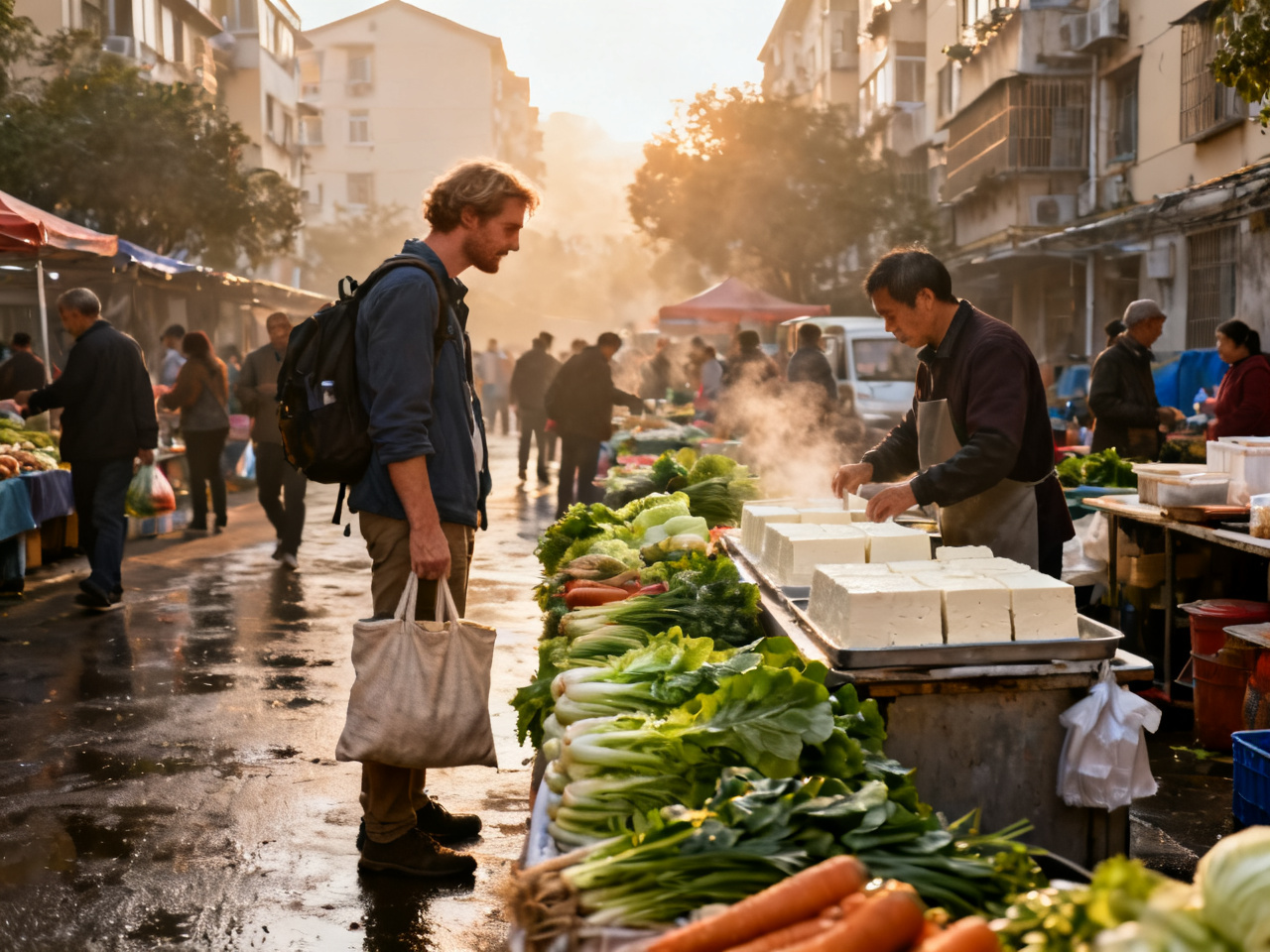
那天我没有急着买东西,而是先跟着人流慢慢走了一圈。市场一侧是蔬菜,地上常常有被甩出来的水珠;再往里一点是猪肉和卤味,颜色一下子变深,空气也更厚;靠后面则是水产,盆里的鱼偶尔猛地拍一下尾巴,旁边的人连躲都不躲,好像这已经是早晨的一部分。最让我喜欢的是豆腐摊和早餐摊之间那一小段过道:一边是白白软软的豆腐块,一边是刚炸好的油条和冒着热气的豆浆,有人买完菜顺手再带一袋早点回家。那一刻我才真正感觉到,“菜市场”在中国并不是一个单独的购物点,而是把一整个早晨串起来的地方。你来这里,不只是补充冰箱,也是顺手确认今天怎么过。
That morning I did not rush to buy anything. I first followed the flow of people and walked one full loop. One side of the market was vegetables, with droplets of water often flicked onto the floor. Deeper inside came pork and marinated foods, where the colors turned darker and the air felt thicker. Farther back was seafood, where fish in tubs occasionally slapped their tails sharply, and the people beside them barely reacted, as if that sound were simply part of the morning. My favorite stretch was the narrow passage between the tofu stall and the breakfast stall: on one side sat soft white blocks of tofu, and on the other were fresh youtiao and steaming soy milk, with people picking up breakfast on the way home from buying vegetables. That was the moment I really felt that a “wet market” in China is not just a shopping point. It is a place that strings an entire morning together. You come here not only to fill the fridge, but also to quietly establish what kind of day today will be.
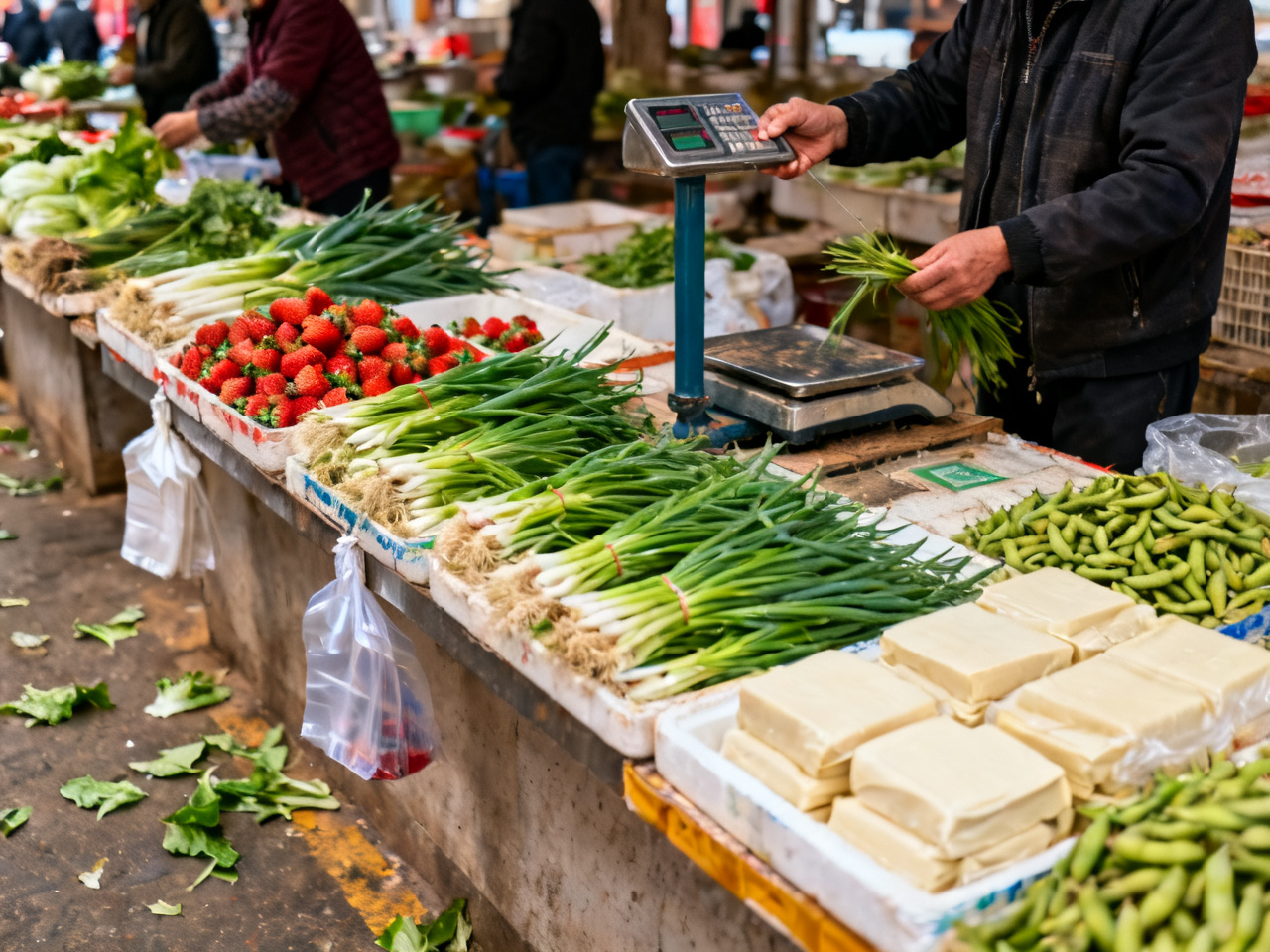
我后来终于买了一小袋草莓和几根小葱,过程却比我想象得轻松。摊主没有因为我是外国人就特别热情,也没有特别冷淡,只是照正常节奏问我多少、给我称重、把袋子一系。我反而很喜欢这种普通。它让我觉得自己不是在被“接待”,而是在参与一个所有人都熟悉的晨间秩序。旁边一个阿姨还顺手帮我挑掉了一颗有点碰伤的草莓,动作快得像本能。我那时候突然想到,很多人在中国感受到的人情味,并不是轰轰烈烈的大帮助,而是这种夹在交易中间的细小修正。它和自然求助和自然接受帮助其实是同一种逻辑:先进入场景,善意才会开始流动。
Eventually I bought a small bag of strawberries and a few scallions, and the process was easier than I had expected. The vendor was not especially warm to me because I was foreign, but neither was he distant. He simply asked how much I wanted, weighed it, and tied the bag in the ordinary rhythm of the morning. I liked that normality very much. It made me feel not that I was being “hosted,” but that I was taking part in a morning order everyone else already knew. An older woman beside me even removed one slightly bruised strawberry from my bag with a quick instinctive motion. In that moment I thought how much of the warmth people feel in China is not dramatic grand help, but these tiny corrections hidden inside ordinary transactions. It follows the same logic as asking for help naturally and receiving help naturally: first enter the scene, and only then does kindness begin to move.
还有一个让我印象很深的细节,是市场里的时间感和超市完全不同。超市像是把东西摆好,等你来决定;菜市场则更像在不断往前推。叶菜上午和中午状态不一样,鱼虾活力也不一样,连摊主说话的速度都会随着太阳升高而变。你如果去得早,就会明白为什么那么多人愿意把一天开始得这么具体:先买点菜,顺手带豆浆,回去做饭,或者把食材放好再去上班。这个早晨让我第一次从身体上理解了中国城市生活的一种底色——再快的城市,也还是有很多人用买菜这件事给一天定调。我也越来越认同让安全感和稳定感建立在可重复的小节点上,而小区菜市场正是这种节点之一。
Another detail that stayed with me was how different the market’s sense of time is from a supermarket’s. A supermarket feels like things have been arranged and are waiting for your decision. A wet market feels like everything is still moving forward. Leafy greens are different at 8 a.m. than at noon. Fish and shrimp have different energy. Even the speed of vendor speech shifts as the sun rises. If you go early enough, you understand why so many people are willing to begin the day in such a concrete way: buy some vegetables, pick up soy milk on the way, go home to cook, or put ingredients away before work. That morning gave me a bodily understanding of one layer of Chinese urban life: even in very fast cities, many people still use the act of buying vegetables to set the tone of the day. I also came to agree more and more with the idea of building steadiness and security on repeatable daily nodes, and the neighborhood wet market is exactly one of those nodes.
现在回头看,我最难忘的并不是那天具体买了什么,而是我终于明白了“新鲜”在中国菜市场里为什么会那么有存在感。它不是一个静态标签,不是简单地写在牌子上,而是被水、声音、手势、问答和人流一起托出来的。对我这个外国人来说,那个早晨像是一堂非常生活化的课:如果你愿意起早一点,站进这种微微潮湿、稍微嘈杂、却极有秩序的地方,中国日常生活会比很多景点都更快地向你打开。
Looking back now, what I remember most is not exactly what I bought that day, but finally understanding why “freshness” feels so alive in a Chinese wet market. It is not a static label and not something simply written on a sign. It is carried up by water, sound, gestures, questions, answers, and the movement of people all together. For me as a foreigner, that morning felt like a deeply ordinary but important lesson: if you are willing to wake up a little early and stand inside a place that is slightly damp, slightly noisy, and yet highly ordered, daily life in China opens itself faster than many famous attractions ever could.
- 风筝制作与放飞:我第一次看懂中国人为什么把春天送上天空 | Kite Making and Flying: My First Real Understanding of How China Sends Spring into the Sky
- 五月在婺源的雨后清晨,我跟着民宿老板去看一片刚亮起来的白墙黑瓦 | One Rain-Washed Morning in Wuyuan, I Followed a Guesthouse Owner Toward White Walls Just Beginning to Glow
- 第一次在中国社区医院挂普通门诊,我先学会的不是看病,而是先找分诊台 | The First Thing I Learned at a Chinese Community Hospital Was Not the Consultation, but Finding Triage First
- 福州的榕树和路口一起告诉我,这座城是怎么往前走的 | Fuzhou’s Banyan Trees and Crossroads Showed Me How the City Moves
- 支付宝绑定国际银行卡实操 | Alipay Foreign Card Binding Walkthrough
- 黄山云海与迎客松:四季皆美 | Huangshan Sea of Clouds & Welcome Pine: Beautiful in All Seasons
- 国庆出行避坑指南 | National Day Travel Tips: Avoiding the Crowds
- 中国旅游医疗与保险指南 | Medical & Insurance Guide for China Travel
- 手机支付失败后我学会准备备用方案 | After My Mobile Payment Failed, I Learned to Prepare a Backup Plan in China
- 共享单车不是难用,难的是先看停车区 | Shared Bikes Are Not Hard; the Hard Part Is Checking Parking Zones First
Comments (0)