
我在中国早餐摊第一次学会豆浆要先问甜不甜 | The First Time I Learned at a Chinese Breakfast Stall to Ask Whether the Soy Milk Was Sweet
我在中国早餐摊第一次学会豆浆要先问甜不甜 | The First Time I Learned at a Chinese Breakfast Stall to Ask Whether the Soy Milk Was Sweet
那是一个很早的早晨,天还没有完全亮开,街角已经被蒸汽和油条的香味占满了。我住处附近那条路上,卖早点的小摊总是比便利店更早进入一天的节奏:铝锅冒白气,塑料杯碰在一起发出轻轻的脆响,炸油条的声音像细密的雨点落在热油里,排队的人一边低头看手机,一边熟练地点着豆浆、包子、鸡蛋饼。作为一个在中国生活的外国人,我一直很喜欢这种清晨的街头秩序,因为它不隆重,却特别真实,像城市醒来的第一口呼吸。可也正是在这样一个我以为自己已经足够熟悉的早餐场景里,我第一次学会,买豆浆之前最好先问一句:甜不甜?
It was very early in the morning, before the sky had fully opened into daylight, and yet the street corner was already full of steam and the smell of youtiao. On the road near where I lived, the breakfast stalls always entered the day earlier than the convenience stores did: aluminum pots breathing white vapor, plastic cups clicking softly against one another, the sound of dough frying like fine rain falling into hot oil, and people in line lowering their heads over their phones while ordering soy milk, buns, and jianbing with practiced speed. As a foreigner living in China, I have always loved this kind of morning street order because it is not grand, just deeply real, like the city’s first breath after waking. But it was precisely in this breakfast scene, one I thought I already understood well, that I learned for the first time it is wise to ask one simple question before buying soy milk: is it sweet?
在我原来的经验里,豆浆几乎是一个默认固定的概念。你想到它,脑子里就会顺带带出某一种味道,有时偏甜,有时至少会默认可以自己加糖。所以那天我排到摊前时,心里根本没觉得这里面有什么需要确认的。我看着老板一边收钱一边掀锅盖,蒸汽一下扑到玻璃挡板上,旁边一位阿姨提着刚炸好的油条离开,桌上摆着吸管、塑料袋和几种小点心。我顺口点了豆浆和油条,正准备像在别的地方那样按照自己的习惯再加一点糖,结果老板先看着我问:“要原味的还是甜的?”我当时愣了一下,那种愣不是因为听不懂,而是因为我忽然意识到,自己原来把早餐的很多事情都想成了全球统一模板。
In my old experience, soy milk was almost a fixed concept. The moment you thought of it, your mind supplied a familiar taste, sometimes sweet, or at least something to which you could automatically add sugar yourself. So when I reached the front of the stall that morning, I did not feel there was anything here that needed confirming. I watched the owner take money with one hand and lift a lid with the other, steam rushing against the glass shield, while a woman nearby left with freshly fried youtiao and the small table held straws, plastic bags, and several simple snacks. I casually ordered soy milk and youtiao and was about to follow my old habit of adding a little sweetness, when the owner looked at me first and asked, “Plain or sweet?” My brief confusion was not because I failed to understand the words. It was because I suddenly realized I had imagined too many breakfast things as if they were globally standardized.
那一刻的场面其实非常日常,甚至可以说普通得不能再普通。可正因为普通,它才特别值得记住。老板没有把“豆浆”当成一个无需展开的项目,而是默认这件事需要问清楚;排队的人也没有表现出任何不耐烦,仿佛“甜不甜”“热一点还是正常”“带走还是现在喝”本来就是早餐摊交流里很自然的一部分。我回答说先来原味,想试试最基础的味道。老板把热豆浆从金属桶里舀出来,倒进薄塑料杯,套上一个方便拿的袋子递给我。杯壁立刻微微发烫,我站到旁边,先小心喝了一口。那一口的感觉比我预期中更豆、更直接,也更能喝出黄豆本身的气味。它并不是不好喝,反而让我觉得很顺,只是和我原先脑子里那个“豆浆应该是什么味道”的默认答案不一样。
The scene itself was incredibly ordinary, almost too ordinary to notice. But that is exactly why it stayed with me. The owner did not treat “soy milk” as a self-explanatory item. He assumed it needed clarification. The people in line did not show any impatience either, as if questions like “sweet or not,” “extra hot or regular,” and “to go or drink now” were naturally part of breakfast-stall conversation. I answered that I wanted the plain version first because I wanted to try the most basic taste. He ladled the hot soy milk from a metal container into a thin plastic cup, slipped it into a carrying bag, and handed it to me. The wall of the cup immediately felt warm. I stepped aside and took a careful first sip. The taste was more beany, more direct, and more clearly shaped by the soybean itself than I had expected. It was not bad at all. In fact, it felt smooth and honest. It was simply different from the default answer my mind had long carried for what soy milk was supposed to taste like.
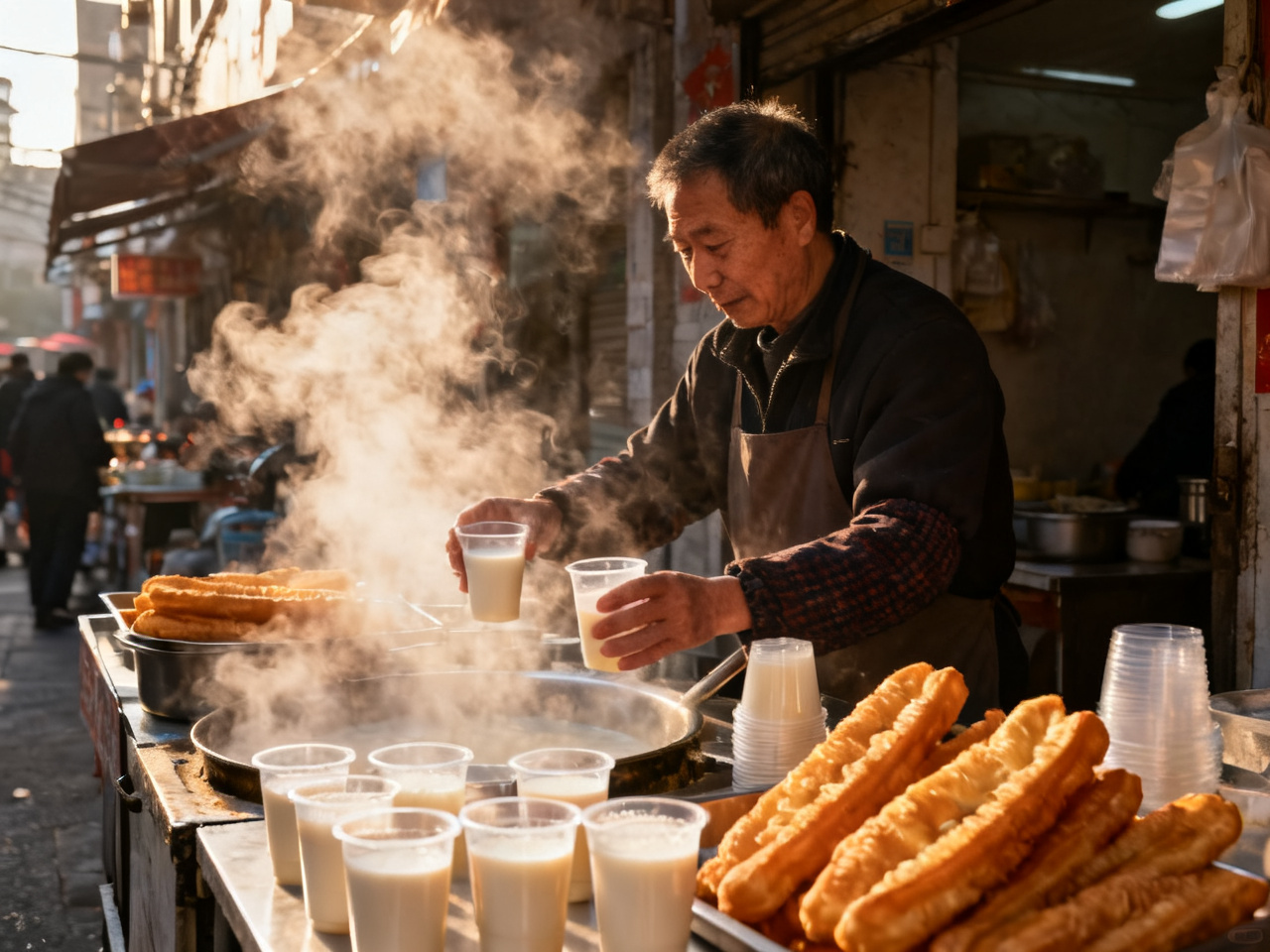
我站在路边喝着那杯热豆浆,看着早高峰一点点抬起来:骑电动车的人从巷口穿出去,送孩子上学的家长一手拎早餐一手催步子,几个上班族靠在共享单车旁边,两三口解决掉手里的饼。就在那几分钟里,我突然觉得,自己之前对“中国早餐”的理解其实也有点偷懒。我喜欢说自己爱吃中国早点,也知道豆浆油条、包子、煎饼这些名字,可我把“知道这些名字”和“真的理解它们在日常生活里的变化”混在了一起。豆浆并不总是你以为的那一种味道,正如很多中国早餐也不是一个固定模板:同样叫豆浆,不同摊位、不同城市、不同习惯的人,默认值都可能不一样。你若是只带着自己的旧经验去点单,就很容易错过这种细微但很有意思的差别。
As I stood by the roadside drinking that hot soy milk, I watched the morning rush slowly rise into shape: people on electric scooters darting out from side lanes, parents carrying breakfast in one hand while urging children toward school with the other, office workers leaning against shared bikes and finishing pancakes in two or three bites. In those few minutes, I suddenly felt that my previous understanding of “Chinese breakfast” had also been a little lazy. I liked to say that I loved Chinese breakfast foods, and I certainly knew the names—soy milk, youtiao, steamed buns, jianbing—but I had blurred together “knowing the names” and “actually understanding how these foods vary inside daily life.” Soy milk is not always the one taste you imagine, just as many Chinese breakfasts are not fixed templates. Even something called by the same name can have different defaults at different stalls, in different cities, or for people with different habits. If you order only through the filter of your old expectations, you can easily miss these subtle but fascinating differences.
后来我又去过那家摊子几次,慢慢观察到更多细节。有的人会直接说“来一杯不加糖的”,有的人会说“甜一点”,还有人要配现炸油条,有人则买个包子就走。老板问问题的方式很快,却不是机械重复,而像是在确认每个人早晨需要的那个小小版本。有次我前面一位年轻女生点豆浆时,老板甚至先问她“今天还是原味?”显然是熟客。我那时才意识到,早餐摊其实并不只是提供食物的地方,它也是一种熟悉感被不断微调的空间。你每天来,口味会被记住,偏好会被识别,点单也会越来越短。对于像我这样的外国人来说,这种看似很小的互动,反而是最能让人感到自己慢慢进入本地生活的时刻。
I went back to that stall several more times and gradually noticed more details. Some people ordered by saying directly, “One without sugar.” Others asked for it sweeter. Some wanted it with freshly fried youtiao, while others grabbed only a bun and left. The owner asked his questions quickly, but not in a robotic way. It was more like he was confirming the small personal version of morning that each person wanted. One time, the young woman in front of me ordered soy milk and he asked first, “Plain again today?” Clearly she was a regular. That was when I realized a breakfast stall is not only a place that provides food. It is also a space where familiarity gets adjusted in tiny ways again and again. If you come every day, your taste is remembered, your preferences are recognized, and your ordering becomes shorter. For a foreigner like me, these apparently small interactions are often the moments that most strongly create the feeling of gradually entering local life.
而我真正学到的,并不只是“以后记得问甜不甜”这么一个操作技巧。更重要的是,我开始提醒自己,不要把熟悉的早餐想成全世界都一样。我们太容易以为,一杯豆浆、一块面包、一碗粥,这些最日常的食物因为常见,所以应该天然可预测。但恰恰是这种“常见”,在不同地方会长出最丰富的差异。中国早餐摊最迷人的地方之一,就是它一边高效,一边又保留了很多具体口味的余地。你站在那两三分钟里,会发现每个人点的虽然都是早餐,却又不是同一个早餐。有人要快,有人要热,有人要甜,有人只想喝最原本的味道。对我来说,这种差异不是麻烦,而是一种非常生活化的提醒:真正的本地经验,从来不是把一切都归纳成单一印象,而是愿意多问一句,多尝一口。
What I truly learned was not only the practical trick of remembering to ask whether the soy milk is sweet. More importantly, I started reminding myself not to imagine familiar breakfast foods as if they were identical everywhere in the world. We very easily assume that a cup of soy milk, a piece of bread, or a bowl of porridge should be naturally predictable because they are so ordinary. But it is exactly this ordinariness that grows the richest differences from place to place. One of the most charming things about Chinese breakfast stalls is that they are efficient while still leaving room for highly specific tastes. If you stand there for just two or three minutes, you notice that everyone is ordering breakfast, but not the same breakfast. One person wants speed. Another wants extra heat. Another wants sweetness. Someone else wants the most original taste possible. To me, that variation is not an inconvenience. It is an intensely everyday reminder that real local experience never comes from flattening everything into one impression. It comes from asking one more question and tasting one more version.
还有一点让我印象很深:早餐摊的老板之所以会先问,并不是因为流程复杂,而是因为他们知道很多东西没有绝对默认值。中国街头生活里常常有这种让我佩服的现实感。它不假设每个人都一样,也不要求你必须提前懂完所有规则。你不会,因为老板那句“原味还是甜的?”而显得无知;相反,那句话像是在给你一个进入这个系统的台阶。你只要接住这个问题,就能更准确地点到自己想要的东西。作为外国人,我曾经很多次因为怕麻烦别人而假装自己“都可以”,但后来我发现,很多日常场景反而欢迎你把偏好说得明确一点。那不是挑剔,而是配合这个城市的高效节奏,让彼此都更省力。
Another thing that stayed with me is that the owner asked first not because the process was complicated, but because he understood that many things do not have one absolute default. There is a kind of realism in Chinese street life that I deeply admire. It does not assume everyone is the same, and it does not demand that you understand every rule in advance. You do not look ignorant because a stall owner asks, “Plain or sweet?” On the contrary, the question acts like a step inviting you into the system. If you simply respond, you can order what you actually want much more accurately. As a foreigner, I used to pretend many times that “anything is fine” because I did not want to trouble people. But later I realized that many everyday situations actually welcome you to state your preference more clearly. That is not being picky. It is cooperating with the city’s efficient rhythm so that everyone spends less effort.
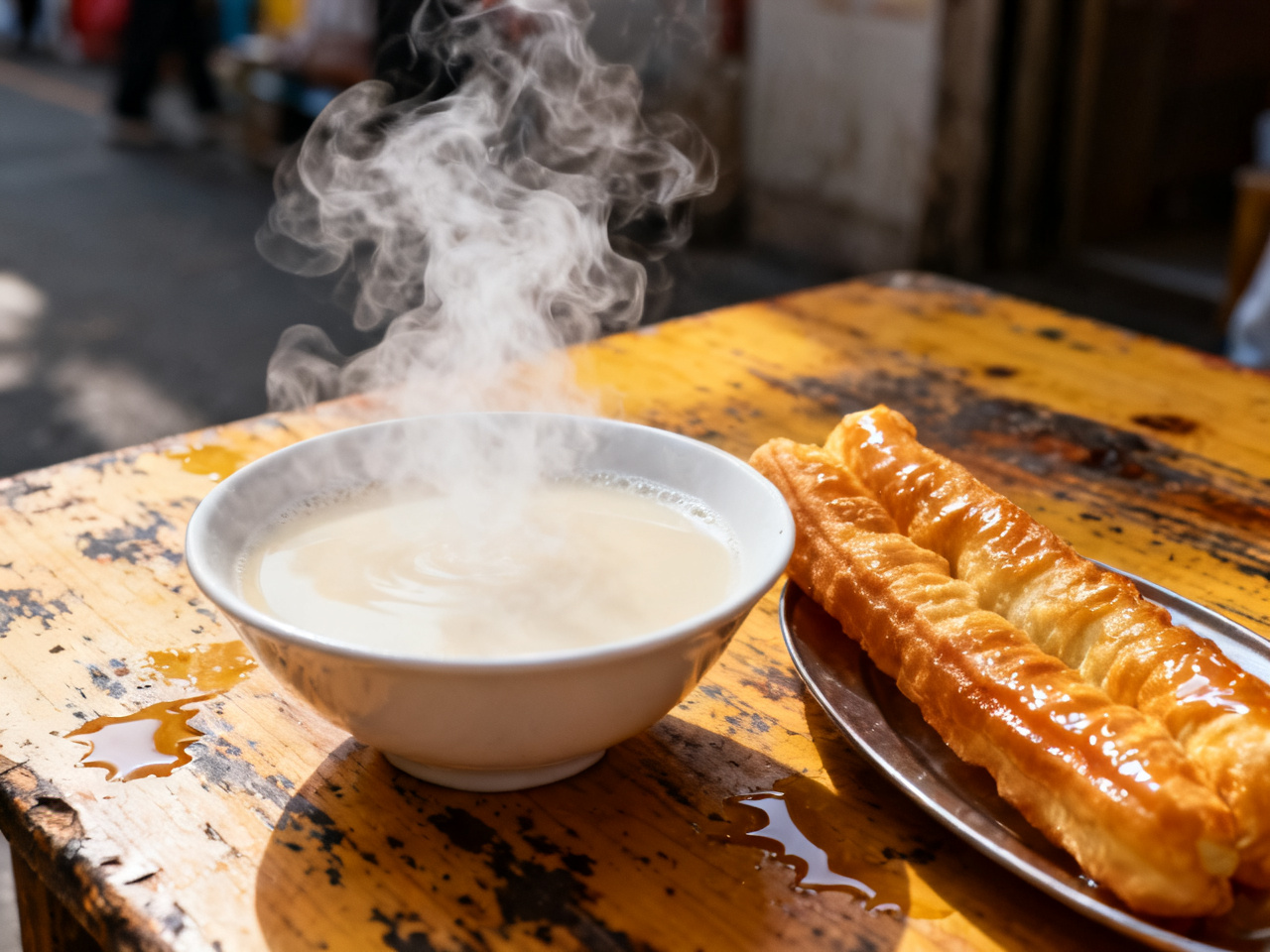
现在如果有人问我,在中国早餐摊最值得记住的一个小经验是什么,我会毫不犹豫地说:别把豆浆想得太理所当然,先问问甜不甜。它听上去像个很小的提醒,却代表着我在中国生活里一个更大的学习过程——别把熟悉感误认为理解,别把自己从别处带来的默认设置直接覆盖到眼前的日常上。那天清晨我真正带走的,不只是豆浆和油条,而是一种更谦逊也更有趣的吃早餐方式:先观察,先听对方怎么问,再决定自己到底想要哪一种。真正的学习点,不是记住哪个摊位更好喝,而是明白再普通的早餐,也不该被我想成全球统一模板。对一个慢慢把中国街头当成自己生活一部分的外国人来说,这种领悟很小,却很实用,也很温暖。
Now, if someone asks me for one small lesson worth remembering at a Chinese breakfast stall, I would answer without hesitation: do not take soy milk for granted—ask whether it is sweet. It sounds like a tiny reminder, but for me it represents a much larger learning process in life in China: do not mistake familiarity for understanding, and do not let the default settings you brought from somewhere else automatically overwrite the ordinary life in front of you. What I really carried away from that morning was not only soy milk and youtiao, but a more humble and more interesting way of eating breakfast: observe first, listen to how the other person frames the options, and then decide what version you actually want. The real lesson was not memorizing which stall tastes best. It was understanding that even the most ordinary breakfast should not be imagined by me as a globally uniform template. For a foreigner slowly making Chinese streets part of everyday life, that realization is small, practical, and unexpectedly warm.
- 合浦老街那块没来得及拍照的月饼 | The Mooncake on Hepu Old Street That I Never Managed to Photograph
- 中国高铁旅行攻略:如何用高铁串联你的中国行 | China by High-Speed Rail: How to Link Your Entire Trip on the Bullet Train
- 我第一次在中国寄快递,把纸箱、胶带和身份证明全学会了 | My First Time Shipping a Parcel in China: Boxes, Tape, and ID Checks
- 中国旅游安全须知 | Safety Tips for Traveling in China
- 中国寺庙参观礼仪完全指南 | The Complete Guide to Temple Etiquette in China
- 兜里留一点现金,让我在小镇车站不慌 | Keeping a Little Cash Helped Me Stay Calm at a Small-Town Station
- 成都-重庆5日美食与熊猫行程 | 5-Day Chengdu-Chongqing Food & Panda Trip
- 我在中国早餐摊第一次学会热包子要先撕口放气 | The First Time at a Chinese Breakfast Stall, I Learned to Tear Open a Hot Baozi First to Let the Steam Out
- 端午龙舟节旅游攻略 | Dragon Boat Festival Travel Guide
- 五月在南浔陪孩子看雨落到河面,我们全家第一次接受“今天少去一个景点也没关系” | Watching Rain Touch the Canal in Nanxun, Our Family Finally Accepted That One Less Stop Could Still Mean a Full Day
Comments (0)